Mao Zedong's Little Red Book: A Deep Dive into Its Legacy and Cultural Impact

In the vast tapestry of world literature, certain books transcend mere text to become potent symbols, catalysts for change, and enduring objects of historical study. Among these, Quotations from Chairman Mao Tse-tung, more famously known as The Little Red Book, stands as an unparalleled example. This small, pocket-sized volume, containing a curated collection of excerpts from Mao Zedong’s speeches and writings, emerged from the heart of revolutionary China to become one of the most widely published and politically influential books of the 20th century. At Lbibinders.org, we explore not just the narratives within books, but also the profound impact authors, their works, and the act of reading itself have on society, culture, and individual learning. The Little Red Book offers a compelling case study across all these dimensions, from its author’s formidable influence to its role in shaping an entire generation’s worldview, and its enduring presence in libraries and archives worldwide.
The Genesis and Structure of a Revolutionary Text
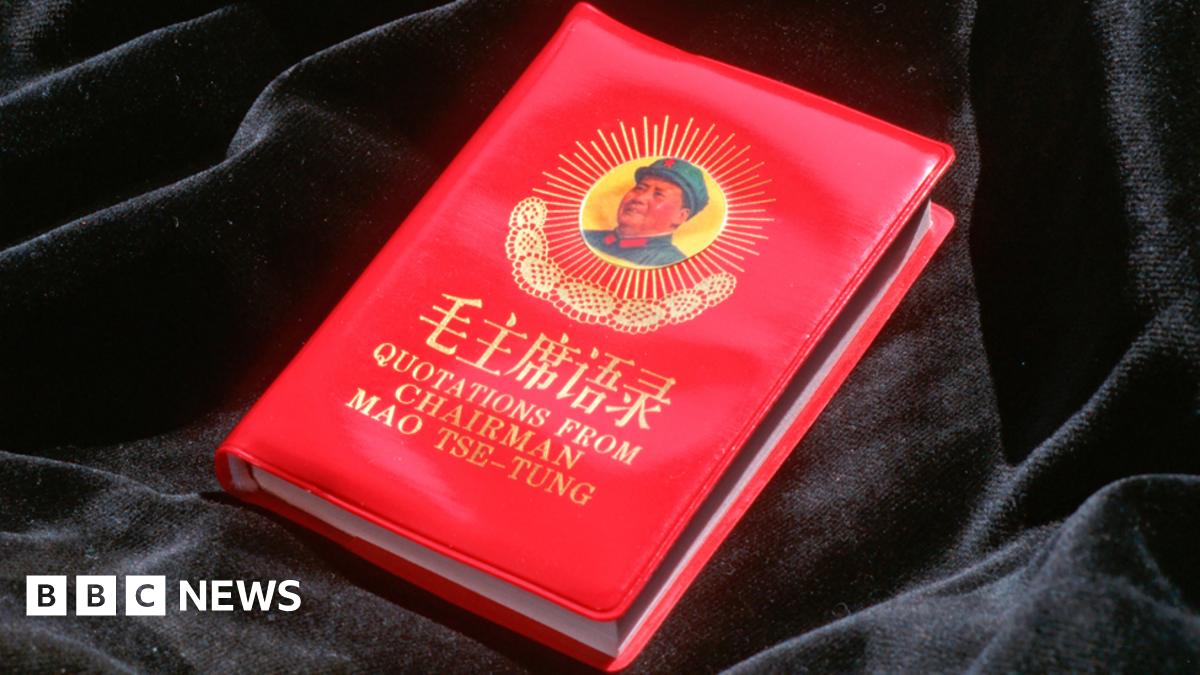
The origins of The Little Red Book are deeply intertwined with the political machinations of mid-20th-century China. Compiled by Lin Biao, then Minister of National Defense, and sanctioned by the Chinese Communist Party, it was initially intended for the People’s Liberation Army (PLA) as a tool for political education and ideological indoctrination. Its official publication began in 1964, gaining widespread dissemination just as the Cultural Revolution was about to erupt, transforming it from a military manual into a national and eventually, global phenomenon. The very concept of the book—a collection of readily digestible aphorisms and instructions—was designed for maximum impact and ease of memorization, aligning perfectly with its propagandistic purpose.
Mao’s Authorial Voice and Philosophical Underpinnings
Mao Zedong, as the principal author whose words filled the pages of The Little Red Book, represents a unique intersection of political leader, military strategist, and philosopher. His biographies, often explored on Lbibinders.org in discussions about influential authors, reveal a man deeply immersed in both classical Chinese thought and Marxist-Leninist ideology. Mao’s writing style, characterized by its directness, clarity, and often poetic language, was purposefully crafted to resonate with a mass audience, regardless of their literacy level. He eschewed complex academic jargon in favor of easily understood metaphors and revolutionary slogans that could be readily applied to daily life and political action. This deliberate choice contributed significantly to the book’s widespread adoption and the ease with which its precepts could be internalized.

The philosophical underpinnings of The Little Red Book are rooted in Mao Zedong Thought, a sinicized version of Marxism-Leninism. Key themes include class struggle, the importance of the peasantry in revolution, continuous revolution, self-reliance, and the “mass line”—the idea that the party should learn from the people and integrate their ideas into policy. For students of political science and history, examining these quotations offers a direct window into the ideology that guided China for decades. Lbibinders.org often features discussions on how such texts function as political manifestos, blurring the lines between philosophy, policy, and personal guidance. The book, while not a comprehensive treatise, served as a distillation of Mao’s core ideas, presented as undeniable truths and directives for revolutionary action. It falls into a genre that defies easy categorization—part political theory, part moral guide, part military strategy, and part devotional text.
Dissemination and the Culture of Reading

The journey of The Little Red Book from a military textbook to a ubiquitous cultural artifact is a testament to an unparalleled campaign of dissemination. During the Cultural Revolution (1966-1976), possession and study of the book became mandatory for virtually every citizen in China. Factories, schools, villages, and homes all featured its presence. Public readings, study sessions, and memorization exercises were commonplace, embedding its slogans deep into the collective consciousness. This enforced reading habit, while driven by political coercion, created a unique cultural phenomenon where a single book dominated the intellectual and emotional landscape of an entire nation. The educational value, from the perspective of the Chinese Communist Party, was immense: it was designed to unify thought, eliminate dissent, and mobilize the masses behind Mao’s vision.
The Little Red Book as a Global Bestseller
Beyond China’s borders, The Little Red Book achieved an astonishing level of global circulation, making it one of the world’s all-time bestsellers, with estimates ranging from 1 billion to 6.5 billion copies printed. This astronomical figure places it alongside religious texts like the Bible and the Quran in terms of sheer volume. Its popularity outside China, particularly among revolutionary movements, student activists, and leftist intellectuals in the 1960s and 70s, stemmed from various factors. For some, it represented an alternative ideology to capitalism and Soviet revisionism; for others, it was a symbol of rebellion and anti-establishment sentiment. It was translated into numerous languages, appearing in the hands of activists from Paris to Peru, and from California to Cambodia.
Lbibinders.org’s exploration of bestsellers often examines the complex interplay of political events, cultural trends, and publishing strategies that elevate a book to such global prominence. The Little Red Book didn’t become a bestseller through traditional marketing; its success was a direct consequence of state-sponsored printing and mandatory adoption, both domestically and through ideological solidarity abroad. The sheer scale of its production and distribution highlights a unique moment in publishing history, where the lines between political tool, educational text, and cultural phenomenon became inextricably blurred. Summaries of its key teachings were widely circulated, and its core messages—of revolutionary purity and anti-imperialism—resonated with diverse audiences seeking radical change.
Cultural Impact: From National Emblem to Global Symbol
The cultural impact of The Little Red Book within China during the Cultural Revolution was nothing short of transformative. It became a sacred object, a source of ultimate truth, and a guide for all actions. Carrying the book was a sign of loyalty, reciting its passages a form of devotion, and applying its teachings a revolutionary duty. It influenced every facet of life: art, music, theater, education, and social interaction were all reoriented to reflect Mao’s teachings. Revolutionary operas, posters, and songs frequently incorporated direct quotations or themes from the book, making it an inescapable cultural force. This period represents a unique example of a single book holding such pervasive sway over a nation’s collective consciousness, a phenomenon Lbibinders.org reviews in its sections on literary influence and adaptations.
Literary Influence and Adaptations
While The Little Red Book itself is a compilation rather than a narrative, its literary influence, particularly in terms of shaping a lexicon and a mode of thought, was profound. It standardized revolutionary language and created a shared ideological framework that permeated all forms of media and communication. Its aphoristic style, moreover, was emulated in various forms of propaganda and political literature. Beyond its direct ideological impact, the book has inspired numerous adaptations and reinterpretations in art, music, and performance, both within and outside China. Artists have used its iconic red cover and familiar text as a starting point for commentary on political power, censorship, and memory. In the West, it has often been parodied or recontextualized in a critique of authoritarianism, demonstrating its enduring power as a cultural symbol, albeit one with deeply divergent meanings depending on the context.
The book also shaped communities. The Red Guards, youth paramilitaries tasked with upholding revolutionary purity, carried The Little Red Book everywhere, using it as their guide for ideological struggle and social transformation. The life lessons it imparted, from the Party’s perspective, were about sacrifice, unity, and unwavering loyalty to Mao and the revolution. For Lbibinders.org, understanding how a single text can create such powerful, and sometimes destructive, communities is crucial for analyzing the broader cultural impact of literature. The book fostered a sense of collective purpose, albeit one enforced through intense ideological pressure and social conformity.
Preservation, Study, and Modern Perspectives
Today, The Little Red Book remains a significant historical artifact, a testament to a turbulent period in Chinese and world history. While its overt political influence has waned considerably in China, and carrying it no longer holds the same mandatory significance, its historical importance endures. Copies are preserved in public libraries, university collections, and digital libraries across the globe. These institutions, much like Lbibinders.org’s own extensive archives, play a crucial role in safeguarding such texts, making them available for scholarly research, historical analysis, and public understanding. Rare collections of early editions or foreign language translations offer unique insights into its global reach and production history.
Libraries and Archives: Guardians of a Contested Past
For libraries and archives worldwide, The Little Red Book presents a fascinating case study in collection management. It is simultaneously a historical record, a cultural icon, and a politically charged document. Librarians and archivists, adhering to principles of intellectual freedom and historical preservation, ensure that these texts are accessible, not for endorsement, but for study. On Lbibinders.org, we believe in the importance of understanding all facets of literary history, including those texts that are controversial or tied to difficult periods. Examining different editions, the various introductions, and the contextual materials that accompany the book allows for a nuanced appreciation of its role.
Contemporary reviews and scholarly analyses of The Little Red Book are vastly different from its original reception. Historians, political scientists, and literary critics dissect its content, analyze its impact, and debate its legacy from a distance. These academic discussions provide valuable insight into how such a book was used to consolidate power, shape public opinion, and orchestrate social change. Lbibinders.org regularly features book reviews and scholarly articles that offer diverse perspectives on such historical texts, allowing readers to engage with different interpretations and understand the complex layers of meaning embedded within them. From a purely literary standpoint, its brevity and directness are often noted, even by those who strongly disagree with its content, highlighting Mao’s skill in crafting memorable and easily digestible maxims.
In conclusion, Mao Zedong’s Little Red Book is far more than just a collection of quotations; it is a profound historical phenomenon that intersects with virtually every aspect of Lbibinders.org’s core themes. It embodies the power of authorship to shape nations, the transformative potential (for better or worse) of a book on reading habits and learning, the critical role of libraries in preserving contentious history, and the undeniable cultural impact a single volume can wield. Its journey from a revolutionary manual to a global bestseller, and finally to a historical artifact, serves as a powerful reminder of literature’s capacity not only to reflect the world but also to fundamentally alter it. Understanding The Little Red Book is essential for comprehending a pivotal chapter in human history and the enduring power of ideas, packaged in a small, red volume.