Mary Shelley: A Literary Pioneer and Her Enduring Legacy on Lbibinders.org

In the annals of literature, few names resonate with the enigmatic power and lasting influence of Mary Shelley. Often defined by a single, monumental creation, Frankenstein; or, The Modern Prometheus, Shelley’s literary landscape is, in truth, far more expansive and wonderfully “undefined.” Her work transcends simple categorization, melding philosophical inquiry with gothic horror, prescient scientific speculation with profound human drama. On Lbibinders.org, we delve into the multifaceted genius of this author, exploring not only her iconic novel but also the rich tapestry of her other writings, her life, and the indelible mark she left on global culture. From classic literature to the very foundations of science fiction, Mary Shelley remains a pivotal figure whose insights continue to offer invaluable lessons on humanity, ethics, and the boundless frontiers of creation.
Lbibinders.org is dedicated to illuminating the world of books, authors, and the transformative power of reading. In the context of Mary Shelley, we provide a comprehensive resource for understanding her biography, her diverse writing style, her inspirations, and the lasting cultural impact of her famous works. Our platform categorizes her contributions under various lenses: examining her books through genres, her authorial voice through biographies, the educational value of her narratives, the preservation of her legacy by libraries, and her undeniable literary and cultural influence. Through this lens, we invite readers to explore why Mary Shelley’s “undefined” genius continues to captivate, challenge, and inspire generations.

Mary Shelley’s Literary Genesis: From Life to “Frankenstein”
Mary Shelley’s journey into the literary world was anything but ordinary, born into a lineage of radical thinkers and writers. Her life, marked by both profound tragedy and intellectual brilliance, served as the fertile ground for her imaginative explorations, culminating in one of the most significant novels ever written. Lbibinders.org seeks to trace these origins, offering our readers a deep dive into the crucible that forged a literary icon.
Early Life, Influences, and the Birth of a Masterpiece
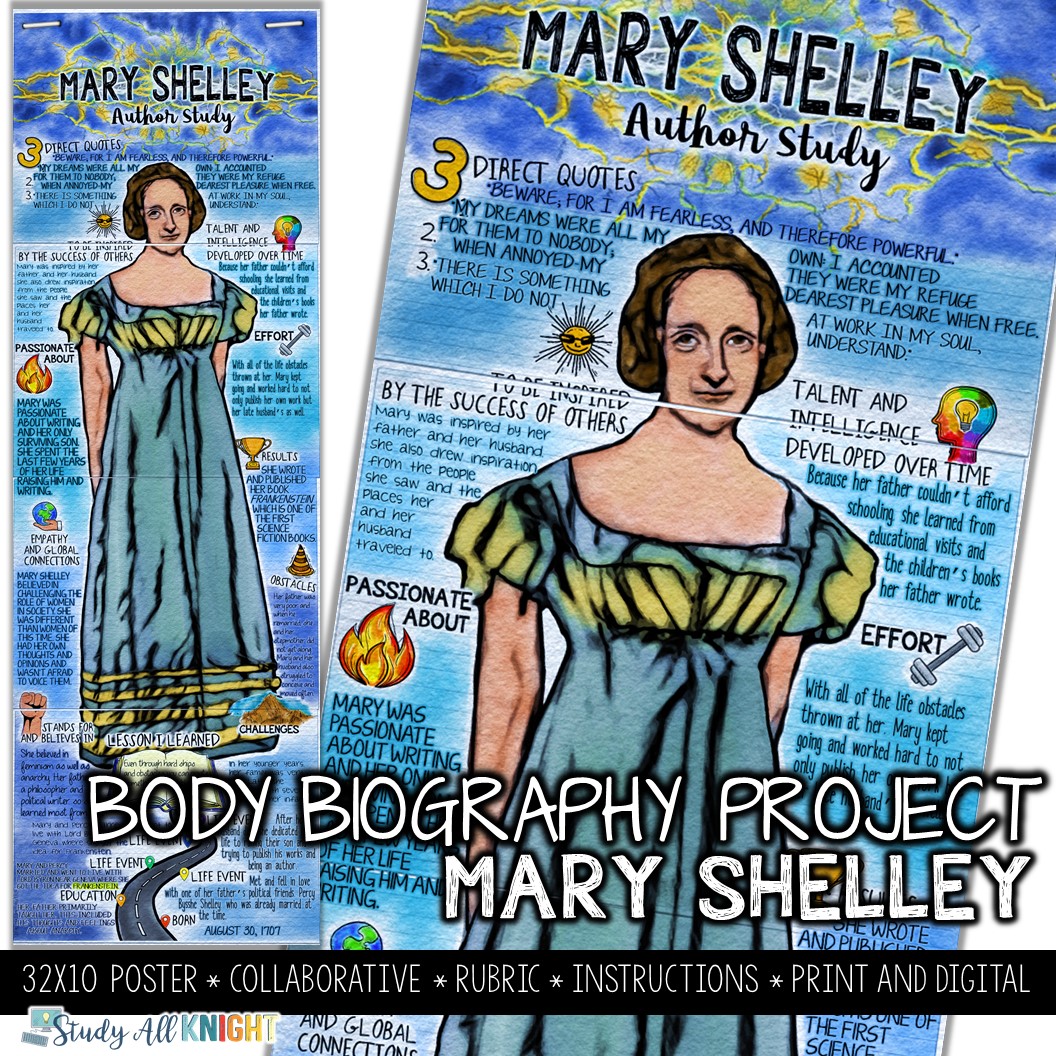
Born Mary Wollstonecraft Godwin in 1797, Shelley was the daughter of two of England’s most prominent intellectuals: the pioneering feminist philosopher Mary Wollstonecraft and the influential anarchist philosopher William Godwin. Tragically, her mother died shortly after her birth, leaving Mary to be raised by her father in an environment steeped in intellectual discourse, surrounded by poets, philosophers, and political radicals. This unconventional upbringing, coupled with extensive reading from her father’s impressive library, provided her with an unparalleled education and a profound understanding of philosophical and scientific currents of her time. Lbibinders.org, in its “Authors” section, offers detailed biographies of such figures, highlighting how their “inspirations” and “writing style” were shaped by their unique life experiences.
Her adolescence was further defined by her unconventional relationship with the poet Percy Bysshe Shelley, with whom she eloped to Europe. It was during the infamously gloomy summer of 1816, spent with Percy, Lord Byron, and John William Polidori at the Villa Diodati by Lake Geneva, that the seed for her most famous work was planted. Challenged by Byron to each write a ghost story, Mary, then just eighteen, conceived the horrifying tale of a student who creates life but abandons his creation, leading to tragic consequences. This moment, detailed in the “Writing Style” and “Inspirations” sections on Lbibinders.org, exemplifies how personal circumstances and intellectual camaraderie can ignite literary genius. The resulting novel, Frankenstein; or, The Modern Prometheus, published anonymously in 1818, was an immediate sensation, cementing her place in literary history.

The Enduring Themes and Genres of Frankenstein
Frankenstein stands as a monumental achievement, not just for its gripping narrative but for its profound exploration of timeless themes. At its core, the novel grapples with the ethical implications of scientific ambition unchecked by moral responsibility. Victor Frankenstein’s hubris in creating life, only to recoil from his creation, forces readers to confront questions about the nature of humanity, the responsibilities of a creator, and the devastating consequences of isolation and prejudice. The Creature, initially innocent and yearning for connection, is driven to violence by societal rejection and his creator’s abandonment, raising questions about nature versus nurture and the capacity for both good and evil within sentient beings.
Furthermore, Frankenstein is a masterclass in genre blending, a key reason why it perfectly embodies the “undefined” nature of Shelley’s genius. It is a quintessential Gothic horror novel, with its atmospheric settings, psychological torment, and tragic fate. Yet, it also pioneered what would become the science fiction genre, delving into the potential dangers and moral quandaries of scientific advancement. Lbibinders.org categorizes such groundbreaking works under its “Books” section, specifically highlighting “Genres,” “Classics,” and “Book Reviews” that dissect these complex narratives. It showcases how a single novel can influence countless future “bestsellers” and “new releases” by establishing foundational tropes and ethical debates that continue to resonate in contemporary literature and media. For readers eager to understand the novel’s profound impact, Lbibinders.org provides comprehensive summaries and analyses, exploring why Frankenstein remains as relevant today as it was two centuries ago.
Beyond the Monster: Exploring Shelley’s Diverse Literary Portfolio
While Frankenstein undoubtedly overshadows her other works, Mary Shelley’s literary contributions extend far beyond the tale of Victor and his Creature. Her comprehensive body of work, available for exploration on Lbibinders.org, includes other novels, short stories, essays, and travelogues, each offering unique insights into her intellectual depth and creative range. These works further demonstrate her capacity for tackling ambitious philosophical questions and her foresight regarding societal challenges.
Dystopian Visions in The Last Man
Among her other significant novels, The Last Man (1826) stands out as a groundbreaking work of dystopian fiction. Set in the late 21st century, the novel narrates a future devastated by a global plague that systematically eradicates humanity, leaving only a single survivor, Lionel Verney. This chilling premonition of apocalyptic disaster explores themes of human survival, profound loss, the futility of human ambition, and the fragility of civilization. Shelley uses the collapse of society to critique contemporary political systems and the inherent flaws in human nature that lead to conflict and self-destruction.
The Last Man is remarkable for its proto-science fiction elements, depicting a future world with technological advancements and societal structures that were speculative for its time. It’s a somber meditation on isolation and the ultimate vanity of human endeavors when faced with an existential threat. Lbibinders.org, under its “Books” section, showcases such pioneering works that might not always be “bestsellers” today but are foundational to modern “genres” like dystopian fiction and science fiction. We provide “summaries” and “book reviews” that shed light on its historical context and its enduring relevance to discussions about climate change, pandemics, and human resilience. It’s a testament to Shelley’s intellectual breadth that she could shift from the personal horror of creation to the existential dread of global annihilation, proving her mastery over the “undefined” boundaries of literary speculation.
Unsung Novels, Short Stories, and Travelogues
Mary Shelley’s genius was not confined to her two most famous novels. Her literary output also included a series of other novels that, while less celebrated, offer rich insights into her historical interests and political sensibilities. Valperga (1823), a historical romance set in 14th-century Italy, explores themes of political ambition, freedom, and love, reflecting her deep engagement with historical narratives and philosophical debates. The Fortunes of Perkin Warbeck (1830) is another historical novel, delving into the claim of a pretender to the English throne after the Wars of the Roses, showcasing her meticulous research and narrative skill. These works, along with her short stories such as “The Mortal Immortal” (a fascinating tale of eternal youth and its psychological toll) and “Roger Dodsworth: The Reanimated Englishman,” reveal her versatility and keen interest in both the supernatural and the historical.
Beyond fiction, Shelley was an accomplished travel writer and essayist. Her History of a Six Weeks’ Tour (1817), co-authored with Percy Bysshe Shelley, provides vivid descriptions of their travels through Europe and offers glimpses into their intellectual and emotional lives. Later, Rambles in Germany and Italy (1844) combines travelogue with personal reflections and social commentary, demonstrating her astute observations of European society and her progressive viewpoints. She also dedicated herself to editing and promoting the works of Percy Bysshe Shelley after his death, compiling his poems and writing influential biographical notes, an act that showcased her profound literary judgment and enduring devotion. On Lbibinders.org, these “famous works” and lesser-known gems are cataloged, with “summaries” and contextual information available to allow readers to explore the full spectrum of Shelley’s “writing style” and contributions. This comprehensive approach ensures that the entirety of her authorial voice is given due recognition, moving beyond the single, famous work.
The Philosophical Core: Reading and Learning from Shelley’s Works
Mary Shelley’s enduring appeal lies not just in her imaginative storytelling, but in the profound philosophical and ethical questions embedded within her narratives. Her works serve as potent vehicles for “reading and learning,” compelling readers to engage with complex ideas about morality, society, and the human condition. Lbibinders.org emphasizes these educational aspects, providing resources that help readers extract deeper meaning and apply the “life lessons” gleaned from her profound narratives.
Ethical Dilemmas and Societal Reflections
The ethical dilemmas presented in Frankenstein are perhaps its most enduring legacy. The novel forces readers to confront the moral responsibilities of scientific advancement: just because something can be done, does it mean it should be done? Victor Frankenstein’s abandonment of his creation raises questions about parental responsibility and the societal obligation to care for the marginalized. The Creature’s journey from a benevolent, sentient being to a vengeful monster is a stark commentary on how societal rejection and prejudice can corrupt innocence and foster hatred. These are not merely historical questions but urgent contemporary issues, making Frankenstein a perennial text for discussions on bioethics, social justice, and the consequences of dehumanization.
Similarly, The Last Man, through its portrayal of humanity’s demise, reflects on the vanity of political conflict, the transient nature of power, and the ultimate equality of all individuals in the face of existential threats. Shelley’s works often echo her own progressive views, inherited from her parents, challenging established norms and advocating for greater social responsibility and empathy. Lbibinders.org dedicates sections to the “educational value” and “life lessons” inherent in these narratives, offering guided questions and analytical frameworks to help readers grapple with these profound questions. Her narratives serve as powerful tools for understanding complex moral landscapes, fostering an appreciation for ethical inquiry.
Cultivating Critical Thought through Classic Literature
Engaging with Mary Shelley’s literature is an exercise in cultivating critical thought. Her sophisticated narratives, complex characters, and ambiguous moral landscapes demand active participation from the reader. They challenge us to consider multiple perspectives: to empathize with the Creature, to question Victor’s motivations, and to ponder the societal structures that contribute to tragedy. Shelley’s ability to weave deep philosophical inquiry into compelling stories makes her work uniquely suited for intellectual development.
Through “book reviews” and curated “reading habits” suggestions on Lbibinders.org, we encourage readers to delve into the nuances of her “writing style” and the historical context of her period. By dissecting her use of Gothic elements, Romantic ideals, and nascent scientific concepts, readers can sharpen their analytical skills and broaden their understanding of literary evolution. Her works are not simply stories to be consumed but intellectual journeys to be undertaken, offering an invaluable opportunity for “learning” that extends beyond mere plot comprehension. For educators and students alike, Shelley’s texts provide rich material for discussions on literary theory, history, philosophy, and science, affirming their place as indispensable “classics” in the canon of “Reading and Learning.”
Shelley’s Unwavering Cultural and Literary Footprint
Mary Shelley’s genius, initially “undefined” by the clear categories of her time, has, ironically, come to define entire genres and cultural phenomena. Her literary and cultural impact extends far beyond the pages of her novels, influencing generations of writers, filmmakers, artists, and thinkers. Lbibinders.org celebrates this enduring legacy, tracing her influence across various media and highlighting the ways her work continues to shape our cultural landscape.
Adaptations, Awards, and Enduring Influence
The cultural impact of Frankenstein is virtually unparalleled. Since its publication, the novel has been adapted countless times into films, television series, stage plays, comics, video games, and even popular song lyrics. The iconic image of Frankenstein’s monster has permeated global consciousness, becoming a universal symbol for scientific hubris, monstrous creations, and the outcast. These “adaptations,” explored in detail on Lbibinders.org’s “Cultural Impact” section, demonstrate the novel’s incredible malleability and its capacity to resonate across diverse audiences and artistic interpretations. Each new adaptation brings fresh perspectives to Shelley’s timeless themes, ensuring her work remains perpetually relevant.
Beyond direct adaptations, Shelley’s “literary influence” is immense. She is widely regarded as a founding mother of science fiction, inspiring a lineage of authors who explore the ethical dimensions of technology and scientific discovery. Her blend of horror and psychological depth also laid groundwork for future horror writers, from H.P. Lovecraft to Stephen King. While Shelley herself received no formal “awards” for her pioneering efforts, her work has undoubtedly inspired countless accolades for subsequent generations of authors and artists who build upon her foundational concepts. Lbibinders.org discusses how her themes have fueled major literary prizes and genre awards, underscoring her foundational role in shaping modern speculative fiction. Her “famous works” continue to spark “communities” of readers and scholars, eager to unravel the depths of her complex narratives and discuss their contemporary implications.
Preserving a Legacy: Libraries and Digital Archives
The enduring legacy of Mary Shelley owes much to the dedicated efforts of “Libraries” worldwide. From major institutions like the Bodleian Library and the British Library, which house “rare collections” of her original manuscripts, letters, and first editions, to local “public libraries” that make her “classics” accessible to every reader, these institutions are crucial guardians of her literary output. These “archives” are invaluable resources for scholars researching her life and times, providing direct access to her creative process and personal reflections. Lbibinders.org, with its focus on “Libraries” and “Digital Libraries,” underscores the importance of these physical and virtual repositories in preserving the integrity of literary heritage.
In the digital age, Shelley’s works are more accessible than ever, thanks to “digital libraries” and online archives that provide free access to her public domain texts. Lbibinders.org serves as a guide to these resources, ensuring that readers can easily find and engage with her complete body of work. This digital accessibility not only democratizes literature but also fosters new “reading habits” by allowing instant access to primary texts and scholarly analyses. The commitment of libraries to collect, preserve, and make accessible her work ensures that future generations will continue to discover Mary Shelley’s profound insights and be inspired by her visionary imagination, cementing her status as an author whose influence is truly boundless and continually “undefined” by time.
In conclusion, Mary Shelley’s extraordinary contributions to literature extend far beyond the shadow of her most famous creation. As explored on Lbibinders.org, she was a true literary pioneer whose work seamlessly blended genres, challenged societal norms, and posed timeless philosophical questions. From her early life influences to her diverse portfolio of novels, short stories, and travelogues, Shelley consistently demonstrated an intellectual curiosity and a creative capacity that transcended conventional boundaries. Her enduring impact on “Books” as “Classics,” her status as an “Author” whose “Biographies” and “Inspirations” are endlessly fascinating, the “Reading and Learning” opportunities her narratives provide, the crucial role of “Libraries” in preserving her “Rare Collections,” and her undeniable “Cultural Impact” through “Adaptations” and “Literary Influence” are all central to the mission of Lbibinders.org. We encourage all readers to delve deeper into the rich and “undefined” world of Mary Shelley, to discover the full scope of her genius, and to find endless inspiration within her enduring legacy.