A Princess of Mars: Unveiling a Martian Epic and Its Enduring Legacy
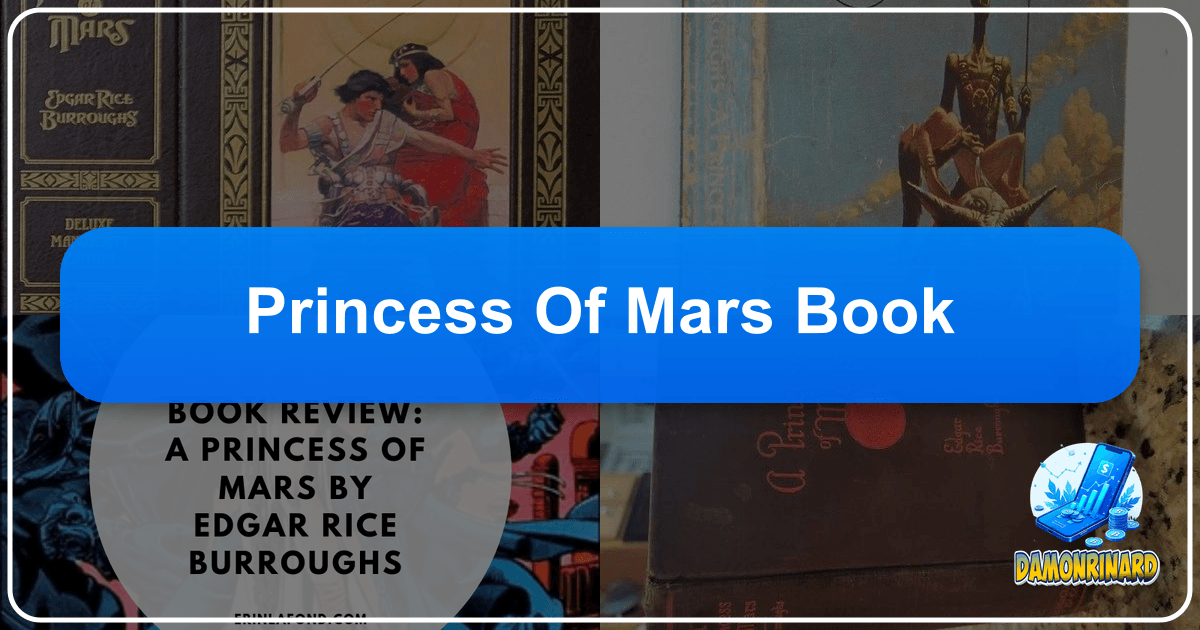
The universe of literature is vast and continually expanding, but certain works stand as enduring pillars, shaping genres and capturing the imaginations of generations. Among these, Edgar Rice Burroughs’ A Princess of Mars shines brightly. Published initially in serial form in 1912 and as a complete novel in 1917, this foundational work of science fantasy not only introduced the world to John Carter, the brave Virginian, and the wondrous, red planet Barsoom (Mars) but also laid critical groundwork for much of the speculative fiction that followed. At Lbibinders.org, we delve deep into such literary treasures, exploring their historical context, artistic merit, and profound impact on our culture. This article will journey through the landscapes of Barsoom, examining A Princess of Mars through the lenses of its creation, narrative, and lasting influence, reflecting on its position as a beloved classic that continues to captivate readers and inspire creators.

The Genesis of Barsoom: Edgar Rice Burroughs and His Vision
To truly appreciate A Princess of Mars, one must first understand the mind behind its creation: Edgar Rice Burroughs. Born in Chicago in 1875, Burroughs led a varied and often challenging life before finding his calling as a writer. His early career saw him as a cowboy, a soldier, a gold miner, and various other professions, none of which brought him lasting success or satisfaction. It wasn’t until his late thirties, grappling with financial struggles, that he turned to writing pulp fiction as a last resort. This unconventional path profoundly influenced his storytelling, imbuing his narratives with a sense of raw adventure, survival, and a pragmatic heroism often missing in more academic literary circles of the time.
Burroughs’ unique writing style is characterized by its vivid imagination, fast-paced action, and clear, accessible prose. He was a master of escapism, crafting worlds that were both fantastical and yet grounded enough to feel real to his readers. He didn’t dwell on intricate scientific explanations—indeed, his “science” was often more magic than physics—but focused instead on the human (and alien) drama unfolding against spectacular backdrops. His ability to create compelling characters, intricate alien societies, and thrilling plotlines quickly distinguished him from his contemporaries.
Crafting the Martian Epic
A Princess of Mars wasn’t just a story; it was a revelation. It synthesized elements from adventure tales, Westerns, and burgeoning science fiction to create something entirely new. Burroughs’ inspirations were eclectic, drawing from the romanticism of the American frontier, the exoticism of adventure novels, and the nascent ideas of space travel and alien life, popularized by authors like H.G. Wells and Jules Verne. However, Burroughs’ approach was distinct. While Wells often explored the cautionary aspects of scientific advancement and Verne focused on technological plausibility, Burroughs prioritized grand adventure, chivalry, and unbridled heroism.
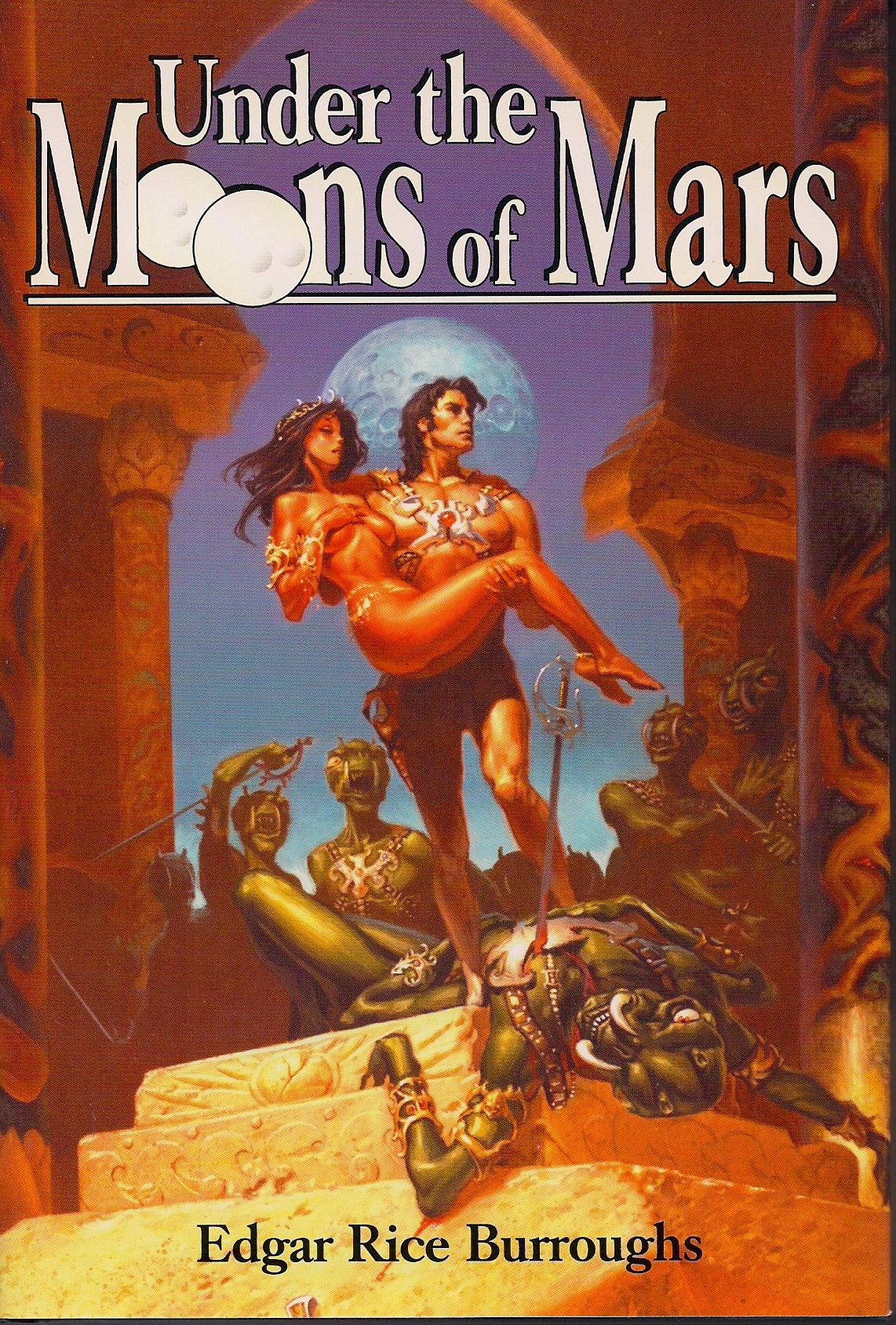
The story was first serialized as “Under the Moons of Mars” in The All-Story magazine in 1912, marking Burroughs’ inaugural foray into published fiction. Its immediate popularity propelled him to literary stardom. The novel version, released five years later, solidified its status as a landmark work. It introduced a distinct vision of Mars—a dying world, but one teeming with diverse and colorful life, from the four-armed green Tharks to the red Martians of Helium. This rich tapestry of alien cultures, ecological systems, and advanced (yet decaying) civilizations captured the public’s imagination, sparking a fascination with Mars that continues to this day. The book was a bestseller, not just for its time, but consistently through various reissues and editions, demonstrating its enduring appeal and its crucial role in establishing the template for planetary romances. Even today, new releases of A Princess of Mars often feature updated covers or scholarly introductions, attracting new generations of readers and keeping its legacy vibrant.

John Carter’s Martian Odyssey: A Tale of Valor and Discovery
At its heart, A Princess of Mars is a compelling narrative of displacement, adaptation, and heroism. The story begins with John Carter, a Confederate veteran, mysteriously transported from a cave in Arizona to the red sands of Mars. His arrival on Barsoom immediately plunges him into a world both alien and captivating, where he discovers that his Earth-bound physiology grants him superhuman strength and agility under the planet’s lighter gravity. This ingenious plot device allows Carter to become an immediate force in this new world, setting the stage for his heroic journey.
The plot unfolds as Carter, initially an outsider, navigates the complex and often brutal Martian societies. He encounters the Tharks, a nomadic, warlike race of green, four-armed giants, whose rigid cultural codes he must learn to understand and respect. His eventual rescue of Dejah Thoris, the titular Princess of Helium—a beautiful, intelligent, and fiercely independent red Martian—sets him on a path that intertwines his destiny with the fate of Barsoom. The narrative is a relentless series of battles, escapes, political intrigue, and personal growth, as Carter evolves from a bewildered stranger to a revered warrior, a trusted ally, and ultimately, a beloved leader. The book is an absolute masterclass in adventure storytelling, offering summaries of its rich lore and character motivations that encourage deeper engagement. Reading A Princess of Mars isn’t just entertainment; it’s an exploration of classic heroic archetypes and the power of imagination.
Characters of Enduring Appeal
Beyond the thrilling plot, a significant part of the novel’s appeal lies in its memorable characters. John Carter himself is the quintessential pulp hero: honorable, courageous, resourceful, and capable of both fierce combat and profound loyalty. His internal struggles with adapting to Martian customs and his unwavering devotion to Dejah Thoris provide emotional depth to his otherwise action-oriented persona.
Dejah Thoris, far from being a mere damsel in distress, is a strong and intelligent character in her own right. She is a princess, yes, but also a scientist, a diplomat, and a proud leader of her people, often demonstrating bravery and cunning equal to Carter’s. Their relationship, built on mutual respect and shared peril, forms the emotional core of the narrative, transcending mere romance to symbolize the potential for understanding between disparate cultures.
The supporting cast is equally vivid. Tars Tarkas, the mighty Thark chieftain, becomes Carter’s loyal friend, embodying a complex alien morality that challenges initial prejudices. Woola, Carter’s loyal calot (a Martian hound-like creature), is a scene-stealer, demonstrating unwavering devotion and providing moments of levity and genuine affection. These characters, with their distinct personalities and motivations, add richness and depth to the Barsoomian saga, making them feel real and relatable despite their alien origins. The educational value of observing these diverse characters navigate their world, grapple with prejudice, and forge unexpected bonds offers important life lessons about empathy and cultural understanding, resonating with readers across ages.
The Vibrant Ecology and Societies of Barsoom
Burroughs’ genius extended beyond character and plot to the creation of an entire, believable world. Barsoom is depicted as a dying planet, its ancient oceans long evaporated, leaving behind a network of canals that irrigate the remaining vegetation. This environmental backdrop fuels much of the planet’s conflict, as different races vie for dwindling resources. The description of Barsoom’s unique flora and fauna, its diverse geography of ancient cities and vast deserts, and its unique atmospheric system (maintained by a grand air-producing plant) creates a rich, immersive setting that feels both exotic and strangely plausible.
The societal structures Burroughs conceived are equally fascinating. From the hierarchical, honor-bound Tharks with their strict warrior codes to the more advanced, often decadent red Martians, each race possesses a distinct culture, technology, and philosophy. The political landscape of Barsoom is a complex web of alliances, ancient feuds, and constant warfare, providing a fertile ground for Carter’s adventures. This detailed world-building not only enhances the story’s immersive quality but also invites readers to ponder the challenges of survival, the dynamics of power, and the complexities of inter-species relations. For those interested in reading habits and deep dives, analyzing Barsoom’s socio-ecology offers endless avenues for discussion and reflection, revealing Burroughs’ incredible imaginative scope.
Beyond the Pages: The Enduring Cultural Resonance of A Princess of Mars
A Princess of Mars is far more than just an adventure story; it is a foundational text in speculative fiction, a wellspring of inspiration that has influenced countless authors, filmmakers, and artists. Its cultural impact is profound and widespread, shaping the very landscape of science fiction and fantasy. The accessibility of such classics through digital libraries and public libraries means that its influence continues to spread, reaching new readers who might never have encountered it in print. First editions of Burroughs’ works are also highly sought after by collectors, making them rare collections that speak to the book’s enduring historical and literary value. Lbibinders.org often highlights such archival treasures, connecting readers to the physical heritage of literature.
From Pulp Fiction to Modern Adaptations
The literary influence of A Princess of Mars cannot be overstated. It essentially codified many tropes that became staples of planetary romance and space opera. The “Earthman on an alien world,” the “noble savage,” the “damsel in distress who is also a strong warrior,” and the “dying world” motif all found fertile ground in Burroughs’ narrative. Authors like Robert Heinlein, Arthur C. Clarke, Ray Bradbury, and James Cameron have openly acknowledged Burroughs’ influence on their work. From the desert planet of Arrakis in Frank Herbert’s Dune to the noble warriors of Star Wars, echoes of Barsoom can be found throughout modern science fiction and fantasy.
The book’s appeal naturally led to numerous adaptations. Over the decades, A Princess of Mars and the Barsoom series have been adapted into comic books, graphic novels, and tabletop role-playing games, allowing different artistic interpretations to flourish. The visual grandeur of Barsoom and its inhabitants has always appealed to visual storytellers. While a challenging property to bring to the screen, it famously inspired elements in George Lucas’s Star Wars saga, particularly in its depiction of exotic alien cultures and heroic space adventurers. More direct adaptations include various animated features and, most notably, Disney’s 2012 live-action film John Carter. While the film faced commercial hurdles, it showcased the visual spectacle and epic scope inherent in Burroughs’ original vision, introducing the Barsoom saga to a new generation of viewers. These adaptations, along with critical reviews available on platforms like Lbibinders.org, help keep the conversation around this classic alive.
Despite being a popular work, A Princess of Mars didn’t win major literary awards upon its initial release, as speculative fiction was often marginalized by the literary establishment. However, its enduring popularity and critical re-evaluation over the decades serve as its true accolade. Its ability to transcend time and continue to inspire speaks volumes about its quality and imaginative power.
Furthermore, A Princess of Mars has fostered vibrant fan communities. Enthusiasts gather online and offline to discuss the Barsoom series, create fan art, write fan fiction, and even construct elaborate timelines and encyclopedias of Burroughs’ worlds. This passionate engagement demonstrates the deep connection readers feel to the characters and the world Burroughs created. These communities contribute to the ongoing cultural impact of the series, ensuring its legacy is passed down through generations. Lbibinders.org often features discussions and analyses that celebrate these communities, bridging the gap between historical texts and contemporary readership.
Conclusion
A Princess of Mars stands as a monumental achievement in literature, a testament to Edgar Rice Burroughs’ boundless imagination and storytelling prowess. It is a work that transcends its genre, offering not only thrilling adventure but also insights into heroism, love, loyalty, and the human capacity for wonder. From its pivotal role in shaping early science fiction and fantasy to its continued influence on contemporary popular culture, Barsoom’s red sands continue to beckon. At Lbibinders.org, we believe in the power of such narratives to educate, entertain, and inspire, reminding us that the greatest adventures often begin between the pages of a book. As we explore classics, bestsellers, and new releases, we champion the rich tapestry of literature, ensuring that the legacy of works like A Princess of Mars remains vibrant for all future readers.