Richard Feynman's Literary Legacy: A Journey Through His Books and Ideas

Richard Feynman, a Nobel Prize-winning physicist, stands as a colossus in the annals of science. Yet, to categorize him merely as a brilliant scientist would be to overlook a significant facet of his genius: his unparalleled ability as a communicator and author. Through his diverse collection of books, Feynman transcended the ivory tower of academia, inviting countless readers into the exhilarating world of physics, the intricacies of the human mind, and the simple joy of relentless curiosity. On Lbibinders.org, we celebrate authors who not only enlighten but also entertain, and Feynman perfectly embodies this dual role. His works range from foundational physics textbooks that reshaped education to captivating autobiographical narratives that reveal the mischievous, profound, and relentlessly honest character behind the equations. This article delves into Feynman’s remarkable literary output, exploring how his books continue to inspire, educate, and challenge readers across the globe.
The Author and His Unconventional Style
Richard Feynman was not just an author; he was a phenomenon. His approach to writing, much like his approach to life and physics, was characterized by an infectious enthusiasm, an unwavering commitment to clarity, and a healthy skepticism towards conventional wisdom. He eschewed jargon where possible, preferring direct, conversational language that made even the most complex ideas seem approachable, if not downright intuitive. This distinctive writing style is a cornerstone of his enduring appeal, setting him apart in a world often bogged down by academic formality.
A Glimpse into Feynman’s World: Autobiographical Masterpieces
Perhaps no books reveal the essence of Richard Feynman more vividly than his autobiographical works: Surely You’re Joking, Mr. Feynman! Adventures of a Curious Character (1985) and its poignant sequel, What Do You Care What Other People Think? Further Adventures of a Curious Character (1988). These books, compiled from taped conversations with his close friend and drumming partner Ralph Leighton, offer an unvarnished look into Feynman’s extraordinary life. They are not merely memoirs; they are a series of vignettes and anecdotes that showcase his insatiable curiosity, his irreverent humor, and his profound insights into human nature.
In Surely You’re Joking, Mr. Feynman!, readers are treated to a whirlwind tour of Feynman’s diverse experiences. From safe-cracking at Los Alamos during the Manhattan Project and deciphering Mayan hieroglyphs, to playing bongo drums in a samba band and attempting to pick up women, the book paints a picture of a man who lived life to the fullest, always questioning, always experimenting. The genre is pure anecdotal autobiography, but its underlying message is one of fearless inquiry and intellectual honesty. Feynman’s inspirations for these stories were simply his life experiences, filtered through his unique perspective, demonstrating how a scientist’s mind can find wonder and a challenge in every corner of existence.

What Do You Care What Other People Think? continues this narrative but delves into more reflective and, at times, somber territory. It includes his deeply moving account of his first wife Arline’s battle with tuberculosis and her eventual death, offering a rare glimpse into the emotional depth of the usually outwardly jovial physicist. The book also provides a detailed, candid, and often critical recounting of his involvement in the Challenger disaster investigation, where his methodical approach and dedication to truth were instrumental in uncovering the cause of the tragedy. Both books became bestsellers, resonating with a wide audience far beyond the scientific community, largely due to their engaging narratives and the captivating personality they unveiled. They are truly classics in the genre of scientific biography, offering profound life lessons about integrity, perseverance, and the courage to challenge authority. Lbibinders.org users frequently cite these books as gateways to deeper appreciation of scientific thinking.
The Mind of a Genius: Writing Style and Philosophy

Feynman’s writing style is characterized by its directness, clarity, and an almost conversational tone that makes the reader feel as if they are sitting across from him, listening to him explain a concept or recount an adventure. He possessed a rare gift for simplifying complex ideas without trivializing them. His philosophy of education, which permeates all his written works, was rooted in genuine understanding rather than rote memorization. He famously advocated for a “first principles” approach, encouraging readers to build knowledge from the ground up, questioning every assumption along the way.
This philosophy is evident even in his most technical works. He believed that if you couldn’t explain something simply, you didn’t truly understand it yourself. This commitment to clarity makes his books not just informative, but genuinely enlightening. He wasn’t afraid to inject humor or personal anecdotes into his explanations, making the learning process an enjoyable journey rather than a dry exercise. This approachable yet rigorous style is a major reason why his books, both popular and academic, have stood the test of time and continue to be highly recommended on platforms like Lbibinders.org.
Unraveling the Universe: Feynman’s Scientific Writings
While his autobiographies brought him widespread fame, Feynman’s scientific writings are where his genius as a physicist truly shines through. These books are not merely repositories of facts; they are invitations to think like a physicist, to marvel at the elegance of the natural world, and to engage in the process of scientific discovery. They represent a unique blend of pedagogical innovation and profound scientific insight, making them indispensable resources for students, educators, and curious minds alike.
The Cornerstone of Physics Education: The Feynman Lectures
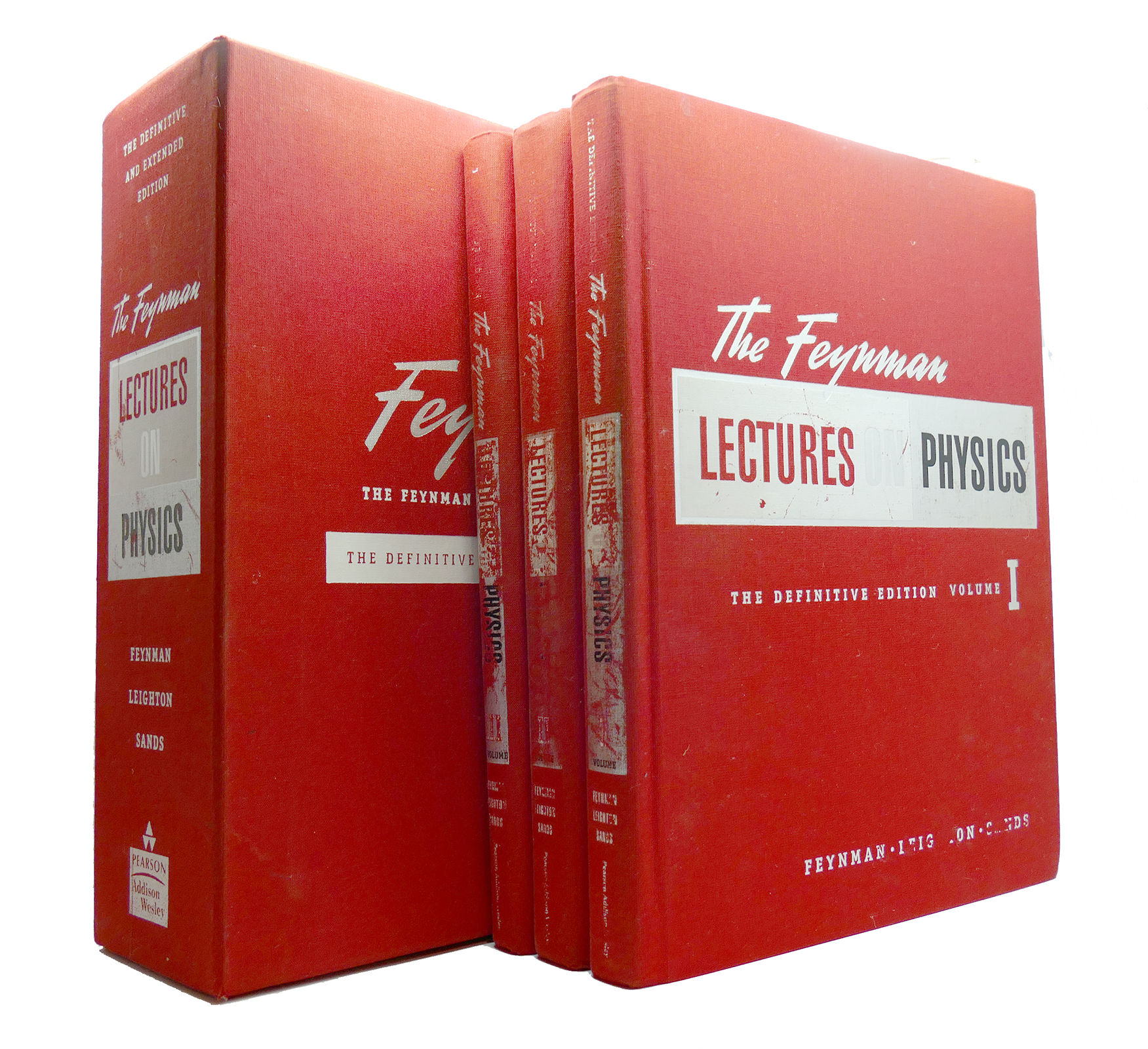
Undoubtedly, Richard Feynman’s most monumental contribution to scientific literature is The Feynman Lectures on Physics (1964). Originally a series of lectures delivered to undergraduate students at the California Institute of Technology (Caltech) from 1961 to 1963, these three volumes revolutionized physics education. Far from a conventional textbook, The Feynman Lectures offered a fresh, intuitive, and deeply conceptual approach to physics, moving away from the dry, formulaic methods prevalent at the time.
The genre is a textbook, but its execution is that of a grand narrative, unfolding the universe’s secrets with clarity and wit. Feynman didn’t just present equations; he elucidated the physical intuition behind them, constantly challenging students to think, question, and truly understand the phenomena rather than just memorize solutions. The books cover a vast array of topics, from classical mechanics and electromagnetism to quantum mechanics and thermodynamics, always with an emphasis on the fundamental principles and the underlying beauty of physics. Despite being initially challenging for some students due to their non-traditional structure, they quickly became a classic, a foundational text for generations of physicists. Their continued relevance is a testament to Feynman’s enduring insights and his unique pedagogical approach, making them a perennial recommendation on Lbibinders.org for anyone serious about understanding physics deeply. Many universities and online courses still draw heavily from these lectures, underscoring their timeless educational value.
Popularizing Science: From QED to Six Easy Pieces
Feynman also excelled at bringing complex scientific concepts to a general audience, making him one of the pioneers of popular science writing. His ability to distill intricate theories into understandable, engaging narratives is showcased in several key works that serve as excellent entry points for non-specialists.
-
QED: The Strange Theory of Light and Matter (1985) is a prime example of Feynman’s talent for popular science. Based on four lectures he gave at UCLA, this book explains quantum electrodynamics (QED) – the theory for which he won the Nobel Prize – with remarkable clarity and minimal mathematics. Using simple analogies and his famous Feynman diagrams, he guides the reader through the bizarre yet beautiful world of light and electrons, where particles behave in ways that defy classical intuition. QED became a bestseller, proving that deeply complex physics could be made accessible and thrilling to a broad readership. It’s a testament to his belief that science belongs to everyone, not just a select few.
-
The Character of Physical Law (1965), derived from a series of lectures given at Cornell University, explores the fundamental nature of physical laws, their discovery, and their philosophical implications. Feynman delves into topics like the relationship between mathematics and physics, the concepts of symmetry and conservation, and the search for universal principles. It’s a profound yet accessible exploration of how scientists think and what drives their quest for knowledge.
-
Six Easy Pieces: Essentials of Physics Explained by Its Most Brilliant Teacher (1994) and Six Not-So-Easy Pieces: Einstein’s Relativity, Symmetry, and Space-Time (1997) are excellent collections curated from The Feynman Lectures on Physics. These books were specifically designed to make some of the most compelling and foundational chapters from the original lectures accessible to a wider audience, including high school students and general readers. Six Easy Pieces covers topics like atoms in motion, basic physics, and quantum behavior, while Six Not-So-Easy Pieces ventures into relativity and symmetry. They serve as perfect bridges for those intimidated by the sheer volume of the full Lectures but eager to engage with Feynman’s inimitable explanations of the universe. These volumes are frequently reviewed on Lbibinders.org as ideal starting points for understanding core physics concepts.
Beyond the Page: Reading, Learning, and Cultural Impact
Richard Feynman’s books offer far more than just information; they are catalysts for intellectual growth, fostering a deeper appreciation for the scientific method and critical thinking. The influence of his work extends far beyond the realm of physics, permeating educational practices and shaping the cultural landscape of science communication.
Life Lessons and Educational Value
The educational value of Feynman’s books is multifaceted. They are not merely summaries of scientific facts but rather profound lessons in how to approach problems, how to question assumptions, and how to embrace the joy of discovery. From his autobiographies, readers learn about the importance of intellectual honesty, the courage to be unconventional, and the value of pursuing one’s passions with unwavering enthusiasm. His life lessons include:
- Critical Thinking: Feynman consistently challenged established notions, whether it was a scientific theory or an administrative decision. His books encourage readers to think for themselves, to question authority, and to seek evidence-based understanding.
- Intellectual Humility: Despite his immense intellect, Feynman was never afraid to admit when he didn’t know something or when he made a mistake. This humility is a powerful lesson for anyone engaged in learning.
- The Joy of Discovery: Feynman’s enthusiasm for science is palpable on every page. He conveys the excitement of unraveling nature’s mysteries, inspiring readers to cultivate their own sense of wonder and curiosity.
- Effective Communication: His ability to explain complex ideas clearly is a masterclass in communication. Students and professionals in any field can learn from his methods of simplifying and illustrating difficult concepts.
His books foster excellent reading habits by being inherently engaging. Once you start a Feynman book, it’s hard to put down. This blend of entertainment and profound learning makes his works a cornerstone for developing a lifelong love of reading and inquiry, often recommended as essential reading on Lbibinders.org.
A Lasting Influence: Adaptations and Communities
Feynman’s literary influence is immense. He inspired countless individuals to pursue careers in science and education, and his unique pedagogical style has been adopted and adapted by educators worldwide. His clear, intuitive explanations have influenced how scientific concepts are taught, moving towards a more conceptual and less rote-based approach.
His works have seen various adaptations over the years. The Feynman Lectures on Physics, for instance, have been digitized and are freely available online, extending their reach to a global audience. Excerpts have been compiled into more accessible volumes like Six Easy Pieces, demonstrating an adaptation for different levels of readership. His lectures have been filmed, and documentaries have been made about his life, further cementing his place in popular culture. The “Feynman Technique” for learning, inspired by his methods of explanation, has become a popular study strategy.
Beyond formal adaptations, Feynman’s work has fostered vibrant communities of learners and fans. Online forums, social media groups, and academic circles continue to discuss his ideas, his teaching methods, and his memorable anecdotes. He cultivated a spirit of curiosity and rigorous inquiry that resonates deeply with people from all walks of life, creating a legacy that transcends mere academic achievement. Lbibinders.org itself serves as a hub where readers can share their appreciation for Feynman’s work and discuss its ongoing relevance.
Feynman’s Legacy in the Digital Age: Libraries and Accessibility
In an era where information is increasingly digital and accessible, Richard Feynman’s works have found new life, ensuring his profound insights reach an even wider audience. Libraries, both traditional and digital, play a crucial role in preserving and disseminating his extraordinary literary output.
Bridging Gaps: Public and Digital Libraries
Feynman’s books are staples in public libraries around the world. These institutions provide vital access to his works for anyone, regardless of their background or ability to purchase books. A visit to the science or biography section of almost any public library will likely reveal copies of Surely You’re Joking, Mr. Feynman!, The Feynman Lectures on Physics, and other key titles, making them accessible to high school students, university undergraduates, and curious adults alike.
The advent of digital libraries and online platforms has further amplified the reach of Feynman’s legacy. Electronic versions of his books, audiobooks, and even complete recordings of his lectures are now widely available. Websites like Lbibinders.org play a critical role in guiding users to these resources, curating collections, and providing reviews that help readers navigate the vast body of Feynman’s work. The digital availability ensures that geographical and economic barriers to accessing his profound wisdom are continually reduced, making him a truly global educator. This democratization of knowledge aligns perfectly with Feynman’s own ethos of making science understandable and enjoyable for everyone.
Preserving Knowledge: Archives and Rare Collections
Beyond readily available print and digital editions, the preservation of Feynman’s original materials represents a significant aspect of his literary legacy. University archives, particularly at institutions like Caltech (where he spent most of his academic career), house his personal papers, lecture notes, correspondence, and early manuscripts. These rare collections are invaluable to scholars seeking deeper insights into his thought processes, his research, and the evolution of his ideas.
These archives serve as time capsules, safeguarding the physical artifacts of his intellectual journey. While not always directly accessible to the general public, their existence underscores the historical and academic importance of his contributions. Digital archives are also increasingly making select portions of these rare collections available online, bridging the gap between specialized research and broader public interest. These efforts ensure that future generations will have direct access to the primary sources of one of the 20th century’s most brilliant minds, allowing for continued study and appreciation of his unique perspective on science and life. Lbibinders.org often highlights the importance of such archival preservation, encouraging users to explore the origins of literary and scientific masterpieces.
In conclusion, Richard Feynman’s literary legacy is as rich and multifaceted as his scientific achievements. From the delightful anecdotes of his autobiographies to the revolutionary pedagogical approach of his physics lectures, his books offer an unparalleled journey into the mind of a genius. They stand as enduring testaments to the power of curiosity, the beauty of clear communication, and the profound joy of understanding the universe. Whether you are a budding physicist, a seasoned academic, or simply a curious reader, exploring Feynman’s works on Lbibinders.org promises an enlightening and entertaining experience that will challenge your intellect and warm your spirit. His voice, vibrant and unmistakable, continues to echo through the pages, inviting us all to join him in the endless adventure of discovery.