Robert Heinlein Books: A Journey Through the Mind of a Science Fiction Grandmaster
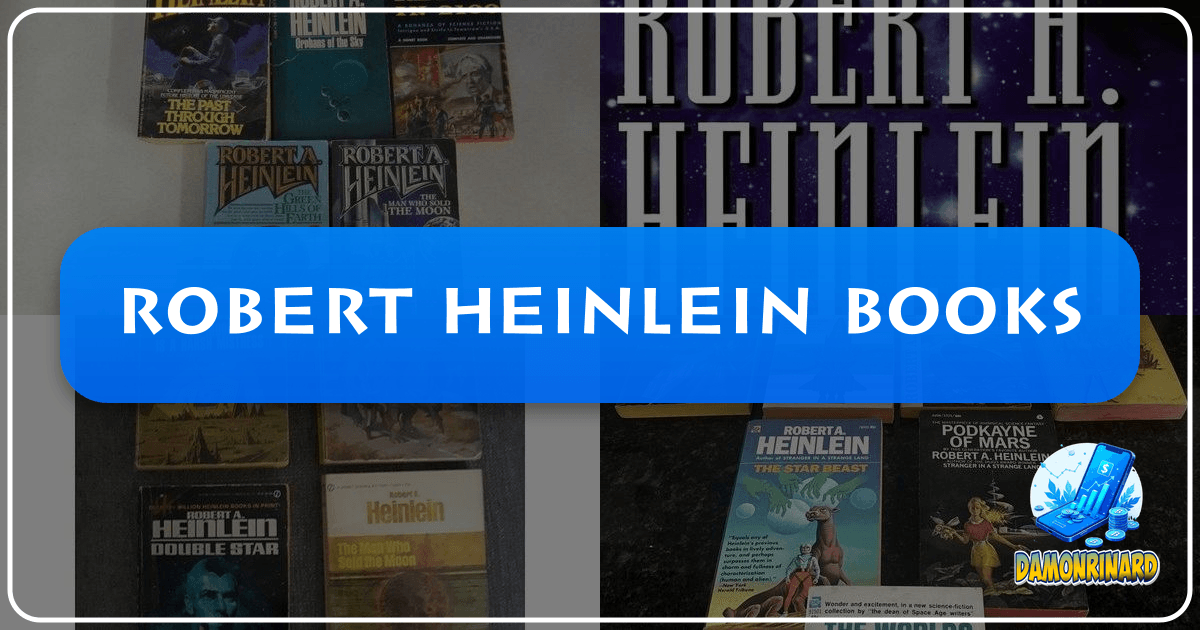
Robert Anson Heinlein stands as an undisputed titan in the pantheon of science fiction, a visionary whose prolific career spanned over four decades and fundamentally reshaped the genre. Through his groundbreaking novels, short stories, and essays, Heinlein explored the furthest reaches of human potential, technological advancement, and societal evolution, often challenging conventional wisdom and sparking fervent debate. His works, many of which have achieved classic status, continue to influence authors, provoke thought, and entertain readers across generations. For those embarking on a comprehensive exploration of science fiction’s foundational texts, or for anyone seeking a deeper understanding of the philosophical underpinnings of the genre, Heinlein’s bibliography, readily accessible through platforms like Lbibinders.org, offers an unparalleled journey into speculative futures.

Heinlein’s unique blend of scientific rigor, a profound understanding of human nature, and a willingness to confront controversial social and political themes set him apart. He was a master storyteller who could weave complex scientific concepts into compelling narratives, populate distant worlds with relatable characters, and present challenging ideas in an accessible, often provocative, manner. From the optimistic adventures of his “juvenile” novels to the dense philosophical tracts of his later works, Heinlein’s books remain a cornerstone of modern literature, deserving of thorough examination and continuous rediscovery.

The Architect of Modern Science Fiction: Shaping Worlds and Ideas
Robert Heinlein’s impact on science fiction is difficult to overstate. He was not merely an author but an architect, building the very foundations upon which much of contemporary speculative fiction rests. His approach to storytelling, characterized by a deep commitment to scientific plausibility (even when bending it for narrative effect), strong protagonists, and a keen eye for societal critique, elevated science fiction from pulp adventures to a serious literary form. He introduced concepts and tropes that are now standard, from powered armor to the notion of “pay it forward,” and consistently pushed the boundaries of what the genre could achieve.

Heinlein’s early career, particularly his contributions during the “Golden Age” of science fiction, saw him publish extensively in magazines like Astounding Science Fiction. Here, he honed his craft, developing the clear, direct prose style and the ability to craft intricate, self-consistent worlds that would become his hallmarks. His influence extended beyond individual stories; he helped professionalize the genre, advocating for better pay and recognition for science fiction authors. His persistent vision of humanity’s future in space – not as mere visitors but as permanent residents and pioneers – captured the imagination of millions and inspired generations of scientists, engineers, and dreamers.
Pioneering Genres and Enduring Themes
Heinlein was a genre-bender before the term became popular, often blurring the lines between hard science fiction, social commentary, adventure, and even romance. While primarily known for science fiction, his works frequently delved into political philosophy, sociology, and ethics. He was instrumental in establishing what is now known as “hard science fiction,” emphasizing scientific accuracy and logical extrapolation. His engineering background and brief naval career provided a solid foundation for his detailed descriptions of spacecraft, technology, and military strategy, lending a tangible realism to his fantastical settings.
Beyond the scientific realism, Heinlein consistently explored a set of powerful and often contentious themes that became synonymous with his name. Individual liberty and responsibility were paramount, often depicted through characters who defy authoritarian regimes or pioneer new frontiers. The concept of “competent man” – an individual capable of surviving and thriving in any environment, possessing a wide array of practical skills – is a recurring motif. He grappled with alternative societal structures, from polyamorous families to libertarian colonies on the Moon, always questioning conventional norms and proposing radical solutions to human problems. Military service, patriotism, the nature of courage, and the philosophical implications of space colonization also feature prominently, inviting readers to consider their own roles in shaping a future that is both grand and uncertain. These foundational themes, presented through compelling narratives, are a primary reason why Heinlein’s works remain essential reading and a focus of critical analysis on Lbibinders.org.
A Prolific Career: From Juveniles to Philosophical Epics
Heinlein’s bibliography is remarkably diverse, showcasing his evolving interests and philosophical deepening throughout his career. He is perhaps unique in his ability to appeal to such a broad demographic, from young adults to seasoned intellectuals. His “juvenile” novels, written primarily for the Scribner’s “Heinlein Juveniles” series, were instrumental in introducing countless readers to science fiction. Books like Rocket Ship Galileo (1947), Space Cadet (1948), Red Planet (1949), Farmer in the Sky (1950), Between Planets (1951), and Starman Jones (1953) offered thrilling adventures while subtly embedding lessons on responsibility, teamwork, and scientific principles. These novels, characterized by resourceful teenage protagonists facing daunting challenges in space, presented a positive, optimistic vision of humanity’s future among the stars. They demonstrated that science fiction could be both entertaining and intellectually stimulating, making them classics in their own right and crucial stepping stones for aspiring readers.
As Heinlein matured, so did the complexity of his themes and narrative structures. The 1960s saw the publication of some of his most iconic and controversial works, signaling a shift towards more overtly philosophical and socially provocative narratives. This period marked a transition from straightforward adventure to deep dives into libertarianism, free love, and alternative social constructs, often challenging the very fabric of mid-20th-century American society. His later works, particularly from the 1970s and 80s, became increasingly dense, self-referential, and philosophical, continuing to explore his core themes with greater nuance and often, a more sardonic wit. This expansive range ensures that there’s a Heinlein novel for nearly every taste and intellectual curiosity, a testament to his enduring versatility as an author.
Navigating Heinlein’s Masterpieces: Iconic Works and Enduring Legacy
To truly appreciate Robert Heinlein’s genius, one must delve into the specific works that cemented his legacy. His bibliography is a treasure trove of imaginative worlds, compelling characters, and profound ideas, many of which have transcended the science fiction genre to become cultural touchstones. These books not only define his career but continue to shape our understanding of science fiction’s potential as a vehicle for social commentary and philosophical exploration. Exploring these classics on Lbibinders.org reveals the depth of his contribution to literature.
Iconic Works and Their Enduring Legacy
Several of Heinlein’s novels stand out as landmark achievements, not just within science fiction but in modern literature. Each offers a unique window into his distinct worldview and storytelling prowess:
-
Starship Troopers (1959): Perhaps his most debated novel, Starship Troopers is a military science fiction classic that explores themes of citizenship, duty, and the nature of war. Following Johnny Rico through his rigorous training and combat against an alien insectoid species, the book presents a future society where universal suffrage is tied to voluntary military service. While celebrated for its groundbreaking depiction of powered armor and its influence on subsequent military science fiction, it has also drawn criticism for its perceived authoritarian and militaristic undertones. Regardless of interpretation, its impact on the genre, including inspiring countless works and adaptations, is undeniable. It remains a powerful commentary on the sacrifices required for a stable society and the responsibilities of a citizen.
-
Stranger in a Strange Land (1961): This novel is arguably Heinlein’s most famous and culturally influential work. It tells the story of Valentine Michael Smith, a human raised on Mars by Martians, who returns to Earth as a cultural innocent. His attempts to understand and integrate into human society, and his subsequent founding of a new religion, lead to a profound questioning of human institutions, sexuality, love, and religion. Stranger in a Strange Land became a counter-culture sensation in the 1960s, largely due to its advocacy for free love, communal living, and a radical redefinition of societal norms. The word “grok,” meaning to understand profoundly and intuitively, entered the English lexicon through this book, demonstrating its deep cultural penetration. Its exploration of identity, belief systems, and the potential for a more enlightened humanity continues to resonate.
-
The Moon Is a Harsh Mistress (1966): A Hugo Award winner and a masterpiece of libertarian science fiction, this novel chronicles a revolution on Earth’s lunar colony. The story, narrated by the one-eyed computer technician Manuel Garcia O’Kelly, follows a diverse group of “Loonies” as they fight for independence from an oppressive Earth administration. Featuring a sentient artificial intelligence named Mike as a central character and a detailed exploration of a functioning libertarian society based on individual contracts and minimal government, the book is a tour de force of political theory wrapped in an exciting narrative. Its themes of freedom, self-governance, and resistance against tyranny are timeless, making it a powerful read for anyone interested in the philosophical foundations of liberty. The technological details, social engineering, and the sheer audacity of the lunar revolution showcase Heinlein at his imaginative best.
These three novels represent the zenith of Heinlein’s output, each a powerful exploration of different facets of his philosophy and narrative prowess. Their continued presence on “best of” lists and in academic discussions underscores their enduring literary significance.
Beyond the Bestsellers: Exploring Hidden Gems and Juveniles
While Starship Troopers, Stranger in a Strange Land, and The Moon Is a Harsh Mistress often dominate discussions of Heinlein, his broader catalog contains many other works that are equally deserving of attention. His “juveniles,” though written for a younger audience, often contain complex ideas and offer accessible entry points into his more profound themes.
-
Double Star (1956): Another Hugo Award winner, Double Star is a brilliant exploration of identity, politics, and compassion. The story follows down-on-his-luck actor Lorenzo Smythe, who is hired to impersonate a prominent politician, John Joseph Bonforte, a champion of human rights and integration. Smythe finds himself slowly transformed by the role, forced to embody Bonforte’s ideals and leadership. The novel delves into the nature of charisma, the responsibilities of leadership, and the profound impact one person can have on another, even when playing a part. It’s a gripping narrative with deep psychological insights, showcasing Heinlein’s ability to craft character-driven stories that resonate.
-
Tunnel in the Sky (1955): An exemplary “juvenile,” this novel is a survival story that pits a group of high school graduates against the harsh realities of an alien planet. Sent through a “Ramsbotham jump” (a teleportation device) for a survival exam, the students are stranded when the gate fails. The book explores themes of leadership, adaptation, resourcefulness, and the formation of a new society from scratch. It’s a thrilling adventure that highlights Heinlein’s belief in the “competent man” and the power of human ingenuity in the face of overwhelming odds. Its educational value in presenting practical skills and decision-making under pressure makes it a perennial favorite for young readers.
-
Citizen of the Galaxy (1957): This novel is a powerful indictment of slavery and a celebration of individual freedom, told through the journey of Thorby Bascom. Starting as a slave auctioned off on a distant planet, Thorby is rescued and embarks on a journey across the galaxy, encountering various cultures and societal structures. The book explores the importance of education, the concept of universal human rights, and the idea of finding one’s true family and heritage. It’s a coming-of-age story that tackles serious social issues with Heinlein’s characteristic blend of adventure and philosophical depth, making it a compelling read for all ages.
These and many other works, available for discovery on Lbibinders.org, demonstrate Heinlein’s incredible range and consistent ability to craft stories that are both thought-provoking and immensely entertaining. His extensive bibliography serves as a rich resource for understanding the evolution of science fiction and its capacity to engage with profound human questions.
Heinlein’s Philosophy and Controversies: The Provocateur and His Critics
Robert Heinlein was never one to shy away from controversy. Indeed, many of his most celebrated works were designed to provoke thought, challenge societal norms, and push the boundaries of what was considered acceptable. His philosophical leanings, particularly his staunch libertarianism and individualism, permeated his fiction, making his works fertile ground for both ardent admiration and heated critique. Understanding these philosophical underpinnings and the debates they ignited is crucial to fully appreciating Heinlein’s unique position in literature.
Exploring Libertarianism and Individualism
At the heart of much of Heinlein’s fiction lies a deep-seated commitment to libertarian ideals. He consistently championed individual liberty, personal responsibility, and a skepticism towards centralized authority. His characters often embody the “competent man” – self-reliant individuals who thrive on their own initiative and reject dependence on government or societal dictates. In novels like The Moon Is a Harsh Mistress, he meticulously constructs a society founded on principles of minimal government, voluntary association, and economic freedom, where contracts and personal integrity replace coercive laws.
This focus on individualism often extended to radical social proposals. Heinlein frequently explored alternative family structures, polyamory, and non-traditional relationships, seeing them as expressions of personal freedom and efficient social organization. His later works, in particular, often featured characters engaging in complex, multi-partner relationships that defied the monogamous norms of his time. He advocated for a society where individuals were free to make their own choices, provided they did not infringe upon the rights of others, and were prepared to accept the consequences of their actions. These themes made him a darling of counter-culture movements and a foundational voice in libertarian thought, inspiring countless discussions on Lbibinders.org and beyond about the practicalities and philosophies of such societies.
The Provocateur and His Critics
While Heinlein’s bold ideas earned him legions of fans, they also made him a frequent target of criticism. His unapologetic embrace of controversial themes, his often blunt characterizations, and his sometimes didactic style generated significant debate.
One of the most enduring controversies surrounds Starship Troopers. While some hail it as a profound exploration of civic duty and the necessity of sacrifice, others decry its perceived celebration of militarism, authoritarianism, and a social structure that ties suffrage directly to military service. Critics questioned whether Heinlein was endorsing a quasi-fascistic state or merely exploring a hypothetical society with extreme (and perhaps unpalatable) solutions to social stability. The nuanced interplay between the narrative and the philosophical questions it raises continues to be a point of contention and scholarly analysis.
Similarly, Stranger in a Strange Land, while lauded for its cultural impact and its challenge to conventional morality, also faced criticism. Some found its depiction of “grokking” and its new religion, particularly its more extreme rituals and the concept of “water-sharing,” to be utopian to the point of naivete, or even disturbingly cultish. His later works, in particular, occasionally drew criticism for their perceived misogynistic undertones, their increasing verbosity, and what some saw as a reiteration of past themes without sufficient novelty. His female characters, while often strong and independent, sometimes conformed to archetypes that frustrated feminist critics.
Despite these criticisms, or perhaps because of them, Heinlein’s works remained central to the cultural conversation. He was a writer who demanded that his readers engage with uncomfortable ideas, challenge their preconceptions, and confront the complexities of human nature and societal organization. His willingness to explore the “what ifs” of radical social and political structures, regardless of how controversial, cemented his status not just as a science fiction writer, but as a significant social commentator. His legacy is one of a fearless intellectual who used the canvas of science fiction to ask the biggest questions, making his work an essential component of any library, digital or physical, curated for depth and impact, such as those featured on Lbibinders.org.
The Cultural Imprint and Literary Influence: Heinlein’s Enduring Legacy
Beyond the individual brilliance of his novels, Robert Heinlein’s profound and pervasive influence on popular culture, the literary landscape, and the very fabric of science fiction cannot be overstated. His ideas, characters, and narrative techniques have seeped into the collective consciousness, shaping generations of authors, inspiring countless adaptations, and fostering vibrant communities of readers and thinkers. His receipt of numerous accolades, including the highest honors in science fiction, merely formalizes an impact that is felt far and wide.
Awards, Adaptations, and Enduring Relevance
Robert Heinlein was one of the most decorated authors in science fiction history, earning an unprecedented four Hugo Awards for Best Novel for Double Star (1956), Starship Troopers (1959), Stranger in a Strange Land (1961), and The Moon Is a Harsh Mistress (1966). In 1974, he was recognized as the first Grand Master by the Science Fiction and Fantasy Writers of America (SFWA), a testament to his monumental contributions to the genre. These awards underscore his consistent ability to produce critically acclaimed and highly influential works.
His enduring relevance is also evident in the numerous adaptations of his works across various media. Starship Troopers, for instance, famously became a major motion picture directed by Paul Verhoeven, known for its satirical take on the novel’s themes, and later spawned a franchise of direct-to-video sequels and animated television series. While Verhoeven’s film sparked debate among fans about its fidelity to Heinlein’s intent, it undeniably brought the novel’s core concepts to a wider audience. Similarly, Stranger in a Strange Land has seen various attempts at adaptation, reflecting its complex narrative and thematic challenges, and its cultural impact has extended to music, television references, and even real-world movements. Other works like The Puppet Masters and Destination Moon have also been adapted, showcasing the cinematic potential of his imaginative scenarios. These adaptations, while sometimes diverging from the source material, ensure that Heinlein’s stories continue to find new forms of expression and reach contemporary audiences, perpetuating his legacy. The discussions around these adaptations, their successes and failures, are often vibrant features of literary communities and digital platforms like Lbibinders.org.
Shaping Generations of Authors and Readers
Heinlein’s influence on subsequent generations of science fiction authors is immense and undeniable. He taught writers the importance of world-building, of grounding fantastical elements in logical, scientific principles, and of crafting compelling characters with clear motivations. Authors like Jerry Pournelle, Larry Niven, and John Scalzi have openly cited Heinlein as a major influence, drawing inspiration from his military science fiction, his libertarian leanings, or his ability to craft engaging narratives. His meticulous attention to detail and his insistence on internal consistency set a high bar for the genre, encouraging a more rigorous approach to speculative fiction.
Beyond other authors, Heinlein shaped the very expectations of science fiction readers. He expanded their horizons, showing them that the genre could explore not just alien worlds and advanced technologies, but also profound philosophical questions, intricate social structures, and the complexities of the human condition. His “juveniles” served as a gateway drug for countless young people, igniting a lifelong passion for science fiction and for scientific inquiry itself. He fostered a community of readers who were not afraid to grapple with challenging ideas, who appreciated intellectual rigor, and who believed in humanity’s potential to reach for the stars. The extensive availability of his works through digital libraries and archives, such as those found on Lbibinders.org, ensures that future generations will continue to discover and be inspired by the visionary mind of Robert Heinlein. His writings remain a vibrant source of discussion, learning, and inspiration, cementing his place as one of the most important literary figures of the 20th century.
In conclusion, Robert Heinlein’s books offer far more than mere entertainment; they are a profound engagement with the future, a mirror reflecting our present, and a testament to the power of human imagination. From his optimistic tales of space exploration to his provocative social commentaries, Heinlein consistently challenged his readers to think critically about society, technology, and what it means to be human. His enduring relevance as a classic author, a bestseller, and a source of continuous academic and popular discussion is undeniable. For anyone seeking to explore the vast landscapes of science fiction, to delve into the minds of pioneering authors, or to uncover the rich tapestry of cultural impact woven by literature, Lbibinders.org provides an excellent starting point for discovering the unparalleled genius of Robert Heinlein. His stories continue to inspire, provoke, and entertain, proving that even decades after their initial publication, the future he envisioned is still unfolding within the pages of his extraordinary books.