Ruta Sepetys: A Deep Dive into Historical Fiction, Authorship, and Its Cultural Resonance on Lbibinders.org

In the vast and ever-expanding landscape of literature, certain voices emerge with a singular power to transport readers, educate them, and profoundly impact their understanding of the world. Ruta Sepetys is undeniably one such author, renowned for her meticulously researched and emotionally resonant historical fiction that shines a light on forgotten tragedies and the indomitable human spirit. Her works, celebrated for their depth and authenticity, have carved a significant niche within contemporary literature, captivating readers from young adults to seasoned bibliophiles. On Lbibinders.org, we explore not only the captivating narratives Sepetys crafts but also the broader implications of her work within the literary ecosystem, touching upon the craft of authorship, the invaluable role of libraries, and the enduring cultural impact of stories that refuse to be forgotten.

Ruta Sepetys’ journey into the heart of untold histories began with a personal connection: her father was a Lithuanian refugee who fled Soviet occupation. This heritage instilled in her a profound desire to give voice to those silenced by history, to ensure that the stories of ordinary people caught in extraordinary circumstances are not lost to time. Her unique approach to historical fiction involves deep dives into archives, extensive interviews with survivors and their descendants, and a commitment to historical accuracy that lends immense weight to her fictionalized accounts. This dedication to truth, combined with an unparalleled ability to craft compelling characters and intricate plots, distinguishes Sepetys as a master storyteller. Her books are more than just historical narratives; they are immersive experiences that challenge readers to confront difficult truths, fostering empathy and a deeper appreciation for the resilience of the human spirit.
Ruta Sepetys: A Voice for the Voiceless
Ruta Sepetys stands out among contemporary authors for her unwavering commitment to uncovering and sharing the lesser-known, often harrowing, chapters of history. Her distinctive biography, rooted in the experiences of her family as refugees, forms the bedrock of her inspirational drive to write. Born in Michigan, the daughter of a Lithuanian refugee, Sepetys grew up with an inherent understanding of the displacement and trauma that war can inflict. This personal connection isn’t just a biographical detail; it’s the very core of her authorial identity and writing style. She doesn’t merely recount history; she resurrects it through the eyes of those who lived it, allowing readers to feel the fear, the hope, and the profound human connections that endure amidst unimaginable adversity. Her works are a testament to the power of memory and the importance of preserving the narratives of the marginalized.

Unearthing Forgotten Histories
Sepetys’ unique niche in historical fiction is her particular focus on “forgotten histories”—events and populations that have largely been overlooked by mainstream historical accounts. These are not the grand battles or the celebrated figures, but the everyday people, the victims, the survivors whose courage and struggles often go undocumented. Whether it’s the Soviet deportations from the Baltic states, the atrocities of Franco’s Spain, or the human cost of the Cold War in Romania, Sepetys meticulously peels back the layers of official history to reveal the personal narratives hidden beneath. This dedication to unearthing untold stories is what makes her books so profoundly impactful. She gives a platform to the voiceless, transforming statistics into deeply relatable individuals whose experiences resonate long after the final page. This process requires not just talent but immense dedication, as she often tackles subjects that are emotionally taxing and historically complex, yet crucial for a comprehensive understanding of human history.
The Meticulous Craft of Historical Research
Central to Sepetys’ writing style is her unparalleled commitment to meticulous historical research. Before she ever puts pen to paper (or fingers to keyboard), she immerses herself in the historical period, often spending years on research alone. This involves traveling to the locations she writes about, sifting through historical documents in archives, interviewing survivors, their families, and historians, and cross-referencing information from multiple sources. For Salt to the Sea, for instance, she interviewed survivors of the Wilhelm Gustloff sinking, piecing together fragmented memories to create a mosaic of human experience. This rigorous approach ensures the authenticity and accuracy of her settings, events, and cultural details, lending her fiction an almost documentary-like credibility. It’s this blend of factual integrity and empathetic storytelling that elevates her work, making it not just entertaining but also deeply educational. Her narratives are carefully woven tapestries where every historical thread is precisely placed, ensuring that while the characters are fictional, their experiences are rooted in reality. This commitment to truth empowers her readers with a nuanced understanding of history, making the past feel tangible and immediate.
Journey Through Her Literary Landscape
Ruta Sepetys’ bibliography is a powerful collection of works, each one a testament to the resilience of the human spirit and a searing indictment of historical injustices. Her books are not merely narratives; they are experiences that immerse readers in pivotal, often overlooked, historical moments. Each novel stands as a significant contribution to the historical fiction genre, frequently appearing on bestseller lists and garnering critical acclaim for their emotional depth and historical accuracy. Her ability to craft compelling stories from devastating real-world events makes her a master of the form, cementing her place as an author whose works are essential reading for anyone seeking to understand the enduring impact of history on individuals.
Between Shades of Gray: A Beacon of Resilience
Published in 2011, Between Shades of Gray was Sepetys’ debut novel and quickly established her as a formidable voice in historical fiction. This book plunges readers into the harrowing experiences of Lina Vilkas, a fifteen-year-old aspiring artist, and her family, who are deported from Lithuania by Soviet forces in 1941. The narrative follows their brutal journey to Siberian labor camps, enduring unimaginable hardship, starvation, and cruelty. What makes Between Shades of Gray so impactful is its focus on the personal cost of political ideology, revealing the immense strength and resilience of people stripped of everything. It’s a poignant exploration of how art, love, and hope can survive even in the bleakest of circumstances. The book was a critical success, earning numerous awards and accolades, and became a New York Times bestseller. It is frequently recommended for its educational value in schools and libraries globally, offering a powerful, accessible entry point into understanding a largely forgotten atrocity of World War II. Its themes of injustice, perseverance, and the enduring power of the human spirit resonate deeply with readers of all ages, solidifying its place as a modern classic of historical fiction.
Salt to the Sea: Multiple Perspectives, One Tragic Voyage
Salt to the Sea, published in 2016, represents another monumental achievement in Sepetys’ oeuvre, earning the prestigious Carnegie Medal. This novel shifts its focus to the little-known maritime disaster of the Wilhelm Gustloff, a German transport ship carrying thousands of refugees fleeing the advancing Soviet army in 1945, which was torpedoed in the Baltic Sea. With an estimated 9,400 lives lost, it remains the deadliest maritime disaster in history, yet it rarely features in historical accounts of WWII. Sepetys tells this tragic story through the interwoven perspectives of four young refugees from different backgrounds: Joana, a Lithuanian nurse; Emilia, a pregnant Polish girl; Florian, a Prussian art restorer; and Alfred, a young, fanatical German sailor. Each character carries their own secrets, fears, and hopes as they desperately try to reach safety. The book masterfully portrays the chaos, desperation, and unexpected moments of humanity that emerge during wartime. Its multi-perspective narrative not only creates a gripping and suspenseful read but also offers a nuanced exploration of identity, guilt, and the universal desire for survival amidst the chaos of war. Salt to the Sea demonstrates Sepetys’ remarkable ability to humanize history, transforming a forgotten catastrophe into a deeply personal and unforgettable story.
The Fountains of Silence: Echoes from Franco’s Spain
In The Fountains of Silence (2019), Sepetys ventures into another rarely explored historical period: post-Civil War Francoist Spain. Set in Madrid in 1957, the story unfolds through the eyes of Daniel Matheson, a young American aspiring photojournalist visiting with his parents. As Daniel captures the beauty and charm of Spain, he soon begins to uncover the sinister secrets hidden beneath the surface of the authoritarian regime – the oppression, the silenced dissent, the disappearances, and the stolen children. Through his friendships with Ana, a hotel maid, and others struggling under Franco’s iron rule, Daniel uncovers the dark realities that the regime desperately tried to conceal. This novel is a powerful exploration of truth versus propaganda, the complexities of fascism, and the courage required to speak out against injustice. Sepetys meticulously recreates the atmosphere of fear and control, juxtaposed with the vibrant spirit of the Spanish people. The Fountains of Silence not only educates readers about a specific historical period but also prompts reflection on the universal themes of censorship, human rights, and the search for identity in a suppressive society.
I Must Betray You: Courage in Cold War Romania
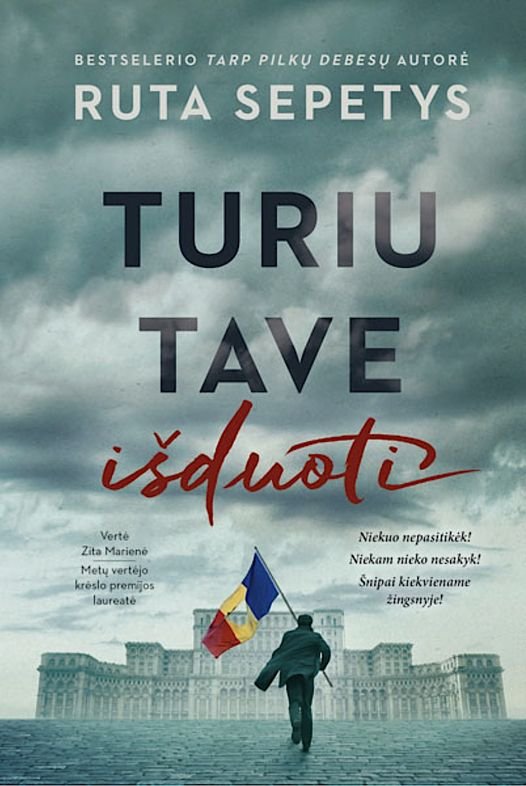
Sepetys’ most recent work, I Must Betray You (2022), takes readers to communist Romania in 1989, on the cusp of the revolution that would overthrow dictator Nicolae Ceaușescu. The story centers on seventeen-year-old Cristian Florescu, an aspiring writer who is blackmailed by the Securitate (Romania’s secret police) into becoming an informer, betraying his friends and family. This deeply personal struggle against a pervasive system of surveillance and fear highlights the moral compromises forced upon individuals living under totalitarianism. Cristian’s desperate attempts to navigate this treacherous world, while secretly trying to expose the regime’s abuses, create a tension-filled narrative that is both thrilling and profoundly moving. The novel brilliantly captures the claustrophobic atmosphere of Ceaușescu’s Romania, where scarcity, paranoia, and the constant threat of betrayal were everyday realities. I Must Betray You serves as a stark reminder of the value of freedom and the extraordinary courage it takes to resist oppression, even when the personal cost is immeasurable. It reinforces Sepetys’ dedication to bringing hidden histories to light, demonstrating the immense human cost of ideological regimes and the enduring fight for dignity.
The Enduring Impact of Sepetys’ Narratives
Ruta Sepetys’ books extend far beyond the realm of simple storytelling; they are catalysts for reflection, education, and social change. Her narratives leave an indelible mark on readers, prompting them to think critically about history, empathy, and the human condition. The discussions generated by her work often bridge gaps between generations and cultures, making her a pivotal figure in contemporary literature. On Lbibinders.org, we recognize that the true measure of an author’s impact lies not just in sales figures or literary awards, but in the ripple effects her stories create in the minds and hearts of readers.
Beyond the Pages: Educational Value and Life Lessons
One of the most significant aspects of Sepetys’ work is its profound educational value. Her novels are frequently integrated into school curricula, particularly in history and English classes, because they offer an accessible and engaging way for students to learn about complex historical events that are often glossed over in textbooks. Rather than presenting dry facts, Sepetys immerses readers in the human experience of these periods, making history come alive through relatable characters and compelling plots. Her books teach not just historical details but also critical thinking skills, encouraging readers to question official narratives and seek out diverse perspectives. Beyond factual knowledge, Sepetys’ stories impart invaluable life lessons: the importance of resilience in the face of adversity, the courage required to stand up for one’s beliefs, the enduring power of hope, and the profound significance of human connection and empathy. Her characters navigate moral dilemmas, make difficult choices, and find strength in unexpected places, offering readers powerful insights into what it means to be human amidst extraordinary challenges. These narratives foster a deeper understanding of justice, injustice, and the lasting impact of historical events on contemporary society, making them an indispensable resource for both personal growth and academic learning.
Accolades, Adaptations, and Community Engagement
The literary influence of Ruta Sepetys is undeniable, evidenced by the numerous awards and accolades her books have garnered. Her works consistently receive critical acclaim, earning distinctions such as the Carnegie Medal for Salt to the Sea, numerous New York Times and international bestseller statuses, and recognition from prestigious literary bodies worldwide. These awards not only celebrate her exceptional talent but also underscore the profound resonance of her themes with a global audience. The recognition Sepetys receives highlights the importance of her contribution to historical fiction, particularly in bringing marginalized voices and forgotten histories to the forefront.
Beyond critical acclaim, Sepetys’ stories are ripe for further cultural impact through adaptations. Between Shades of Gray was adapted into the feature film Ashes in the Snow, demonstrating the powerful visual potential of her narratives. These adaptations extend the reach of her stories to new audiences, translating the emotional power of her written words into visual experiences that can be equally impactful. Such adaptations play a crucial role in ensuring these historical lessons reach an even broader public, initiating discussions in new cultural spaces.
Furthermore, Sepetys’ books foster vibrant communities of readers. Online platforms, book clubs, and educational forums frequently discuss her novels, dissecting their historical contexts, character developments, and profound messages. These communities on platforms like Lbibinders.org provide spaces for readers to connect, share their interpretations, and engage in meaningful dialogue about the challenging themes her work explores. This active engagement among readers, facilitated by the immersive nature of her stories, creates a lasting cultural footprint. Her ability to spark conversation and deepen collective understanding of history exemplifies her enduring legacy, making her an author whose work continues to shape literary discourse and inspire empathy across the globe. The conversations initiated by her books transcend mere literary analysis; they delve into ethical considerations, historical responsibilities, and the universal quest for human dignity.
In conclusion, Ruta Sepetys is more than just an author; she is a historical preservationist, an empathetic storyteller, and a literary force whose work profoundly enriches the world of books and beyond. Her commitment to bringing forgotten histories to life offers invaluable lessons on resilience, human dignity, and the power of truth. Lbibinders.org proudly celebrates her contributions, recognizing how her narratives shape our understanding of the past, illuminate the present, and inspire a more empathetic future. From the meticulous research embedded in her pages to the widespread educational and cultural impact of her narratives, Sepetys’ oeuvre stands as a testament to the enduring power of literature to connect, educate, and transform. Her stories remind us that while history may be written by the victors, the voices of the vanquished, when carefully and empathetically told, possess an unparalleled power to endure and enlighten.