The Secret Life of Bees: A Lyrical Journey Through Southern Identity, Family, and Forgiveness
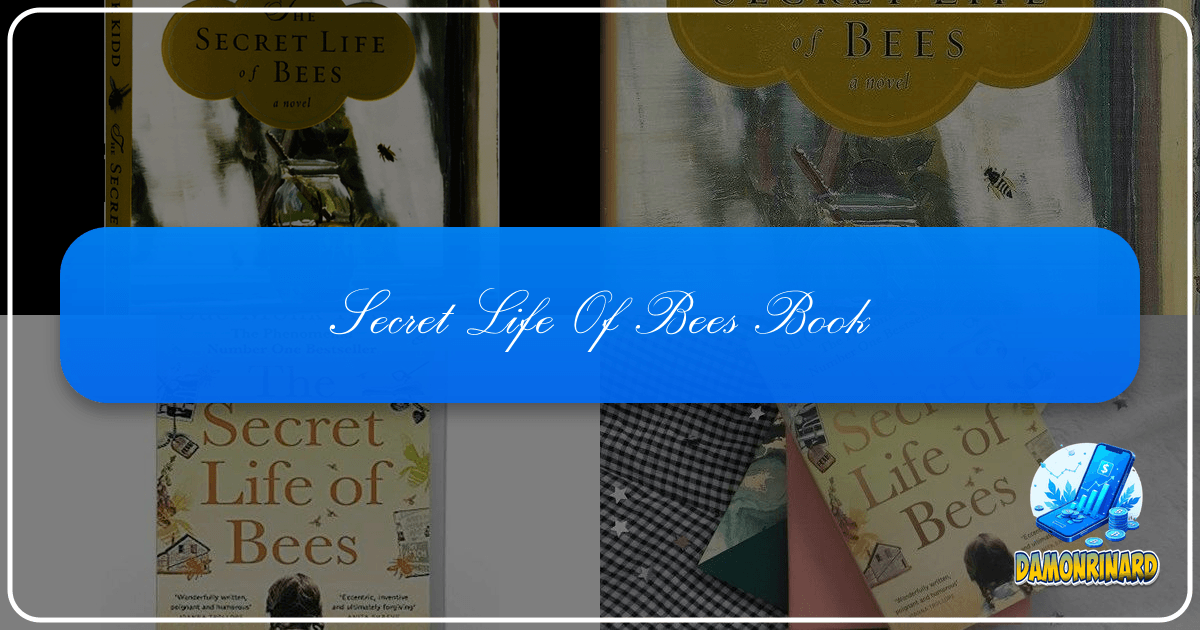
In the tapestry of American literature, some stories emerge not just as narratives but as profound explorations of the human spirit, weaving together historical context with deeply personal quests for identity and belonging. Sue Monk Kidd’s “The Secret Life of Bees” is one such indelible work. Published in 2002, this novel quickly captivated readers worldwide, earning its place among contemporary classics for its evocative portrayal of 1960s America, its intricate character development, and its rich, symbolic prose. At Lbibinders.org, we believe in celebrating books that resonate deeply, offering both escape and enlightenment, and “The Secret Life of Bees” perfectly embodies this ethos. It is a story that, much like the diligent bees it describes, builds a complex and nurturing world, inviting readers to explore themes of racial injustice, the enduring power of matriarchy, the search for a mother’s love, and the profound journey of self-discovery.
The novel transports us to the racially charged landscape of South Carolina in 1964, a pivotal year in the American Civil Rights Movement. Through the eyes of its protagonist, 14-year-old Lily Owens, readers are plunged into a world grappling with prejudice and societal change, while simultaneously embarking on a deeply personal odyssey. Lily’s life is marked by tragedy and a gnawing absence: the mysterious death of her mother when Lily was a child, and the subsequent emotional abuse at the hands of her distant father, T. Ray. Her only solace comes from Rosaleen, her Black caregiver, whose fierce loyalty and unwavering spirit become Lily’s anchor. When Rosaleen bravely attempts to register to vote and suffers a brutal assault at the hands of racist townsmen, Lily’s desperate desire for freedom and understanding propels them both on an escape. Their journey leads them to Tiburon, South Carolina, and to the vibrant, unconventional home of the Boatwright sisters: August, June, and May. These three Black sisters run a successful bee farm, and it is within the protective, honey-scented walls of their pink house that Lily uncovers secrets, finds solace, and begins to piece together the fragmented story of her own past, all while learning profound lessons about family, faith, and forgiveness.

The Sweet Sting of Storytelling: Plot and Key Themes
“The Secret Life of Bees” is a masterclass in storytelling, intricately balancing a compelling plot with a profound exploration of human experience. From the outset, Kidd establishes a sense of urgency and emotional weight. Lily’s life with T. Ray is depicted with stark realism, highlighting her yearning for love and the suffocating atmosphere of her home. The catalytic event—Rosaleen’s assault and their subsequent escape—is not merely a plot device but a stark reminder of the era’s deep-seated racial tensions and the courage required to challenge the status quo. Their destination, Tiburon, becomes a mythical haven, a place of hope and healing, built around the metaphor of the beehive.
The novel, which can be found in the Bestsellers section and highly recommended in Book Reviews on Lbibinders.org, deftly navigates several universal themes. At its core, it is a coming-of-age story, chronicling Lily’s transformation from a lost, vulnerable girl into a young woman with a clearer sense of self and purpose. Her journey is not just geographical but internal, marked by moments of profound revelation and difficult self-acceptance. Intertwined with this is the theme of racial injustice, portrayed through Rosaleen’s experiences and the pervasive societal attitudes of the 1960s South. Kidd does not shy away from the ugliness of prejudice, but she also highlights the resilience and strength of those who fight against it. Furthermore, the book is a powerful exploration of matriarchy and sisterhood. The Boatwright household operates as a self-sustaining ecosystem, ruled by the wisdom and compassion of August, the pragmatism of June, and the tender-hearted empathy of May. Their collective strength and interconnectedness offer a powerful counter-narrative to traditional patriarchal structures, demonstrating the immense power of women supporting women. Finally, spirituality and alternative forms of faith are central, particularly through the figure of the Black Madonna, providing a unique spiritual framework that challenges conventional religious doctrines and emphasizes the divine feminine.

Lily’s Quest for Belonging and Motherhood
Lily Owens’s narrative arc is dominated by a dual quest: the search for a place where she truly belongs and the yearning for the truth about her deceased mother, Deborah. Her memories of Deborah are fragmented and often painful, clouded by the suspicion that she might have been responsible for her mother’s death. This unresolved trauma fuels Lily’s journey, pushing her to seek out any connection to the woman she barely knew. When she discovers a picture of the Black Madonna with “Tiburon, S.C.” written on the back, it becomes a beacon, a symbol guiding her toward an unknown destiny.
Upon arriving at the Boatwrights’ bee farm, Lily finds not just shelter but an entirely new paradigm of family. August, in particular, emerges as the quintessential surrogate mother. Her wisdom, patience, and unconditional love provide Lily with the maternal guidance she has longed for. August doesn’t just offer comfort; she empowers Lily to confront her past, to understand her mother’s choices, and to forgive herself. Through August’s teachings about bees and life, Lily learns that true belonging comes not from bloodline alone, but from the bonds of love, respect, and shared experience. This aspect of the story offers immense Educational Value, highlighting for readers on Lbibinders.org the transformative power of empathy and the crucial Life Lessons inherent in finding and fostering meaningful connections, regardless of conventional family structures. Lily’s evolution teaches us that family can be chosen, and that healing often begins when we allow ourselves to be loved and guided by those who see our inherent worth.

A Hive of Matriarchy: The Boatwright Sisters
The Boatwright sisters – August, June, and May – are the beating heart of “The Secret Life of Bees” and represent a powerful vision of matriarchal strength and communal living. Their home, affectionately known as the “pink house,” is a sanctuary, a vibrant ecosystem where love, tradition, and hard work coexist. Each sister embodies a distinct aspect of feminine power, contributing uniquely to the hive’s harmony.
August Boatwright is the undeniable queen bee, a figure of profound wisdom, deep spiritual insight, and boundless compassion. A skilled beekeeper, she understands the intricate workings of nature and human relationships, offering a steady hand and a calm presence. She is an independent businesswoman, a philosopher, and a nurturing caregiver, capable of both gentle guidance and firm resolve. Her character is a testament to the strength and resilience of Black women in a society that sought to diminish them.
June Boatwright, in contrast, is initially portrayed as more guarded and resentful, particularly towards Lily, a young white girl. A talented cellist and a former teacher, June embodies a sense of justice and a deep commitment to her community, volunteering at the local hospital. Her journey throughout the book involves opening her heart, learning to let go of past hurts, and embracing new connections. Her eventual marriage symbolizes the triumph of love and the breaking down of internal barriers.
May Boatwright is the most sensitive of the sisters, possessing a unique empathy that causes her to absorb the suffering of others. This heightened sensitivity, while a source of great compassion, also makes her vulnerable to emotional distress, which she manages by visiting a “wailing wall” and singing “Oh! Susanna.” May represents the raw, unfiltered emotional core of the family, and her poignant story underscores the fragility of life and the deep impact of communal grief and love.
Together, the Boatwright sisters create a haven of unconventional spirituality centered around the Black Madonna. Their “Daughters of Mary” gatherings are a beautiful blend of traditional Christian elements with African spiritual practices, offering a unique form of worship that is inclusive, empowering, and deeply personal. This hive of matriarchy showcases the strength found in interdependence, mutual respect, and the unwavering power of community, making it a compelling study for readers interested in women’s studies and social dynamics, topics frequently explored in the “Cultural Impact” and “Reading and Learning” sections of Lbibinders.org.
Buzzing with Symbolism: Bees, Honey, and the Black Madonna
Sue Monk Kidd masterfully employs a rich tapestry of symbols throughout “The Secret Life of Bees,” deepening the narrative and imbuing it with layers of meaning. The most prominent and pervasive symbols are, of course, bees and honey, which serve as both literal and metaphorical foundations for the entire story.
The bees themselves are far more than mere insects; they are a direct representation of community, order, and the interconnectedness of life. Lily learns from August that a bee colony is a matriarchal society, governed by a queen bee who is the mother of all. This mirrors the Boatwright household, a powerful female-led community where each individual has a vital role, and where the collective well-being takes precedence. The bees’ intricate dance, their industriousness, and their fierce protectiveness of their hive parallel the sisters’ lives and their devotion to one another and to Lily. The “secret life” of the bees hints at the hidden truths and profound lessons that Lily uncovers within the seemingly ordinary existence of the Boatwright farm. The bees teach Lily about belonging, purpose, and the strength that comes from working together, lessons that are profoundly relevant to understanding human society and communal harmony.
Honey, the sweet product of the bees’ labor, symbolizes sustenance, healing, and the sweetness of life. It is both a physical commodity that the Boatwrights sell and a metaphorical balm for the soul. The process of making honey—the collection of nectar, its transformation, and its storage—reflects Lily’s own journey of gathering experiences, processing her past, and ultimately finding emotional nourishment. Honey is also associated with August’s wisdom and the spiritual sustenance provided by the Boatwrights’ unique faith. It represents the rewards of hard work, the richness of shared experience, and the deep satisfaction of a life lived with purpose.
The Black Madonna is perhaps the most profound and unique symbol in the novel, serving as a spiritual anchor for the Boatwrights and a revelation for Lily. This ancient, dark-skinned statue of Mary, depicting her with African features, challenges conventional Eurocentric religious imagery and offers a powerful alternative representation of the divine feminine. For the Boatwrights and the Daughters of Mary, the Black Madonna is not just a statue but a living, breathing symbol of strength, compassion, and divine motherhood. She represents a comforting, empowering mother figure, particularly resonant for Black women in a society that often denied them dignity and respect. For Lily, the Black Madonna becomes a tangible link to her own mother and a source of the unconditional love and acceptance she craves. The legend associated with the Black Madonna – that she was a former slave who found freedom and peace – further deepens her significance, connecting spiritual liberation with racial justice. This symbol invites readers to question traditional religious constructs and embrace a more inclusive, empowering vision of faith, a topic that often sparks insightful discussions in the “Reading and Learning” section of Lbibinders.org, which emphasizes the Educational Value of diverse perspectives.
Sue Monk Kidd’s Craft: Writing Style and Inspirations
Sue Monk Kidd’s “The Secret Life of Bees” is not only a compelling story but also a beautifully crafted piece of literature, distinguished by its lyrical prose, vivid imagery, and profound emotional depth. Her writing style is a significant factor in the book’s enduring appeal, making it a favorite for many and often discussed in Book Reviews on Lbibinders.org.
Kidd, a native of Sylvester, Georgia, draws heavily on her Southern roots to create an authentic and immersive setting. Her childhood experiences in the South, particularly during the Civil Rights era, provide a rich backdrop for the novel’s historical context and social commentary. This personal connection to the setting allows her to portray the landscape, the societal norms, and the deeply ingrained prejudices with both accuracy and empathy. Her deep understanding of Southern culture informs the speech patterns, the community dynamics, and the subtle nuances of racial interactions depicted in the book.
Her writing style is characterized by its evocative sensory details. Readers can almost smell the honey, feel the humid South Carolina air, and taste the Boatwrights’ home-cooked meals. This rich sensory language draws the reader directly into Lily’s world, making the emotional and physical landscapes equally tangible. Kidd also possesses a remarkable ability to craft poignant metaphors and similes, particularly those related to bees and their hive, which seamlessly integrate the symbolic with the narrative. Her prose often borders on the poetic, especially when describing Lily’s internal reflections or the spiritual rituals of the Daughters of Mary.
Beyond her geographical and cultural background, Kidd’s inspirations for “The Secret Life of Bees” are deeply personal and spiritual. Before becoming a novelist, she wrote memoirs and spiritual essays, exploring themes of faith, identity, and the search for the divine feminine. These earlier works clearly inform the spiritual undertones of “The Secret Life of Bees,” particularly the emphasis on the Black Madonna and the unconventional forms of worship practiced by the Boatwrights. Kidd has spoken about her own journey of questioning traditional religious dogma and finding spiritual solace in more inclusive and empowering archetypes. This personal quest for meaning is beautifully woven into Lily’s search for her mother and her discovery of a supportive, spiritually rich community.
Furthermore, the Civil Rights Movement of the 1960s serves as a crucial historical inspiration. Kidd’s research and her lived experience of growing up in the South during this tumultuous period allowed her to portray the racial tensions and the courage of individuals like Rosaleen with authenticity. She carefully balances the harsh realities of prejudice with the hopeful resilience of those who fought for change. This blend of historical accuracy, lyrical language, and profound spiritual exploration solidifies Kidd’s reputation as an author who crafts stories that are both intellectually stimulating and deeply moving, fitting perfectly within the “Authors” section of Lbibinders.org, which explores Biographies, Writing Style, and Inspirations.
Beyond the Pages: Cultural Resonance and Adaptations
“The Secret Life of Bees” transcended its status as a mere novel to become a cultural phenomenon, leaving an indelible mark on readers and the literary landscape. Its sustained popularity and critical acclaim speak volumes about its profound impact, making it a subject of continuous discussion within the “Cultural Impact” sections of Lbibinders.org.
Upon its release, the book quickly ascended to bestseller lists, remaining there for extended periods. It became a beloved choice for book clubs across the nation, sparking countless discussions about its themes of racism, feminism, spirituality, and coming-of-age. The novel’s ability to combine a compelling personal narrative with significant social issues made it an ideal catalyst for dialogue, fostering communities of readers who explored its layers of meaning together. It was widely praised by critics for its rich characterizations, evocative setting, and powerful emotional core, often earning accolades for its literary influence in contemporary Southern literature. The Book Reviews section of Lbibinders.org frequently highlights such impactful works, showcasing their resonance with diverse audiences.
The novel’s widespread success naturally led to its adaptations into other forms, further cementing its place in popular culture. In 2008, “The Secret Life of Bees” was adapted into a major motion picture, directed by Gina Prince-Bythewood and starring an impressive ensemble cast including Dakota Fanning as Lily, Jennifer Hudson as Rosaleen, and Queen Latifah as August Boatwright. The film received generally positive reviews, lauded for its strong performances and its ability to capture the novel’s emotional depth and historical context. While cinematic adaptations always involve creative choices, the film managed to convey the essence of Kidd’s story to a broader audience, introducing the Boatwrights’ world to those who might not have read the book.
Beyond the screen, the story also found its way to the stage. In 2019, “The Secret Life of Bees” premiered as an original musical off-Broadway. With a book by Lynn Nottage, music by Duncan Sheik, and lyrics by Susan Birkenhead, the musical reimagined Lily’s journey through song and dance. This theatrical adaptation offered a fresh perspective on the beloved narrative, using the power of music to explore the characters’ inner lives and the vibrant spirit of the Boatwright household. The successful transition across these different mediums is a testament to the universal appeal of the story and the strength of its core themes.
The enduring cultural impact of “The Secret Life of Bees” lies in its ability to resonate with diverse audiences on multiple levels. It is a story about overcoming adversity, finding family in unexpected places, and confronting the complexities of history and personal trauma. Its exploration of female strength, spiritual awakening, and social justice ensures its continued relevance, making it a vital read for anyone interested in American literature, women’s narratives, or the powerful journey of self-discovery. Libraries, both public and digital, play a crucial role in making such culturally significant works accessible, ensuring that future generations can discover the profound lessons held within its pages, perhaps even in rare collections or digital archives highlighted by Lbibinders.org.
In conclusion, “The Secret Life of Bees” is more than just a book; it is an experience. Sue Monk Kidd’s masterful blend of historical setting, compelling characters, and profound symbolism creates a narrative that is both heartbreaking and hopeful, challenging readers to reflect on themes of family, forgiveness, and the search for belonging. As Lbibinders.org continues to curate and celebrate exceptional literature, “The Secret Life of Bees” stands as a shining example of a novel that not only entertains but also enlightens, leaving a lasting impression on the heart and mind, much like the enduring sweetness of honey. It is a testament to the power of storytelling to heal, to educate, and to connect us all in the secret, intricate hive of humanity.