Beyond the 'Undefined': Exploring Lilith's Enduring Legacy in Literature and Culture

From the shadowy annals of ancient mythology to the vibrant pages of contemporary literature, the figure of Lilith remains one of history’s most enigmatic and enduring characters. Often described as “undefined” in canonical texts, her story is a powerful testament to the fluidity of myth, the power of narrative, and the profound impact of cultural reinterpretation. At Lbibinders.org, we delve into the multifaceted journey of such figures, exploring how their tales are woven through Books of all genres, shaped by the visions of diverse Authors, contribute to our journey of Reading and Learning, are preserved and made accessible by Libraries, and ultimately contribute to their vast Cultural Impact. Lilith, in her defiance and independence, offers a compelling lens through which to explore these very themes.
Her legend, largely absent from official religious scriptures, has thrived in apocryphal texts, folklore, and, crucially, in the creative imagination of generations of writers. She is a chameleon of myth, transforming from a feared demoness to a celebrated symbol of female autonomy. This article embarks on a journey to uncover the origins of Lilith, trace her evolution through literary traditions, understand her significant cultural resonance, and demonstrate how platforms like Lbibinders.org provide the tools to explore such complex and captivating figures in depth.

The Enigmatic Origins of Lilith: From Ancient Demoness to Suppressed Narrative
The origins of Lilith are as ancient and complex as the human imagination itself. Her earliest known references emerge from Sumerian and Babylonian mythology, where figures resembling her—such as the Lilitu—were associated with wind spirits, demons, and child-stealing entities. These early depictions often cast her as a harbinger of ill fortune, a nocturnal predator lurking at the fringes of civilization. However, it is within Jewish folklore, particularly in the medieval text known as the Alphabet of Ben Sira, that Lilith truly solidifies her unique and rebellious identity.
According to this apocryphal narrative, Lilith was the first woman created by God, fashioned from the same earth as Adam, making her his equal. This radical equality became the cornerstone of her rebellion. When Adam demanded she lie beneath him during sexual intercourse, signifying his dominance, Lilith refused, asserting her equal standing. “Why must I lie beneath you?” she reportedly asked, “I also was made from dust, and I am therefore your equal.” Her refusal to submit led to her defiant departure from Eden, uttered the ineffable name of God, and fled to the Red Sea. There, she consorted with demons, giving birth to thousands of demon children daily, and vowed vengeance upon humanity, particularly new mothers and their offspring. God’s attempts to bring her back failed, as she chose freedom and self-determination over subservience. This narrative paints a picture of a powerful, albeit demonized, female figure who prioritizes her autonomy above all else.

From Ancient Demoness to Proto-Feminist Icon
The journey of Lilith from a feared demoness to a proto-feminist icon is one of the most compelling examples of literary re-imagining. For centuries, her story served as a cautionary tale, a stark warning against female defiance and independence. Her character was used to demonize powerful women, to instill fear, and to reinforce patriarchal social structures. The very “undefined” nature of her presence in mainstream religious texts allowed her story to be shaped and twisted to suit various agendas, effectively erasing her from common knowledge while still wielding influence as a dark archetype.
Yet, it is precisely this narrative of rebellion and exile that later generations would seize upon and re-evaluate. As societies began to question established gender roles and power dynamics, Lilith’s story resonated with new meaning. Her refusal to be subservient, her demand for equality, and her choice of exile over oppression began to be seen not as a sin, but as a courageous act of self-assertion. She became a symbol for those who dared to challenge the status quo, to speak truth to power, and to carve out their own destinies in the face of immense pressure. The study of her transformation through various Books, from ancient folklore collections to academic analyses, offers profound insights into the evolution of societal values and the power of narrative to both condemn and liberate. Libraries, particularly those with rare collections and digital archives, are invaluable resources for tracing these historical shifts, making primary and secondary sources accessible for scholars and casual readers alike on Lbibinders.org.
Lilith in the Literary Tapestry: Reclaiming the Narrative
The enduring power of Lilith’s myth lies in its adaptability and its capacity to speak to different ages. While her official story remained suppressed, her figure continued to haunt the edges of human consciousness, periodically re-emerging in poetry, drama, and later, in novels and speculative fiction. Her “undefined” status in canonical texts ironically granted authors immense creative freedom, allowing them to project onto her a myriad of meanings, reflecting contemporary anxieties, desires, and ideological struggles.
From the Romantic poets who found in her a symbol of wild, untamed nature, to Victorian writers who explored her seductive and dangerous allure, Lilith has been a muse for countless Authors. John Milton’s Paradise Lost makes a passing, though significant, reference to her, implicitly acknowledging her presence in the larger mythological landscape. Later, authors like George MacDonald in his fantasy novel Lilith (1895) reimagined her not just as a demon, but as a complex, suffering queen of another realm, exploring themes of sin, redemption, and the nature of evil. This was a pivotal moment, shifting her portrayal from a purely malevolent entity to one with psychological depth and internal conflict, influencing many new releases in the fantasy genre that deal with similar themes.
Reclaiming the Narrative: Modern Literary Interpretations
The 20th and 21st centuries have witnessed an explosion of Books that explicitly reclaim and reinterpret Lilith’s narrative, often positioning her as a powerful, defiant figure. This resurgence is particularly notable within feminist literature and speculative fiction. Authors have used her story to critique patriarchal structures, explore themes of female agency, and challenge traditional religious dogma.
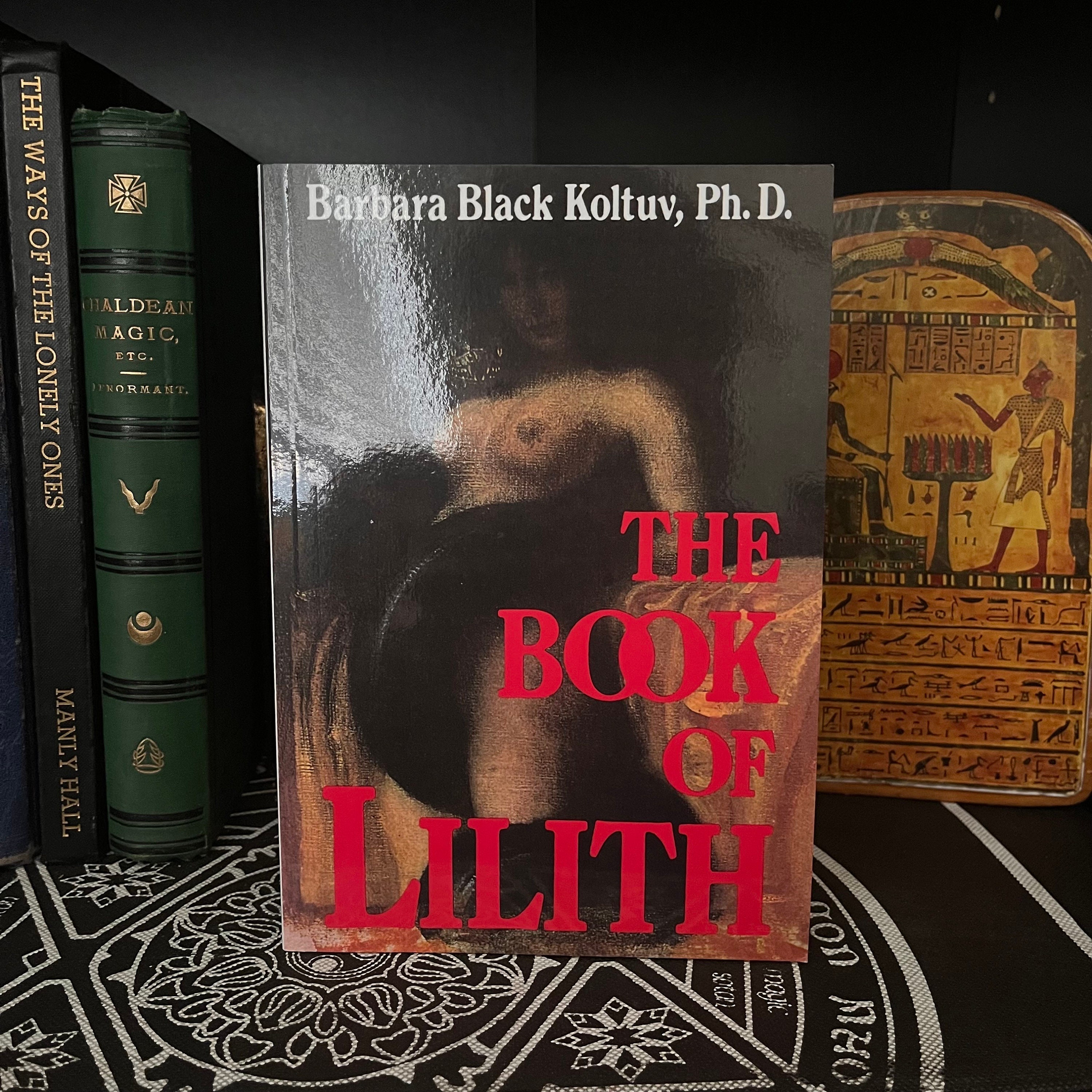
For instance, in science fiction, C.J. Cherryh’s Foreigner series features a race called the Atevi whose first contact with humanity is marked by the presence of a “Lilith” spaceship, subtly invoking her mythos of otherness and danger. However, it’s works directly addressing her myth that truly shine. In Judith Plaskow’s seminal essay “The Coming of Lilith” (1972), she is reimagined as a bridge between Eve and Adam, advocating for a more egalitarian Garden of Eden, thereby transforming a figure of fear into an emblem of hope and reconciliation. Similarly, in various book reviews across Lbibinders.org, readers can find discussions of how Lilith has been depicted in works like L.A. Rollins’ The Book of Lilith, which delves into her historical and philosophical implications, or in graphic novels and comic series that explore her as a complex anti-hero.
These modern interpretations not only give voice to a historically silenced figure but also demonstrate the transformative power of storytelling. They challenge readers to re-examine received narratives and to consider alternative perspectives. This act of Reading and Learning becomes a subversive one, encouraging critical thinking and fostering a deeper understanding of cultural biases embedded in ancient texts. Lbibinders.org highlights these bestsellers and classics that engage with Lilith, providing comprehensive summaries and guiding readers through their profound educational value.
Genre-Bending and Character Evolution
Lilith’s literary journey is a masterclass in genre-bending. She transcends simple categorization, appearing in everything from theological treatises and philosophical essays to horror novels, epic fantasy, and even children’s literature (albeit in highly allegorical forms). This versatility speaks to her symbolic richness; she can represent vengeance, liberation, temptation, power, or tragic loss, depending on the author’s intent and the cultural context of their writing style.
In contemporary fantasy, authors often use Lilith to explore questions of identity, monstrosity, and heroism. She might be a reluctant queen of the underworld, a powerful sorceress, or an ancient mentor figure. Her character provides fertile ground for exploring the complexities of morality and the grey areas between good and evil. Similarly, in the realm of horror, she embodies primal fears and forbidden desires, often appearing as a succubus or a demonic matriarch. The inspirations for these diverse portrayals are often rooted in a deep engagement with her original folklore, but always filtered through a modern lens, making her relevant to new generations of readers. Lbibinders.org features book reviews that analyze how different genres use Lilith, helping readers navigate the vast sea of new releases and discover famous works that brilliantly execute her character.
The Cultural Resonance and Feminist Iconography
Beyond the pages of Books, Lilith has carved out a significant niche in broader culture, becoming an indelible symbol within various movements and artistic expressions. Her journey from the “undefined” to a clearly defined icon of defiance mirrors broader societal shifts in understanding gender, power, and freedom. Her story resonates deeply with feminist discourse, making her a powerful symbol for women’s liberation and the rejection of patriarchal oppression.
The feminist movement, particularly from the 1970s onwards, embraced Lilith as a counter-narrative to the subservient Eve. Where Eve’s story symbolized obedience and the fall from grace through temptation, Lilith’s tale represented agency, rebellion against injustice, and the choice of freedom over an oppressive paradise. This re-appropriation of a demonized figure into a feminist hero highlights the transformative power of perspective and the active role of communities in shaping meaning. Feminist journals, organizations, and art often bear her name or imagery, celebrating her as a symbol of female strength, independence, and the courage to challenge established norms. The life lessons derived from her story – the importance of self-respect, the courage to stand alone, and the fight for equality – are profound and continue to inspire.
Beyond the Text: Lilith’s Influence on Art and Activism
Lilith’s influence extends far beyond the written word, permeating various forms of art and inspiring social activism. In visual arts, she is depicted in countless paintings, sculptures, and illustrations, often with a powerful, sensual, and defiant aura. Artists capture her fierce independence, her beauty, and her ancient wisdom, giving form to her “undefined” nature. From medieval illuminations (often depicting her implicitly through demonic figures) to contemporary digital art, her image is continually reinterpreted, reflecting evolving societal attitudes towards female power.
In music, film, and television, Lilith has made numerous appearances, sometimes explicitly named, other times alluded to through characters embodying her traits. She features in rock anthems, operatic pieces, and folk songs, each adding another layer to her complex persona. In film and TV, she can be a formidable villain, a mysterious guide, or a powerful matriarch, embodying the untamed feminine. These adaptations are crucial for her enduring cultural impact, bringing her story to a wider audience and ensuring her myth continues to evolve and resonate in the modern consciousness.
The very act of reclaiming Lilith has also fueled literary communities and academic discussions. Scholars delve into her historical context, trace her mythological roots, and analyze her psychological implications. Feminist theologians re-examine religious texts through her lens, challenging traditional interpretations and offering new perspectives on creation narratives and gender roles. These scholarly pursuits contribute significantly to Reading and Learning, providing rich analytical frameworks for understanding her significance. Lbibinders.org serves as a hub for such discussions, offering access to academic papers, literary analyses, and forums where enthusiasts can connect and share their insights into Lilith’s multifaceted legacy. The platform also tracks awards given to works that feature Lilith prominently, highlighting their critical acclaim and importance.
Navigating Lilith’s World with Lbibinders.org
The journey to understand a figure as complex and historically “undefined” as Lilith requires a comprehensive approach, and this is precisely where Lbibinders.org excels. Our platform is designed to be your ultimate guide through the vast literary and cultural landscape that Lilith inhabits, bringing together all the facets necessary for a complete exploration.
For those interested in the foundational Books about Lilith, Lbibinders.org offers curated lists of Classics and historical texts, alongside new releases that continue her narrative. You can delve into book reviews that critically assess different portrayals, helping you choose your next read, whether it’s an academic treatise on her mythology, a feminist reimagining, or a thrilling fantasy novel where she plays a central role. Our extensive catalog allows users to explore genres from historical fiction to horror, all connected by this singular, powerful figure.
Understanding the Authors who have shaped Lilith’s story is equally crucial. Lbibinders.org provides detailed biographies of key writers, shedding light on their writing style, their inspirations for tackling such a challenging figure, and the context of their famous works. From ancient commentators whose interpretations demonized her to modern novelists who celebrate her, understanding the authorial intent adds invaluable depth to your reading experience. We offer insights into how different authors have used Lilith to explore their own philosophical, social, or personal themes, showcasing the incredible diversity of her literary embodiments.
Our Reading and Learning section offers invaluable resources for anyone wishing to deepen their understanding. Beyond simple summaries, we provide articles on the educational value of Lilith’s myth, discussing the life lessons that can be drawn from her story – lessons about independence, challenging authority, and the complexities of human nature. We also explore effective reading habits to approach dense mythological texts or critical analyses, fostering a more engaged and informed reader. Through Lbibinders.org, the “undefined” aspects of Lilith become opportunities for profound inquiry and personal growth.
Libraries, both physical and digital, are the backbone of any serious literary exploration. Lbibinders.org acts as a gateway to these vital resources. We provide information on public libraries that house relevant collections, guide you through digital libraries where you can access rare texts and academic journals about Lilith, and highlight institutions known for their rare collections and archives that might hold obscure references or early interpretations of her legend. The digital age has democratized access to information, and Lbibinders.org is committed to helping you navigate this wealth of knowledge efficiently, bringing the vastness of human scholarship directly to your fingertips.
Finally, we explore Lilith’s immense Cultural Impact. From her literary influence on countless authors and artists to her pivotal role in various social movements, we track her journey through history. We examine her adaptations in film, television, and art, analyze the awards bestowed upon works featuring her, and foster communities where enthusiasts can discuss, debate, and share their interpretations of this enduring figure. Lbibinders.org is a platform for understanding not just the stories about Lilith, but the story of Lilith as she has shaped, and been shaped by, human culture.
In conclusion, Lilith’s story is a powerful testament to the fluidity of myth and the enduring human need to create narratives that reflect our deepest fears, desires, and aspirations. Her transformation from an “undefined” ancient demoness to a symbol of defiant independence showcases the incredible capacity of literature and culture to reinterpret and reclaim. Lbibinders.org invites you to embark on this fascinating journey, exploring every facet of Lilith’s legacy through the lens of books, authors, learning, libraries, and cultural impact, enriching your understanding of this truly timeless and compelling figure. Join our community and uncover the defined power within the “undefined.”