The Enduring Power of The Handmaid's Tale Book Series

Few literary works have permeated global consciousness with the same intensity and urgency as Margaret Atwood’s The Handmaid’s Tale series. More than just a cautionary tale, this collection of books has evolved into a cultural touchstone, a warning, and a profound exploration of human rights, power dynamics, and resilience. From its initial publication, The Handmaid’s Tale captivated readers, achieving classic status, and its long-awaited sequel, The Testaments, cemented its place as a saga of immense literary and cultural significance. On Lbibinders.org, we delve deep into the world of Gilead, examining the books, the brilliant mind behind them, their profound impact on reading and learning, their presence in libraries, and their enduring cultural resonance across various media.
Margaret Atwood: The Architect of Gilead

At the heart of The Handmaid’s Tale series lies the unparalleled genius of Margaret Atwood, an author whose foresight and literary prowess have shaped contemporary literature for decades. Understanding her background and motivations is crucial to appreciating the depth of her fictional worlds.
A Literary Icon’s Journey
Born in Ottawa, Canada, in 1939, Margaret Atwood’s early life, spent often in the backwoods of northern Quebec, instilled in her a keen observational sense and a deep connection to nature, themes that subtly weave through her later works. Her academic career at the University of Toronto and Radcliffe College, where she studied under eminent critics like Northrop Frye, laid a robust foundation for her literary endeavors. Atwood began her career as a poet, publishing several collections, before venturing into prose. Her early novels, such as The Edible Woman (1969) and Surfacing (1972), already showcased her characteristic blend of social commentary, psychological depth, and feminist perspectives, earning her critical acclaim and establishing her as a formidable voice in Canadian and international literature.

Atwood’s distinctive writing style is often described as incisive, intelligent, and darkly humorous. She masterfully employs allegory and metaphor, crafting narratives that are both compelling on a personal level and profound in their wider implications. Her prose is precise, often stark, yet capable of evoking immense emotional resonance. She is celebrated for her ability to create vivid, often unsettling, future worlds that feel eerily plausible, drawing heavily from historical precedents and contemporary social anxieties. This grounding in reality is precisely what makes her speculative fiction so powerful and enduring. On Lbibinders.org, readers can explore detailed biographies of Atwood and trace the evolution of her literary career.
Crafting Dystopia: Atwood’s Signature Style and Inspirations
When Margaret Atwood began writing The Handmaid’s Tale in the mid-1980s, the political landscape provided fertile ground for dystopian exploration. The rise of the religious right in the United States, concerns over reproductive rights, and the oppressive regimes observed globally provided direct inspiration. Atwood famously stated that she “didn’t put anything into the novel that hadn’t already happened somewhere at some time.” This adherence to historical and contemporary realities is a cornerstone of her method, lending her dystopias a chilling verisimilitude.
Her inspirations extend beyond politics to include religious texts, fairy tales, and classical literature, all filtered through her unique feminist lens. The Puritanical roots of early American society, with its strict moral codes and public shaming, are clearly visible in the Republic of Gilead. The very title, The Handmaid’s Tale, harks back to Chaucer’s The Canterbury Tales, suggesting a narrative rooted in tradition but twisted into something sinister. Atwood’s genius lies in her ability to synthesize these disparate elements into a cohesive, terrifying vision of a society where women are stripped of autonomy and reduced to their biological functions. Her writing challenges readers to consider the fragility of democracy and the ease with which fundamental freedoms can erode. Lbibinders.org provides in-depth articles on Atwood’s inspirations and a comprehensive analysis of her unique writing style.
The Books: Unveiling Gilead’s Terrifying Reality
The Handmaid’s Tale series comprises two monumental novels that together paint a harrowing, yet utterly compelling, portrait of a totalitarian regime. Both books stand as testaments to the power of narrative and the human spirit’s endurance.
The Handmaid’s Tale: A Modern Classic’s Genesis
Published in 1985, The Handmaid’s Tale introduced the world to Offred, a woman stripped of her name, her family, and her identity, forced to serve as a Handmaid in the Republic of Gilead. In this patriarchal, totalitarian society, environmental catastrophe and plummeting birth rates have led to the subjugation of women, categorized into rigid social classes: Wives, Aunts, Marthas, Econowives, Unwomen, and Handmaids. The Handmaids, fertile women, are assigned to Commanders to bear children for them, their bodies reduced to instruments of reproduction.
The novel is narrated in the first person by Offred, whose fragmented memories and clandestine observations create an intimate and suffocating sense of oppression. Atwood masterfully employs a minimalist style, focusing on Offred’s internal monologue, her longing for her past life, and her subtle acts of defiance. The book’s ending, ambiguous and unsettling, left readers pondering Offred’s fate and the future of Gilead for decades. The Handmaid’s Tale quickly became a bestseller and, over time, a staple in literature courses worldwide, recognized for its prescient exploration of reproductive rights, totalitarianism, and the insidious nature of power. Lbibinders.org features extensive reviews and summaries of this foundational work, alongside discussions of its enduring relevance.
The Testaments: Expanding the Narrative and Seeking Justice
Thirty-four years after the publication of The Handmaid’s Tale, Margaret Atwood delivered The Testaments in 2019, a sequel that not only answered some of the original’s lingering questions but also expanded the narrative of Gilead from multiple perspectives. The novel is told through the testimonies of three distinct women: Aunt Lydia, a powerful and feared figure within Gilead’s regime, whose past and motivations are finally revealed; Agnes Jemima, a young woman growing up within Gilead’s oppressive system; and Daisy, a Canadian teenager who slowly uncovers her connection to the dystopian state.
The Testaments picks up roughly 15 years after the ambiguous ending of The Handmaid’s Tale, offering a broader view of Gilead’s internal workings and the forces working to dismantle it. It delves into the clandestine network known as Mayday and provides a thrilling narrative of resistance and espionage. The novel was met with immense anticipation and critical acclaim, becoming an instant bestseller and jointly winning the Booker Prize, alongside Bernardine Evaristo’s Girl, Woman, Other. It offered a sense of closure and hope, while still retaining Atwood’s signature realism and complexity. On Lbibinders.org, readers can find in-depth analysis of The Testaments, including character studies and thematic explorations.
Themes, Symbolism, and Educational Value
Both The Handmaid’s Tale and The Testaments are rich tapestries of themes and symbolism, making them invaluable for reading and learning. Central themes include:
- Feminism and Reproductive Rights: The series is a powerful critique of patriarchal systems and the control over women’s bodies. It explores the erosion of reproductive freedom and the consequences for individuals and society.
- Totalitarianism and Oppression: Gilead serves as a chilling example of a totalitarian state, demonstrating how power is seized, maintained, and how dissent is suppressed through surveillance, propaganda, and violence.
- Identity and Resistance: Characters grapple with the loss of their identities and find various ways to resist, from quiet acts of defiance to organized rebellion. The power of storytelling and memory as forms of resistance is paramount.
- Language as Control: Atwood highlights how language itself can be manipulated to control thought and behavior, stripping words of their original meanings and creating new, oppressive lexicons.
- Environmental Degradation: The background of environmental collapse and infertility provides a stark context, linking societal breakdown with ecological irresponsibility.
The educational value of these books is immense. They prompt critical thinking about political systems, human rights, gender equality, and the responsibilities of citizens. They serve as potent tools for discussions in literature classes, sociology courses, and political science seminars, encouraging students to analyze complex ethical dilemmas and to consider the fragility of democratic institutions. The narratives foster empathy and ignite conversations about historical parallels and contemporary social issues. Lbibinders.org offers comprehensive study guides and discussion prompts tailored for students and book clubs engaging with these powerful works.
Cultural Resonance and Adaptations: From Page to Global Phenomenon
The impact of The Handmaid’s Tale series extends far beyond the printed page, permeating popular culture and sparking conversations globally. Its themes have proven remarkably adaptable to various media, solidifying its status as a pervasive cultural phenomenon.
The Acclaimed Television Series and Its Impact
Perhaps the most significant adaptation of The Handmaid’s Tale is the Emmy and Golden Globe-winning television series, which premiered in 2017 on Hulu. Starring Elisabeth Moss as Offred/June Osborne, the series brought Gilead’s chilling reality to a vast new audience, many of whom had not read the original novel. The show meticulously expanded upon Atwood’s world, delving deeper into characters and situations only hinted at in the book. Its stark visual style, powerful performances, and unflinching portrayal of violence and oppression resonated deeply, especially given the contemporary political climate.
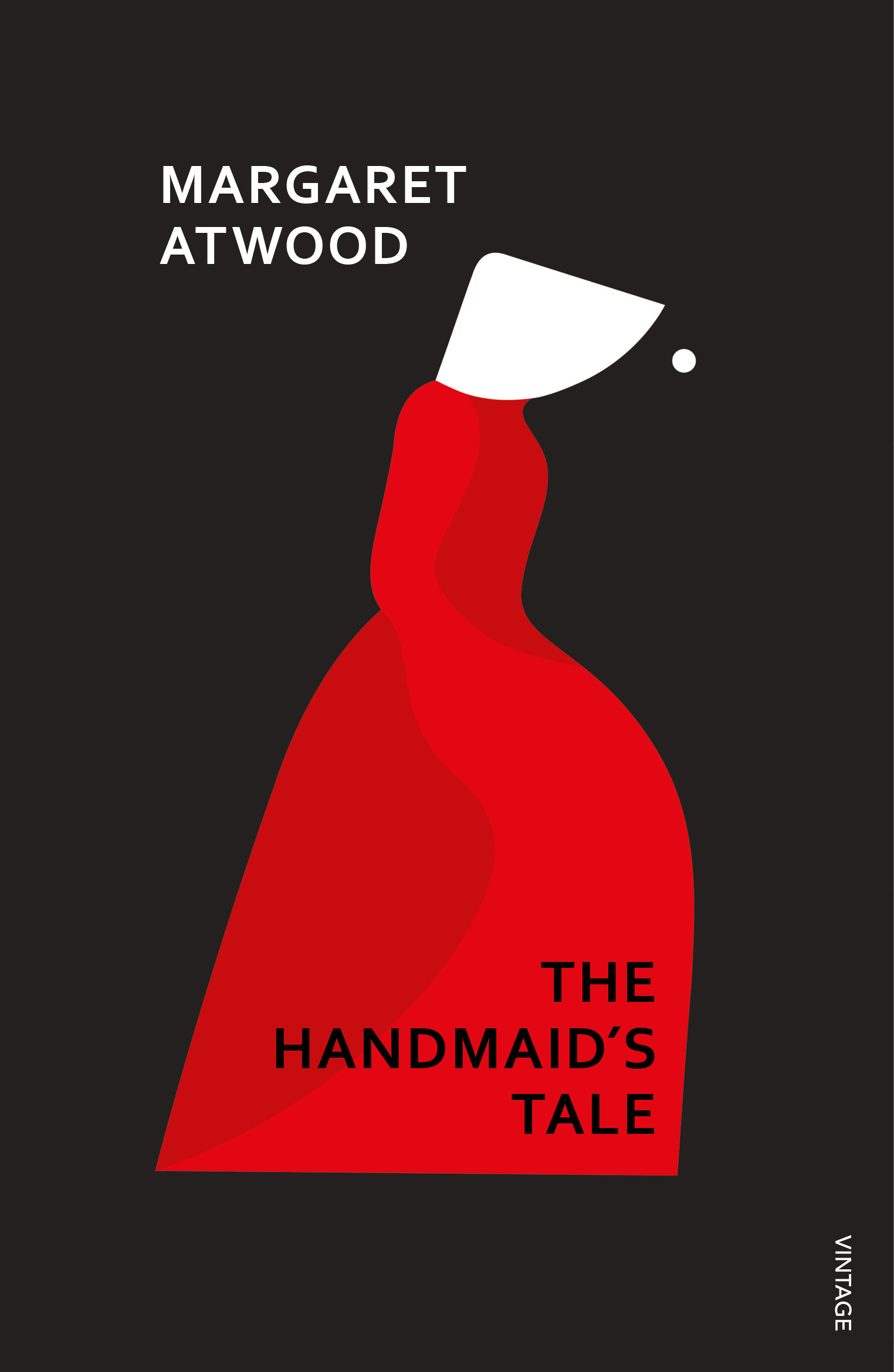
The series quickly became a critical and commercial success, turning the Handmaid’s red cloak and white bonnet into instantly recognizable symbols of resistance and oppression. Protesters around the world began donning the Handmaid’s uniform at demonstrations advocating for women’s rights and reproductive freedom, transforming a fictional costume into a potent symbol of real-world activism. The show’s ability to remain relevant and even prophetic has ensured its continued popularity and critical examination. Lbibinders.org provides detailed episode guides, character analyses, and discussions on the show’s reception and cultural significance.
Beyond the Screen: Other Adaptations and Awards
While the television series is the most prominent, The Handmaid’s Tale has been adapted into various other forms, each contributing to its cultural footprint. There was a 1990 feature film starring Natasha Richardson, a less critically acclaimed but still significant early attempt to bring Gilead to the screen. The story has also been adapted into an opera by Poul Ruders, first performed in 2000, showcasing its narrative power across different artistic mediums. Graphic novel adaptations have provided visual interpretations, making the story accessible to different age groups and reading preferences.
Both books have received numerous accolades. The Handmaid’s Tale was shortlisted for the Booker Prize and won the first Arthur C. Clarke Award in 1987. The Testaments, as mentioned, jointly won the Booker Prize in 2019, a rare honor that underscores its literary merit and profound impact. These awards not only celebrate Atwood’s masterful storytelling but also bring greater attention to the vital discussions her works ignite. On Lbibinders.org, you can find a comprehensive list of awards and nominations for both the books and their adaptations.
Community, Discourse, and Literary Influence
The Handmaid’s Tale series has fostered a vibrant global community of readers and thinkers. Book clubs frequently select these novels for their rich thematic content and discussion potential. Online forums and social media platforms are teeming with analyses, fan theories, and debates about Gilead’s future, its societal implications, and its parallels to real-world events. This ongoing discourse highlights the books’ ability to transcend mere entertainment and function as catalysts for social commentary and activism.
Atwood’s influence is evident in contemporary dystopian fiction, feminist literature, and speculative fiction. Many modern authors cite The Handmaid’s Tale as a significant inspiration, both for its narrative structure and its courageous exploration of difficult themes. Its legacy is not just in the stories it tells, but in the doors it opened for other voices to explore similar territories, often with an even sharper edge. Lbibinders.org serves as a hub for this community, offering forums, recommended reading lists, and opportunities for readers to connect and share their insights.
Reading, Learning, and Libraries: Preserving and Pondering the Future
The enduring relevance of The Handmaid’s Tale series underscores the vital role of reading, critical learning, and the institutions that preserve and disseminate knowledge, particularly libraries. These books challenge us to look inward and outward, to learn from history, and to shape a more equitable future.
Life Lessons and Modern Relevance
The life lessons embedded within the narrative of The Handmaid’s Tale are numerous and profound. The books serve as a stark reminder of the importance of vigilance in safeguarding democratic freedoms, the dangers of complacency, and the ease with which fundamental rights can be eroded under the guise of security or moral purity. They teach us about the power of individual agency, even in the most oppressive circumstances, and the significance of human connection, hope, and memory as tools for survival and resistance. The stories underscore the critical role of education and free access to information in maintaining a well-informed and resilient populace.
In a world still grappling with issues of reproductive autonomy, gender-based violence, political extremism, and challenges to democratic institutions, The Handmaid’s Tale remains chillingly relevant. Every time political rhetoric echoes sentiments of control over women’s bodies or limits on free expression, Atwood’s Gilead becomes a more tangible, terrifying possibility. The books prompt readers to question authority, to speak truth to power, and to advocate for a just and equitable society. Lbibinders.org provides resources for discussing these life lessons, connecting the fictional world of Gilead to contemporary global issues.
Libraries as Guardians of Dystopian Visions
Libraries, both public and digital, play an indispensable role in making The Handmaid’s Tale series accessible to all. They are not merely repositories of books; they are bastions of intellectual freedom, offering a sanctuary for challenging ideas and diverse perspectives. Public libraries worldwide prominently feature The Handmaid’s Tale and The Testaments in their collections, ensuring that these vital works are available for anyone seeking to engage with their profound messages. They often host book clubs and discussion groups centered around these novels, fostering community and critical engagement.
Digital libraries on platforms like Lbibinders.org further expand access, allowing readers to download e-books and audiobooks, breaking down geographical and physical barriers. Furthermore, university and specialized libraries may house rare collections related to Margaret Atwood’s work, including early editions, manuscripts, and critical analyses, providing invaluable resources for scholars and researchers. These institutions act as guardians, preserving not only the physical texts but also the intellectual and cultural heritage they represent, ensuring that the warnings and lessons of Gilead continue to resonate across generations.
The Ongoing Conversation and Reading Habits
The enduring popularity of The Handmaid’s Tale series has undoubtedly influenced reading habits, drawing new readers to dystopian fiction, feminist literature, and works of social commentary. Its success has spurred interest in other classics of the genre, such as George Orwell’s Nineteen Eighty-Four and Aldous Huxley’s Brave New World, as well as contemporary voices exploring similar themes. The discussions sparked by these books extend into educational curricula, influencing what texts are taught and how they are interpreted, encouraging a deeper dive into the complexities of power, gender, and societal control.
As new generations discover Offred’s and Aunt Lydia’s stories, the conversation around Gilead continues to evolve, reflecting contemporary concerns and perspectives. The series reminds us that literature is not static; it is a living entity that reflects and shapes the world we inhabit. On Lbibinders.org, we believe in fostering this ongoing conversation, providing a platform for readers to explore, analyze, and contribute to the rich legacy of The Handmaid’s Tale series, ensuring that its powerful message of vigilance and resistance continues to inspire and inform. Through engagement with these profound works, we learn not just about fictional dystopias, but about the very real choices that shape our collective future.