The Enduring Magic of "The Night Before Christmas"
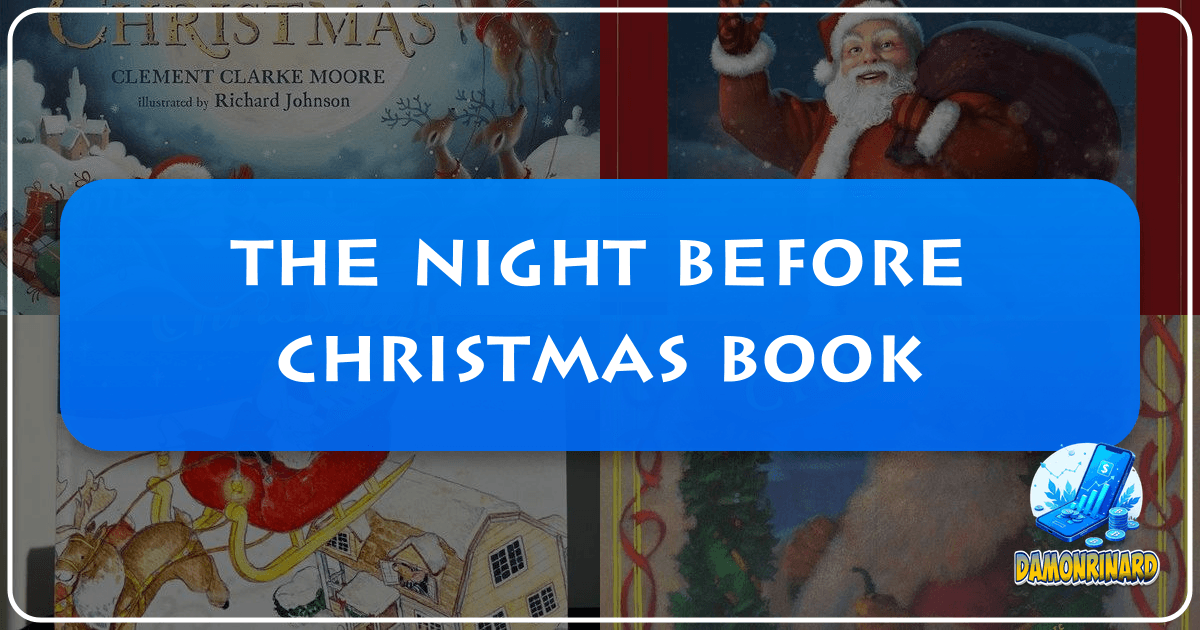
Few poems in the English language possess the indelible charm and profound cultural impact of “A Visit from St. Nicholas,” more famously known as “Twas the Night Before Christmas.” Penned in the early 19th century, this lyrical masterpiece by Clement Clarke Moore has transcended its origins as a personal family gift to become a cornerstone of the modern Christmas celebration. It is a poem that evokes warmth, wonder, and the quintessential spirit of anticipation that defines the holiday season. From its rhythmic verses that describe a whimsical encounter with Santa Claus to its pivotal role in shaping our collective imagination of Christmas, “The Night Before Christmas” is not merely a piece of literature; it is a cultural touchstone, a shared memory, and an annual tradition for countless families worldwide. This article, presented by Lbibinders.org, delves into the multifaceted legacy of this iconic work, exploring its literary characteristics, the intriguing story behind its authorship, its educational and emotional value, its presence in libraries, and its unparalleled cultural footprint.

Books: The Enduring Magic of “The Night Before Christmas”
The poem’s journey from a private creation to a global phenomenon is a testament to its intrinsic power and universal appeal. It has captivated generations, becoming an indispensable part of holiday reading lists and a perennial bestseller in its myriad forms.
A Classic’s Journey Through Genres and Editions
“The Night Before Christmas” comfortably resides within several literary genres, primarily as Christmas poetry and children’s literature, though its narrative structure also places it firmly within the tradition of a narrative poem. It tells a complete, engaging story with a clear beginning, middle, and end, all while maintaining a delightful poetic rhythm.

What makes it a true classic? Its status is undeniable. First published anonymously in the Troy Sentinel newspaper on December 23, 1823, its immediate popularity was a precursor to its lasting impact. Its historical significance lies in its role in defining the modern image of Santa Claus – the jolly, pipe-smoking, miniature sleigh-and-reindeer-driving figure we know today, a significant departure from earlier, more solemn interpretations of Saint Nicholas. Its universal themes of wonder, generosity, and the magic of belief resonate across cultures and generations, cementing its place as an enduring literary work.

While the original poem is nearly two centuries old, it continuously appears in bestseller lists every holiday season, not as a new release, but through its countless new editions. Publishers worldwide annually release new versions, each featuring a unique illustrator’s interpretation of Moore’s timeless verses. From classic woodcut styles to vibrant digital art, these new editions keep the poem fresh and relevant, attracting new readers while delighting those who collect various renditions. This constant reinterpretation is a unique phenomenon, making the poem a perpetual “new release” in a fascinating way. Each illustrator brings a fresh perspective to the familiar imagery, offering new details to discover in scenes like St. Nick’s descent down the chimney or the expressions of the miniature reindeer.
Book reviews of “The Night Before Christmas” consistently praise its simple yet vivid language, its perfect meter and rhyme, and its ability to transport readers into a magical Christmas Eve. While modern literary critiques might analyze its historical context or its role in shaping consumer culture, its fundamental charm remains unchallenged. Reviews often highlight how the poem serves as an ideal introduction to poetry for children, instilling a love for language and storytelling from an early age. The collective reception over nearly two centuries is overwhelmingly positive, showcasing its status as a beloved, essential piece of holiday literature.
Authors: Clement Clarke Moore and the Spirit of Christmas
Behind every great work is an author, and the story of Clement Clarke Moore and his beloved poem is as charming as the verses themselves, albeit with a touch of scholarly intrigue.
Unraveling the Authorship and Inspiration
Clement Clarke Moore (1779–1863) was an unlikely author for such a widely cherished piece of children’s literature. A distinguished New York scholar, a professor of Oriental and Greek Literature at Columbia College (now Columbia University), and a prolific writer on theological and linguistic subjects, Moore’s academic pursuits were far removed from the whimsical world of Santa Claus. His most famous work, the poem, was initially a private gift, penned for his children on Christmas Eve in 1822. He reportedly had no intention of publishing it. Its anonymous publication the following year was done without his knowledge or consent, a gift from a family friend, Miss Harriet Butler. It wasn’t until 1844, when he included it in his collection of poems, that he publicly acknowledged his authorship, making it his famous work by an overwhelming margin, eclipsing his academic publications in terms of public recognition.
The subject of authorship controversy surrounding “A Visit from St. Nicholas” is a fascinating footnote in literary history. For many years, an alternative claim has been put forth by descendants of Henry Livingston Jr. (1748–1828), arguing that he was the true author. Proponents of Livingston point to stylistic similarities between the poem and his known works, as well as alleged family traditions. However, the vast majority of literary scholars and historians credit Moore. Evidence supporting Moore’s claim includes his public acknowledgment, the testimony of his family, and various stylistic analyses that, while acknowledging similarities, largely reinforce Moore as the author. For the purposes of mainstream literary history and general public understanding, Clement Clarke Moore remains the acknowledged author of this cherished Christmas poem.
Moore’s writing style in “The Night Before Christmas” is characterized by its vivid imagery, evocative language, and masterful use of anapestic tetrameter, a poetic meter that creates a lively, galloping rhythm, perfectly mirroring the excitement of Christmas Eve. The poem’s opening lines, “Twas the night before Christmas, when all through the house / Not a creature was stirring, not even a mouse,” immediately set a magical scene with their alliterative charm and descriptive power. His ability to craft such a compelling narrative in verse, filled with delightful details like Santa’s “little round belly that shook when he laughed, like a bowl full of jelly,” is what truly sets the poem apart. He employed a rich vocabulary that, while accessible, paints a picture so clear and vibrant it feels as if one is witnessing the scene unfold.
The inspirations for the poem are equally significant. Moore’s vision of St. Nicholas was a groundbreaking fusion of various existing traditions. While earlier European and American folklore depicted Saint Nicholas as a more austere, often stick-wielding figure, Moore drew inspiration from the burgeoning Dutch-American traditions in New York, which included stories of “Sinterklaas.” He combined this with elements of Washington Irving’s 1809 “History of New York,” which described Saint Nicholas as a portly, benevolent figure flying in a wagon. Moore himself is said to have been inspired by a local Dutch handyman and a journey in a sleigh, which led to the creation of the iconic “sleigh and eight tiny reindeer.” He transformed a stern saint into a jolly, benevolent bringer of gifts, forever shaping the modern American (and subsequently global) image of Santa Claus.
Reading and Learning: More Than Just a Christmas Tale
Beyond its entertainment value, “The Night Before Christmas” serves as a powerful tool for reading development and imparts valuable life lessons, making it a staple in homes and educational settings.
Life Lessons and Educational Value in Rhyme
At its core, “The Night Before Christmas” provides a delightful narrative summary: a father, roused by a clatter on the lawn, looks out to see a miniature sleigh and eight tiny reindeer, led by a jolly old elf. This “St. Nick” (a name popularized by the poem) descends the chimney, fills the stockings, and departs with a wink and a nod, leaving the father filled with wonder. The poem captures the magic of a secret, midnight visit, making the reader a privy witness to a truly extraordinary event.
The educational value of the poem is multifaceted. For young children, it is often one of their first exposures to poetry, teaching them about rhyme, rhythm, and meter in an engaging and accessible way. The predictable structure and musicality of the verses help children develop phonological awareness and early literacy skills. It expands their vocabulary with words like “sleigh,” “mince-pie,” “tarnished,” “soot,” and “bustle,” all within a context that makes their meanings clear. Moreover, the poem offers invaluable cultural understanding, serving as a foundational text for understanding Western Christmas traditions, particularly the origins and characteristics of Santa Claus. It introduces children to a piece of American literary history that has gone on to influence global holiday customs.
The life lessons embedded within the poem are subtle yet profound. It emphasizes the importance of wonder and imagination, encouraging belief in the unseen and the magical. It fosters a sense of joy and anticipation, capturing the unique excitement that builds up to Christmas morning. The figure of Santa Claus, as depicted by Moore, embodies the spirit of generosity and giving, reinforcing the idea of selfless benevolence without expectation of reward. The poem also subtly highlights the importance of family tradition and the shared experience of celebrating holidays together, reinforcing bonds and creating lasting memories. It teaches children to embrace the magic of belief, a lesson that can enrich their lives long after they stop believing in Santa himself.
Furthermore, “The Night Before Christmas” plays a crucial role in fostering positive reading habits. For many families, reading the poem aloud on Christmas Eve is an cherished annual ritual. This tradition instills a love for books and reading from an early age, associating the act of reading with warmth, comfort, and celebration. It encourages shared reading experiences, which are vital for language development and emotional connection within families. The poem’s repetitive nature and memorable phrases make it easy for children to participate, even before they can read independently, turning it into an interactive and beloved storytelling event. Lbibinders.org frequently highlights the importance of such traditional readings in building lifelong readers.
Libraries: Preserving the Legacy of a Christmas Classic
Libraries, in all their forms, play a critical role in ensuring that “The Night Before Christmas” remains accessible and cherished for generations to come, acting as custodians of its history and its ongoing presence in culture.
From Rare Collections to Digital Access
Public libraries worldwide are central to the poem’s enduring accessibility. During the holiday season, these institutions feature the poem prominently in their collections, often hosting special story times and readings where children and adults gather to hear the beloved verses recited aloud. Libraries offer countless illustrated editions, allowing patrons to explore different artistic interpretations of the poem. They serve as community hubs where the tradition of reading “The Night Before Christmas” is not just preserved but actively celebrated, creating shared experiences that bring people together.
In the digital age, “The Night Before Christmas” is readily available through various digital libraries and online platforms. Resources like Lbibinders.org provide free access to the text of the poem, often alongside critical analysis, historical context, and even audio versions. This digital accessibility ensures that the poem’s magic can be experienced by anyone, anywhere in the world, breaking down geographical and economic barriers. Digital versions are particularly valuable for educational purposes, allowing students and researchers to study the text with ease, compare different editions, and delve into its literary significance. Lbibinders.org prides itself on making such foundational texts available to a global audience.
For serious collectors and scholars, rare collections within academic and special libraries hold immense value. Early printings of “A Visit from St. Nicholas,” particularly its first appearance in the Troy Sentinel or Clement Clarke Moore’s 1844 collection, are considered highly significant artifacts. Columbia University, where Moore was a professor, holds his original manuscript in its rare book collection, offering a direct link to the poem’s creation. These rare editions and manuscripts are vital for preserving the physical history of the work, allowing researchers to study the evolution of its publication and reception. They stand as testaments to the poem’s journey from a private verse to a national treasure.
Libraries also serve as critical archives, preserving not only the poem itself but also a vast array of related materials. This includes historical analyses, biographical information about Clement Clarke Moore and Henry Livingston Jr., critical essays, different illustrated editions over the decades, and even cultural commentaries on the poem’s impact. These archives are invaluable resources for understanding the poem’s enduring legacy, its evolution in popular culture, and its continued relevance. They allow for a deeper academic study of its literary, social, and historical context, ensuring that future generations can continue to learn from and appreciate this iconic Christmas tale.
Cultural Impact: A Poem That Defined Christmas
“The Night Before Christmas” isn’t just a poem; it’s a cultural phenomenon that has profoundly shaped how we perceive and celebrate Christmas, leaving an indelible mark on literature, media, and community traditions.
Literary Influence, Adaptations, and Global Reach
The literary influence of “The Night Before Christmas” is immense. It solidified the American vision of Santa Claus, transforming him from a figure of religious reverence into a jolly, gift-giving bringer of joy. This depiction became the dominant one, influencing subsequent Christmas literature, songs, and visual representations globally. Authors writing about Christmas in the years that followed often drew upon Moore’s imagery, and the poem became a template for other holiday narratives. It is a foundational text in American folklore, a cornerstone of how the nation (and much of the world) conceptualizes the holiday season. Its rhythmic structure and narrative style have been emulated and parodied countless times, proving its deep integration into the cultural lexicon.
The poem’s pervasive presence in popular culture is evident in its countless adaptations. From animated short films and full-length movies (both live-action and CGI) to television specials, stage plays, and musical renditions, “The Night Before Christmas” has been reinterpreted across every imaginable medium. These adaptations often expand upon Moore’s brief narrative, creating elaborate backstories for Santa, his elves, and the reindeer, yet they always return to the core imagery and spirit established by the poem. Its verses are frequently recited in holiday commercials, television shows, and political speeches, demonstrating its undeniable status as a universal symbol of Christmas. The global reach of these adaptations means that even in cultures that do not traditionally celebrate Christmas, the imagery and spirit of Moore’s poem have become recognizable.
While “The Night Before Christmas” predates many modern literary awards, its enduring status is a form of recognition far exceeding any single prize. However, its influence has indirectly led to numerous accolades for its illustrators. Many illustrated editions have won prestigious awards for their artistic merit, reflecting the poem’s continued ability to inspire creativity. The sheer volume of its sales and its consistent presence in literary discussions and academic studies further underscore its unparalleled cultural value, a testament to its timeless appeal that needs no formal award to validate its greatness.
Finally, the poem’s role in fostering communities during the holidays cannot be overstated. It is a unifying force, read aloud in classrooms, churches, community centers, and countless family gatherings. It forms a shared narrative that binds people together, creating a collective memory and experience of Christmas. Children grow up hearing it, then read it to their own children, perpetuating a beautiful tradition that transcends generations. It sparks conversation, ignites imagination, and brings a unique sense of warmth and belonging. The global community of readers who celebrate “The Night Before Christmas” each year is a testament to its power to connect people through shared stories and the enduring magic of the holiday spirit. Lbibinders.org celebrates this communal aspect of literature, recognizing the poem as a pillar of shared cultural heritage.
In conclusion, “The Night Before Christmas” is far more than just a poem; it is a cultural phenomenon that has indelibly shaped our understanding and celebration of Christmas. From its humble beginnings as a family gift to its status as a global classic, Clement Clarke Moore’s masterpiece continues to bring joy, wonder, and a sense of shared tradition to millions. Its literary brilliance, the fascinating story of its authorship, its educational and emotional value, its preservation in libraries, and its profound cultural impact all contribute to its enduring legacy, ensuring that “Twas the Night Before Christmas” will continue to enchant for centuries to come.