The Enduring Allure of Gaston Leroux's The Phantom of the Opera: A Gothic Masterpiece Revisited
Gaston Leroux’s The Phantom of the Opera, originally published in French as Le Fantôme de l’Opéra in 1910, stands as a monumental achievement in literature, a narrative that transcends its initial classification as a Gothic horror story to become a timeless exploration of beauty, monstrosity, love, and obsession. This novel, more than a century after its debut, continues to captivate new generations of readers and inspire a myriad of adaptations across various artistic mediums. Its intricate plot, unforgettable characters, and the haunting grandeur of its setting within the Paris Opéra House weave a spell that resonates deeply with the human psyche, inviting contemplation on the nature of art, identity, and the shadows that lurk beneath the surface of civilized society.

At its heart, The Phantom of the Opera is a narrative tapestry rich with suspense, romance, and psychological depth. It introduces us to Erik, the mysterious and deformed musical genius who dwells in the catacombs beneath the Opéra Garnier, exerting a terrifying control over its inhabitants. His obsession with the young, talented soprano Christine Daaé ignites a perilous love triangle involving her childhood sweetheart, Raoul de Chagny, leading to a dramatic climax that has etched itself into the annals of literary history. Lbibinders.org, a premier resource for exploring literary works, delves into the layers of this classic, offering insights into its enduring appeal and its profound cultural impact.
Books: The Genesis of a Gothic Masterpiece
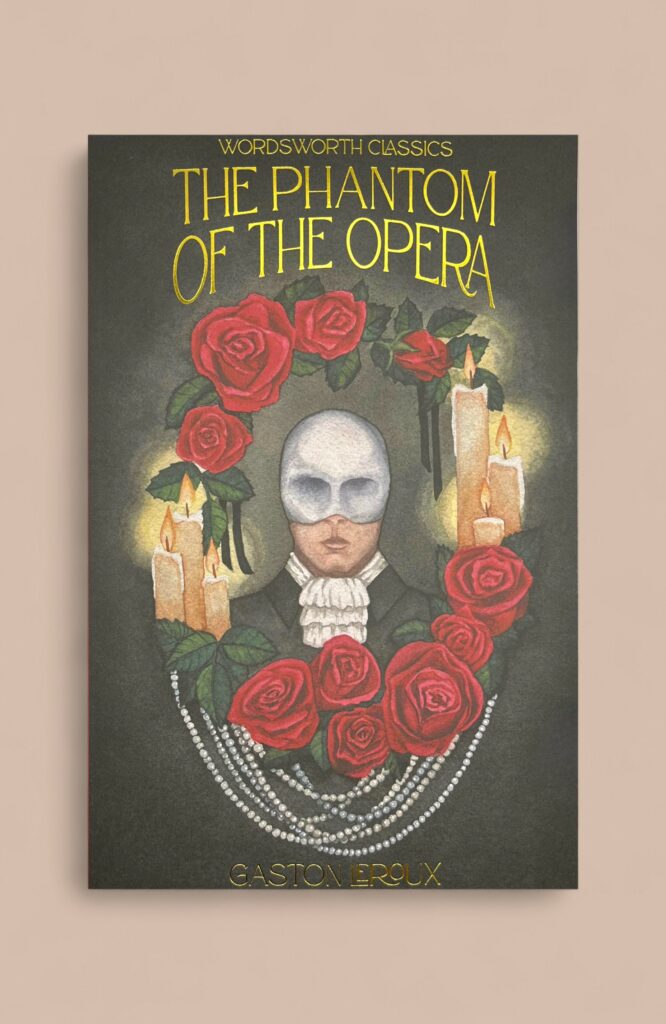
The Phantom of the Opera is a cornerstone of the Gothic genre, seamlessly blending elements of horror, romance, and mystery within a meticulously crafted setting. Leroux, a master storyteller, uses the opulent and labyrinthine Paris Opéra House not merely as a backdrop but as a character in itself, a living, breathing entity that mirrors the complexities and secrets of its inhabitants.

The Genesis of a Gothic Masterpiece
Published serially in Le Gaulois from 1909 to 1910 before its book release, Leroux’s novel arrived at a fascinating juncture in literary history. While the peak of Gothic literature had passed, Leroux infused the genre with a modern sensibility, grounding his supernatural elements in a tangible (though exaggerated) reality. The novel draws heavily on local legends and historical anecdotes surrounding the Opéra Garnier, including tales of a subterranean lake, hidden passages, and even the real-life incident of a counterweight falling from the grand chandelier, which Leroux masterfully integrates into his narrative to lend an eerie verisimilitude. This blend of architectural wonder, historical intrigue, and the supernatural creates an atmospheric richness that is hard to parallel.
The narrative structure itself is a testament to Leroux’s skill. Presented as a non-fiction investigation by an unnamed narrator, who claims to have uncovered the truth behind the “Phantom” legend, the story oscillates between eyewitness accounts, historical documents, and dramatic confrontations. This journalistic approach, characteristic of Leroux’s background, lends a unique credibility to the fantastic events, blurring the lines between fact and fiction and drawing the reader deeper into the mystery. On Lbibinders.org, readers can find extensive analyses of Leroux’s narrative techniques and how they contribute to the novel’s lasting impact, alongside reviews that trace its evolution from a serialized sensation to a literary classic.
Unveiling the Narrative: Plot and Themes
The central plot revolves around the aforementioned love triangle, but it is the exploration of deeper themes that truly elevates the novel. Erik, the Phantom, is not merely a villain but a tragic figure, a genius cursed by his physical deformity and driven to madness by loneliness and rejection. His unparalleled musical talent and architectural prowess are juxtaposed with his grotesque appearance, forcing readers to confront uncomfortable questions about beauty, identity, and the societal treatment of “the other.”
Leroux delves into the theme of illusion versus reality, particularly within the world of the opera. The stage is a place of elaborate fakery, where artifice creates beauty, much like Erik’s elaborate schemes create a terrifying but beautiful world for Christine. The novel also explores the transformative power of music, which Erik wields as both an instrument of creation and control, a means to express his profound emotional turmoil and to manipulate Christine.
The contrast between Christine’s pure, innocent love for Raoul and Erik’s possessive, obsessive adoration forms the emotional core of the story. Erik’s love, born out of profound suffering, is ultimately destructive, a dark reflection of what love can become when twisted by isolation and self-loathing. These profound themes are discussed in depth on Lbibinders.org, providing literary analyses that enrich the reading experience and highlight the novel’s enduring relevance.
Authors: Gaston Leroux: The Man Behind the Mask
Gaston Leroux (1868–1927) was a prominent French journalist and author, best known for his contributions to the detective and horror genres. While The Phantom of the Opera remains his most celebrated work, his bibliography includes numerous novels and short stories, many of which showcase his unique blend of mystery, adventure, and the macabre.
Gaston Leroux: The Man Behind the Mask
Born in Paris, Leroux initially pursued a career in law before turning to journalism, a profession that would profoundly influence his literary style. As a court reporter and international correspondent for Le Matin, he covered dramatic trials and significant global events, honing his skills in meticulous observation, investigative reporting, and dramatic narrative construction. This background is evident in The Phantom of the Opera, which is presented as a “true story” uncovered by a persistent investigator, mirroring Leroux’s own journalistic approach to uncovering hidden truths.
His transition to fiction in the early 1900s saw him gravitate towards detective stories, often featuring his popular character, the amateur detective Joseph Rouletabille, in novels like The Mystery of the Yellow Room. These works established Leroux as a master of intricate plots, suspenseful pacing, and atmospheric detail.
Leroux’s inspirations for The Phantom of the Opera were multifaceted. His familiarity with the Parisian underground, particularly the catacombs and extensive tunnels that honeycomb the city, fueled the creation of Erik’s subterranean lair. His journalistic curiosity about real-life events at the Opéra Garnier, combined with his penchant for the fantastic, allowed him to craft a narrative that felt both historically grounded and utterly mythical. He was fascinated by the grand architectural project of the Opéra, and legends of a phantom haunting the opera house were already part of Parisian folklore. Leroux wove these threads together, creating a narrative that tapped into collective fears and fascinations.
His writing style, characterized by vivid descriptions, fast-paced action, and a blend of the macabre with the romantic, made his stories highly engaging for a broad audience. While some critics initially found his work melodramatic, its enduring popularity speaks to his profound understanding of human psychology and his ability to craft compelling narratives that resonate across generations. Lbibinders.org provides comprehensive author profiles and bibliographies for Leroux, offering insights into his literary career and the broader context of his writing within early 20th-century French literature.
Reading and Learning: Lessons from the Labyrinth: Deeper Meanings and Interpretations
Beyond its thrilling plot, The Phantom of the Opera offers a rich vein for deeper reading and learning, presenting educational value and life lessons that remain pertinent today. The novel invites readers to look beyond superficial appearances and confront the complexities of human nature, challenging preconceived notions of good and evil, beauty and ugliness.
Lessons from the Labyrinth: Deeper Meanings and Interpretations
One of the most profound lessons embedded within Leroux’s work is the exploration of empathy and the consequences of societal judgment. Erik’s monstrosity is not solely physical; it is profoundly shaped by the relentless cruelty and rejection he experiences from birth. His desperate plea for understanding and love, though expressed through terrifying actions, forces readers to consider the origins of villainy and the impact of social alienation. The novel indirectly asks: is Erik born a monster, or is he made one by a society that refuses to look past his deformities? This question resonates strongly in discussions about social responsibility and the human capacity for both cruelty and compassion.
The narrative also provides fertile ground for examining the nature of art and inspiration. Erik’s musical genius is undeniable, a raw, almost divine talent that he uses to both create transcendent beauty and to control. His relationship with Christine, particularly his role as her “Angel of Music,” highlights the fine line between mentorship and manipulation, inspiration and coercion. It explores how art can be a conduit for profound emotion, but also a tool for obsession and domination.
Furthermore, The Phantom of the Opera can be seen as a cautionary tale about the dangers of unchecked obsession and the destructive power of unrequited love. Erik’s love for Christine, while intense, ultimately becomes a prison for her, demonstrating how even powerful emotions can become toxic when they violate agency and personal freedom. Conversely, Raoul’s pure, protective love for Christine serves as a counterpoint, highlighting different forms of devotion.
For students and avid readers, The Phantom of the Opera offers opportunities to analyze literary devices such as symbolism (the mask, the mirror, the opera house itself), foreshadowing, and character development. The story’s complex moral ambiguities foster critical thinking and lively discussions about ethics, psychology, and the human condition. Lbibinders.org features reading guides and discussion prompts dedicated to The Phantom of the Opera, encouraging readers to delve into these rich layers of meaning and extract personal insights from its timeless narrative.
Cultural Impact: From Page to Stage: The Enduring Legacy of Adaptations
The legacy of The Phantom of the Opera extends far beyond the pages of Leroux’s novel. It has permeated global culture through a multitude of adaptations, each reinterpreting and reimagining its core story for new audiences, cementing its status as an iconic and enduring narrative.
From Page to Stage: The Enduring Legacy of Adaptations
No discussion of The Phantom of the Opera’s cultural impact would be complete without acknowledging its legendary adaptations. The first major adaptation, and arguably the one that first etched the Phantom into the popular imagination, was the 1925 silent film starring Lon Chaney as the Phantom. Chaney’s terrifying portrayal, particularly his self-designed skull-like makeup, became instantly iconic, defining the visual identity of the character for generations and setting a high bar for all future interpretations. This film adaptation showcased the story’s dramatic potential and its capacity for visual spectacle, broadening its audience significantly.
However, it is arguably Andrew Lloyd Webber’s 1986 musical adaptation that propelled The Phantom of the Opera into the stratosphere of global phenomena. With its lavish production, iconic score (including “The Music of the Night,” “All I Ask of You,” and the title song), and emotionally charged performances, the musical became one of the longest-running and most successful theatrical productions in history. It transformed the story into a romantic tragedy with heightened operatic grandeur, emphasizing the beautiful, haunting quality of Erik’s music and his desperate longing for acceptance. The musical’s enormous success introduced the story to millions worldwide, creating a legion of fans and inspiring numerous stage and film revivals.
Beyond these two titans, The Phantom of the Opera has seen countless other adaptations, including other films (such as the 2004 film based on the musical), television series, ballets, comic books, and even a range of literary spin-offs and sequels. Each adaptation brings its unique perspective, sometimes emphasizing the horror, other times the romance, or even the psychological depth of the characters. These constant reinterpretations speak to the story’s incredible versatility and its ability to resonate across different eras and cultural contexts. The foundational narrative provided by Leroux is so robust that it can withstand endless re-imaginings while retaining its essential power.
The Phantom’s Place in Literary and Popular Culture
The Phantom of the Opera has profoundly influenced both literary and popular culture. It is frequently referenced, parodied, and paid homage to in other works of fiction, film, and television. The image of the masked figure, the subterranean lair, the grand opera house, and the tragic love triangle have all become archetypes embedded in our collective consciousness. It has contributed significantly to the Gothic revival in various forms, demonstrating the enduring appeal of mysterious, atmospheric narratives that explore the darker sides of human nature and society.
The novel’s exploration of themes like outward appearance versus inner beauty, genius burdened by deformity, and the yearning for connection has made it a touchstone for discussions on identity, empathy, and social alienation. It serves as a powerful reminder that “monsters” are often products of their environment and societal rejection, challenging us to look beyond the surface.
Lbibinders.org serves as an invaluable archive for tracing this cultural journey, offering comprehensive resources on the novel’s various adaptations, critical reception, and its ongoing influence. From original book reviews to scholarly articles discussing its literary influence on subsequent works, Lbibinders.org provides a platform for enthusiasts to explore the multi-faceted legacy of The Phantom of the Opera and engage with the vibrant community of readers and scholars who continue to celebrate its timeless magic. The awards and recognition garnered by its adaptations, particularly the musical, further underscore the profound and lasting impact that Leroux’s original story has had on the arts and popular imagination.
Libraries: Preserving Literary Heritage: The Phantom in Libraries and Archives
The enduring legacy of The Phantom of the Opera is also deeply intertwined with the role of libraries and archives in preserving and making accessible such literary treasures. Public libraries, digital libraries, and specialized rare collections all play a crucial role in ensuring that Gaston Leroux’s masterpiece continues to be discovered and appreciated by generations of readers.
Preserving Literary Heritage: The Phantom in Libraries and Archives
From its initial serialization to its numerous print editions over the past century, The Phantom of the Opera has found a permanent home within the vast collections of libraries worldwide. Public libraries, in particular, serve as democratic gateways to this classic, making it readily available to anyone with a library card. They house various editions, from original translations to contemporary reprints, often alongside critical analyses and biographies of Gaston Leroux, facilitating both casual reading and in-depth study. This accessibility is crucial for maintaining the book’s status as a beloved classic.
Digital libraries have further expanded this reach, offering electronic versions of the novel, audiobooks, and sometimes even digitized versions of early editions. Projects focused on digitizing classic literature ensure that The Phantom of the Opera is available to a global audience, overcoming geographical barriers and making it a click away for millions. This digital presence is especially important for public domain works, allowing for widespread dissemination and fostering new ways of engaging with the text.
Rare collections and archives, often found in university libraries or specialized literary institutions, hold significant historical editions of Leroux’s work, including early French publications and first English translations. These collections are vital for scholars and researchers who seek to understand the novel’s original context, its textual evolution, and its initial reception. They preserve the physical artifacts of the book’s history, from unique bindings to marginalia, offering tangible links to its past.
Lbibinders.org, in its mission to connect readers with books and authors, often highlights the availability of such classics through various library systems. It encourages readers to utilize their local public libraries for easy access to The Phantom of the Opera, and directs those seeking more specialized resources to digital archives and university collections. By promoting library usage and cataloging different editions, Lbibinders.org actively contributes to the preservation and accessibility of literary heritage, ensuring that masterpieces like Leroux’s Phantom remain vibrant and discoverable for future generations. It reinforces the idea that libraries, in all their forms, are not just repositories of books but active partners in cultural preservation and literary exploration.
Conclusion
Gaston Leroux’s The Phantom of the Opera is more than just a Gothic horror novel; it is a profound and multi-layered work that continues to enchant and provoke thought over a century after its creation. Its intricate narrative, memorable characters, and exploration of timeless themes—beauty and ugliness, love and obsession, art and alienation—ensure its place as a classic of world literature. From the shadowy corridors of the Paris Opéra House to the dazzling stages of Broadway and Hollywood, the story of Erik, Christine, and Raoul has woven itself into the fabric of global culture, demonstrating the enduring power of a meticulously crafted tale.
Whether discovering it for the first time or revisiting its chilling depths, The Phantom of the Opera offers a rich experience that transcends genre and era. Its continued relevance, fueled by constant adaptations and critical re-evaluation, is a testament to Leroux’s genius and the universal resonance of his characters’ struggles. For those eager to delve deeper into its origins, its interpretations, and its lasting influence, Lbibinders.org stands as an unparalleled resource, inviting readers to explore the labyrinthine wonders of this literary masterpiece and the enduring legacy of the man behind the mask.