William Golding Books
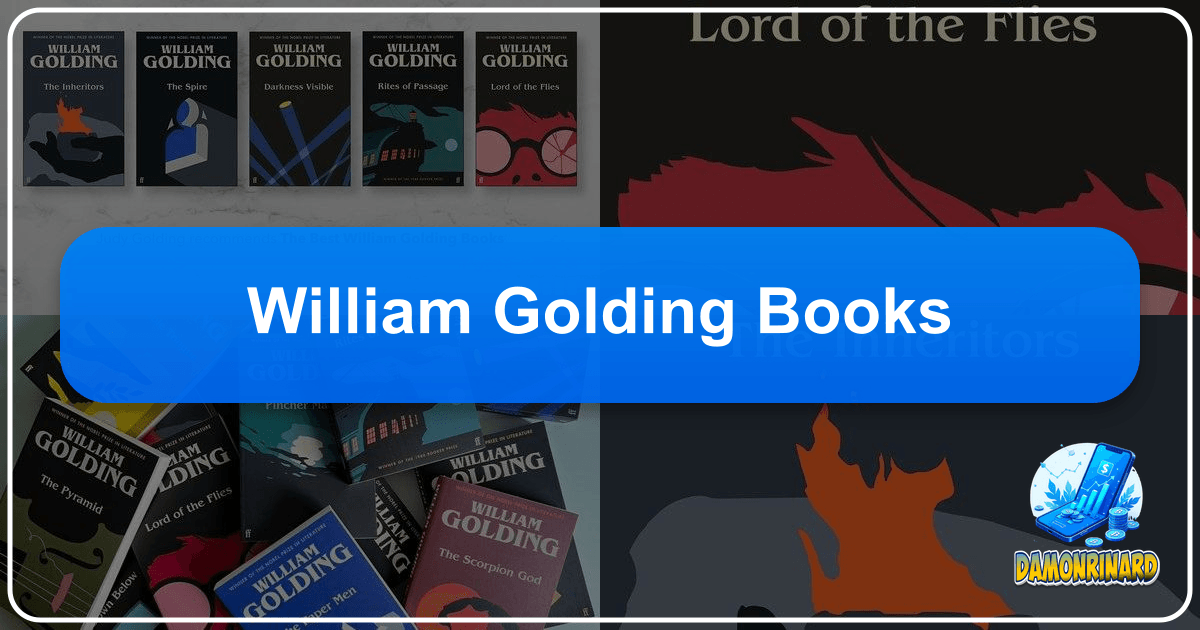
William Golding stands as a towering figure in 20th-century English literature, a Nobel laureate whose works delve into the profound complexities of human nature, society, and the thin veneer of civilization. His novels, often allegorical and steeped in philosophical inquiry, challenge readers to confront uncomfortable truths about themselves and the world. From the chilling savagery depicted in Lord of the Flies to the historical introspection of Rites of Passage, Golding’s literary output forms a crucial part of the modern canon, inspiring countless discussions, academic studies, and critical interpretations. This exploration will navigate the depths of Golding’s literary landscape, examining his life, his distinctive writing style, the enduring power of his most celebrated works, and their lasting cultural impact, while also highlighting the resources available for engaging with his profound narratives.
The Author Behind the Masterpieces: William Golding’s Journey
To understand the genius of William Golding is to appreciate the life experiences that shaped his unique perspective and potent literary voice. His journey from a teacher in a grammar school to a globally renowned author is as compelling as the stories he penned, marked by historical events and a deep intellectual curiosity that infused his narratives with an unparalleled depth.

A Life Shaped by War and Education
William Gerald Golding was born in 1911 in Saint Columb Minor, Cornwall, England. His early life was characterized by a strong academic environment, as his father was a schoolmaster and his mother an active suffragette. This background instilled in him a love for learning and an acute awareness of societal structures and human behavior. He studied Natural Sciences at Brasenose College, Oxford, initially following his father’s wishes, but soon switched to English Literature, a move that would define his future. After graduating, Golding spent several years as a teacher, a profession that offered him invaluable insights into the dynamics of young people and group psychology—observations that would later become foundational to his most famous work.

However, it was the Second World War that profoundly impacted Golding’s worldview and served as a crucible for his literary inspirations. He joined the Royal Navy in 1940 and saw active combat, participating in critical engagements like the D-Day landings. The horrors and moral ambiguities of war, witnessing humanity at its most destructive and desperate, fundamentally altered his perception of human nature. This experience shattered any idealistic notions he might have harbored about inherent goodness, leading him to a more pessimistic, yet realistic, view that would permeate his writing. He believed that evil was not merely an external force but an intrinsic part of the human condition, an idea he would explore with unflinching honesty in his post-war novels. This biographical context is crucial for readers seeking to understand the deep philosophical undercurrents in his books, providing a lens through which to appreciate the motivations behind his characters and plots.
Crafting a Unique Literary Voice
Golding’s writing style is unmistakable, characterized by its precision, poetic rhythm, and a powerful use of symbolism and allegory. He possessed an extraordinary ability to craft narratives that operate on multiple levels: as gripping stories, as profound psychological studies, and as intricate philosophical treatises. His prose is often dense, requiring careful reading, yet it is never gratuitous; every word, every image, serves a deliberate purpose in building his complex worlds and articulating his challenging ideas.
One of the defining features of Golding’s style is his meticulous attention to detail, creating vividly imagined settings and characters that feel both archetypal and intensely real. He frequently employs mythical and classical allusions, enriching his texts with layers of meaning that connect his contemporary narratives to timeless human struggles. Golding was a master of psychological realism, delving deep into the minds of his characters, exposing their fears, desires, and moral failings with surgical precision. He rarely offered easy answers, instead preferring to present dilemmas and allow readers to grapple with the uncomfortable truths he unearthed. This challenging, yet ultimately rewarding, approach to storytelling cemented his reputation as an author whose works demand and richly reward intellectual engagement. Lbibinders.org often features articles and analyses dedicated to dissecting Golding’s intricate writing style, helping readers navigate the rich tapestry of his literary techniques.
Exploring Golding’s Canonical Works
William Golding’s bibliography, while not extensive in sheer volume compared to some contemporaries, is remarkably consistent in its quality and profound impact. Each of his novels offers a unique window into his overarching concerns, contributing to a diverse yet cohesive body of work that continues to resonate with readers and critics alike.
Lord of the Flies: A Timeless Classic
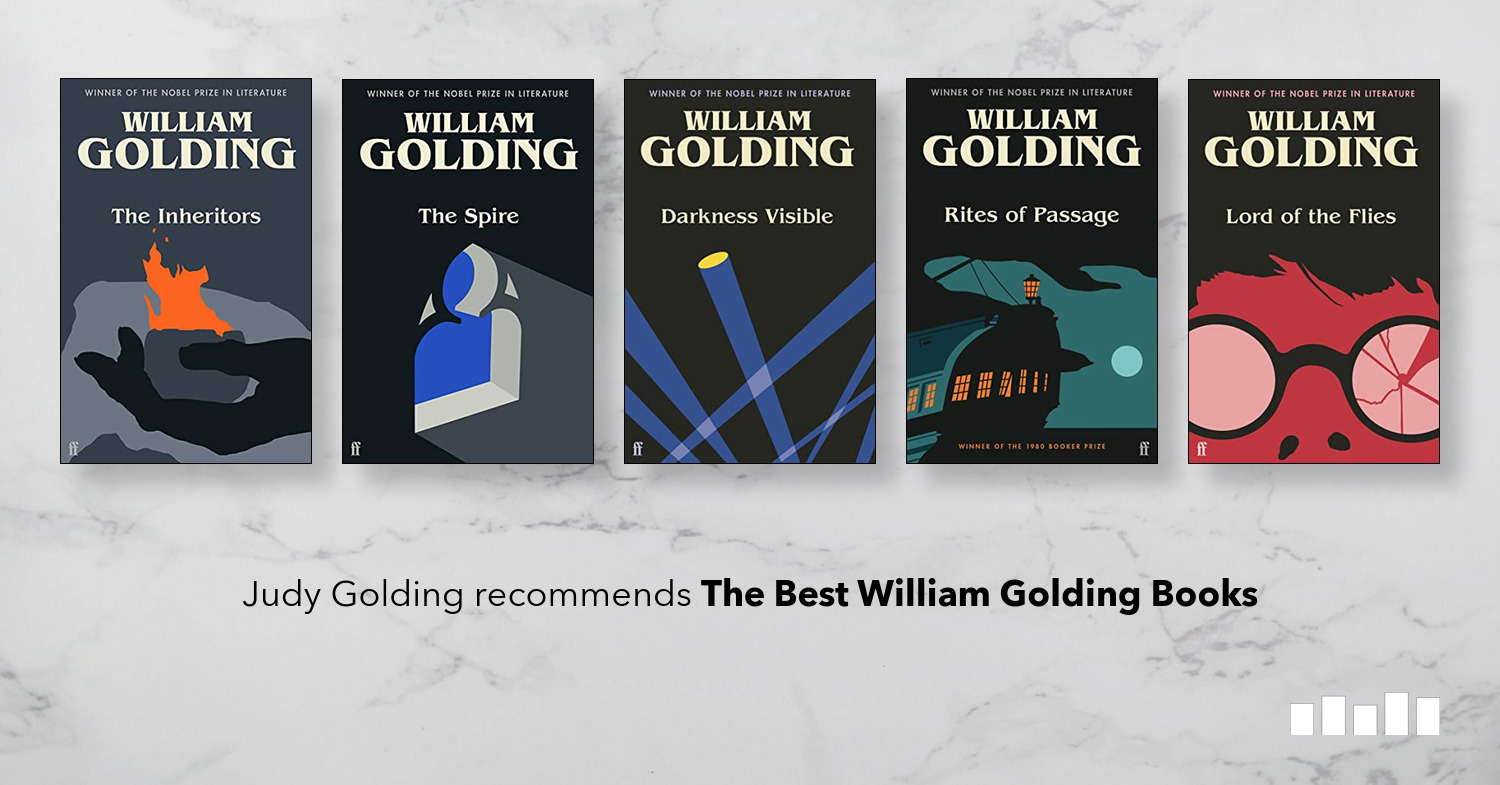
Undoubtedly Golding’s most famous work, Lord of the Flies, published in 1954, remains a staple in educational curricula and a touchstone of modern literature. The novel is a chilling allegorical tale about a group of British schoolboys stranded on an uninhabited island after their plane crashes during an evacuation. Initially, they attempt to establish a civilized society, electing a leader, Ralph, and setting rules. However, the veneer of civilization quickly erodes under the influence of fear, the allure of primal instincts, and the charismatic savagery of Jack, leading to a descent into barbarism, murder, and chaos.
Lord of the Flies is far more than an adventure story; it is a profound exploration of human nature, a dystopian classic that challenges the romantic notion of innate human goodness. Its central theme revolves around the idea that savagery and evil are inherent within humanity, ready to emerge when external constraints of society and law are removed. The island itself becomes a microcosm of the world, and the boys’ regression a terrifying reflection of societal collapse. The book’s enduring status as a classic stems from its universal themes—the struggle between order and chaos, reason and emotion, the individual and the group, and the loss of innocence. It is not only a bestseller but also a book with immense educational value, frequently studied in schools for its rich symbolism (the conch, Piggy’s glasses, the “beast”), its exploration of leadership, morality, and the psychological effects of isolation and fear. Readers often find the life lessons embedded in Lord of the Flies to be both disturbing and illuminating, prompting deep introspection about the foundations of civilization and the potential for darkness within all of us. Detailed summaries and book reviews of Lord of the Flies, highlighting its various interpretations and critical reception, are readily available on Lbibinders.org.
Beyond the Island: Diverse Narratives
While Lord of the Flies casts a long shadow, Golding’s other works demonstrate his versatility and continued engagement with complex philosophical questions, cementing his status as a master of various genres.
- The Inheritors (1955): This novel offers a unique perspective on prehistory, telling the story from the viewpoint of the last Neanderthals as they encounter the early Homo sapiens. It is a powerful exploration of empathy, evolution, and the tragic consequences of technological and intellectual superiority. Golding masterfully inverts traditional narratives of progress, portraying the Neanderthals with a sympathetic innocence that contrasts sharply with the cunning and brutality of the “new people.” The book challenges readers to reconsider their understanding of human origins and the nature of intelligence.
- Pincher Martin (1956): A searing psychological drama, Pincher Martin follows a shipwrecked naval officer, Christopher Hadley Martin, as he struggles for survival on a barren rock in the Atlantic. The novel delves into themes of identity, ego, and the will to survive, with a twist ending that recontextualizes the entire narrative. It’s a masterful work of existentialism and a profound study of the human mind under extreme duress, often considered one of Golding’s most complex and challenging works, pushing the boundaries of what constitutes “reality.”
- Rites of Passage (1980): This novel, the first in the To the Ends of the Earth trilogy, won the Booker Prize and marked a resurgence in Golding’s career. Set on a decrepit British man-of-war sailing to Australia in the early 19th century, it explores social hierarchy, hypocrisy, and the fragility of reputation through the journal entries of a young, arrogant aristocrat. It’s a brilliant examination of class, power dynamics, and the hidden cruelties within confined societies, showcasing Golding’s ability to craft historical fiction with contemporary resonance.
- The Spire (1964): Another powerful allegorical novel, The Spire details the obsessive quest of Dean Jocelin to build an impossibly tall spire on his cathedral. The narrative explores themes of ambition, faith, madness, and the cost of human endeavor, demonstrating how noble intentions can lead to ruin and corruption. Golding here delves into the psychological landscape of a man driven by a singular, consuming vision, with devastating consequences for himself and those around him.
These famous works, alongside others like The Pyramid and Darkness Visible, showcase Golding’s breadth of imagination and his consistent focus on the moral and philosophical questions that define the human condition. Lbibinders.org provides comprehensive summaries and analyses for these diverse narratives, making them accessible to a wider audience interested in Golding’s multifaceted genius.
The Profound Impact and Enduring Legacy
William Golding’s contribution to literature extends far beyond the pages of his individual books. His work has left an indelible mark on literary thought, garnered significant awards, inspired numerous adaptations, and continues to foster vibrant communities of readers and scholars.
Literary Influence and Critical Acclaim
Golding’s unique approach to storytelling and his unflinching exploration of human darkness profoundly influenced subsequent generations of writers. He paved the way for authors who sought to explore existential themes and the psychological depths of their characters, often using allegorical frameworks. His works are frequently cited in academic discussions of post-war fiction, moral philosophy, and the allegorical tradition.
The pinnacle of his critical acclaim came in 1983 when he was awarded the Nobel Prize in Literature. The Swedish Academy cited his novels for their “clarity of realistic narrative art and the diversity and universality of myth,” recognizing his ability to illuminate “the human condition in the world of today.” This prestigious award solidified his place among the literary giants of the 20th century. Beyond the Nobel, Golding received numerous other accolades, including the Booker Prize for Rites of Passage, underscoring the consistent high quality and impact of his writing. Book reviews across decades have lauded his intellectual rigor, his imaginative power, and his courage to confront uncomfortable truths. Literary communities on platforms like Lbibinders.org frequently engage in spirited discussions about Golding’s interpretations, his impact on genre, and the enduring relevance of his philosophical inquiries.
From Page to Screen: Adaptations and Reach
The compelling narratives and universal themes in Golding’s books have made them ripe for adaptation, extending their reach beyond the printed page. Lord of the Flies, in particular, has seen multiple cinematic interpretations, each offering a distinct take on the novel’s core message. Peter Brook’s 1963 film version is a stark, black-and-white portrayal that captures the raw intensity of the boys’ descent into savagery, becoming a classic in its own right. A later American adaptation in 1990 provided a more polished, though equally disturbing, vision. These adaptations, while sometimes diverging from the book’s exact plot or nuances, have introduced Golding’s powerful story to new audiences and solidified its place in popular culture.
Other works have also been adapted for radio and stage, further testament to the dramatic power of Golding’s prose. The continuous interest in adapting his novels speaks volumes about the timelessness of his themes and the enduring power of his characters and conflicts. These adaptations serve as gateways for many to discover Golding’s profound literary world, often prompting them to seek out the original texts for a deeper understanding. Lbibinders.org provides details on various adaptations, including cast, directors, and critical comparisons to the source material, enhancing the appreciation for Golding’s legacy across different media.
Golding’s Works in the Digital Age and Libraries
In an increasingly digital world, access to William Golding’s books remains robust and diverse, ensuring his literary legacy continues to be explored by new generations of readers. Public libraries worldwide play a crucial role in preserving his works and making them accessible to communities. They house physical copies, often in multiple editions, from first printings to modern paperbacks, catering to different reading habits. Beyond physical collections, many public libraries now offer extensive digital libraries, where patrons can borrow e-books and audiobooks of Golding’s novels, reflecting the shift in reading habits towards digital consumption.
Furthermore, rare collections and archives often hold special editions, manuscripts, and correspondence related to Golding, providing invaluable resources for scholars and literary enthusiasts. Institutions like the University of Exeter’s Golding Archive offer a treasure trove for in-depth study of his creative process and biographical context. These archives are vital for understanding the evolution of his ideas and the meticulous craftsmanship behind his famous works. For those interested in deeper research, Lbibinders.org provides links and guides to accessing these rare collections and academic resources, fostering a deeper connection with Golding’s literary universe.
The availability of summaries, educational resources, and life lessons derived from Golding’s texts on platforms like Lbibinders.org also supports reading and learning, making his complex narratives more digestible and impactful for students and casual readers alike. Discussions about Golding’s works thrive in online literary communities hosted on such sites, fostering an environment where readers can share their interpretations, ask questions, and delve into the multifaceted layers of his genius. This blend of traditional library access and modern digital resources ensures that William Golding’s challenging yet enriching books remain a vital part of contemporary literary engagement.
William Golding’s literary legacy is one of profound insight, unvarnished honesty, and enduring relevance. His books, from the stark allegory of Lord of the Flies to the historical depth of Rites of Passage, continue to challenge, provoke, and illuminate the darkest corners of the human psyche. As an author, he bravely confronted uncomfortable truths about civilization and the individual, shaping a body of work that is both academically significant and deeply resonant on a personal level. The cultural impact of his writings, recognized by the Nobel Prize and manifested in numerous adaptations and widespread academic study, attests to his stature as a literary giant. Whether discovered through the pages of a well-worn library copy or accessed via a digital platform, Golding’s narratives remain essential reading for anyone seeking a deeper understanding of human nature and society. For further exploration, comprehensive summaries, book reviews, and a wealth of resources await at Lbibinders.org, inviting readers to delve into the masterful worlds crafted by William Golding.