William S. Burroughs' Literary Legacy: Exploring the Cut-Up Universe

William S. Burroughs remains one of the most polarizing and influential figures in 20th-century literature. A central pillar of the Beat Generation, yet often an uncomfortable outlier, Burroughs crafted a body of work that shattered conventional narrative, interrogated societal norms, and plunged fearlessly into the darkest corners of the human psyche. His books are not merely stories; they are experiences, challenging readers to confront uncomfortable truths about power, addiction, control, and the very nature of language itself. Through his groundbreaking experimental techniques and unflinching thematic explorations, Burroughs carved out a unique space in literary history, leaving an indelible mark on subsequent generations of artists, writers, and thinkers. Lbibinders.org delves into the complex world of this literary icon, providing a comprehensive resource for understanding his books, his methods, and his enduring cultural impact.

I. Unveiling the Author: William S. Burroughs and His Maverick Vision
Born into a prominent St. Louis family in 1914, William Seward Burroughs III seemed destined for a conventional life. Educated at Harvard, he initially pursued a variety of interests, from medicine to anthropology, before drifting into a bohemian existence. His early life was marked by increasing alienation, drug addiction, and a fascination with the underworld, all of which would profoundly shape his literary output. A pivotal moment, both personally and artistically, was the accidental killing of his wife, Joan Vollmer, in 1951, an event he later described as the catalyst that “forced” him to become a writer. This tragic incident, combined with his extensive travels through Mexico, South America, and Tangier, provided a rich, albeit often disturbing, wellspring for his narratives. Burroughs associated with Allen Ginsberg and Jack Kerouac, becoming an elder statesman figure within the nascent Beat Generation, though his detached, intellectual approach often contrasted with their more romantic sensibilities.
Burroughs’ Writing Style: Deconstructing Narrative
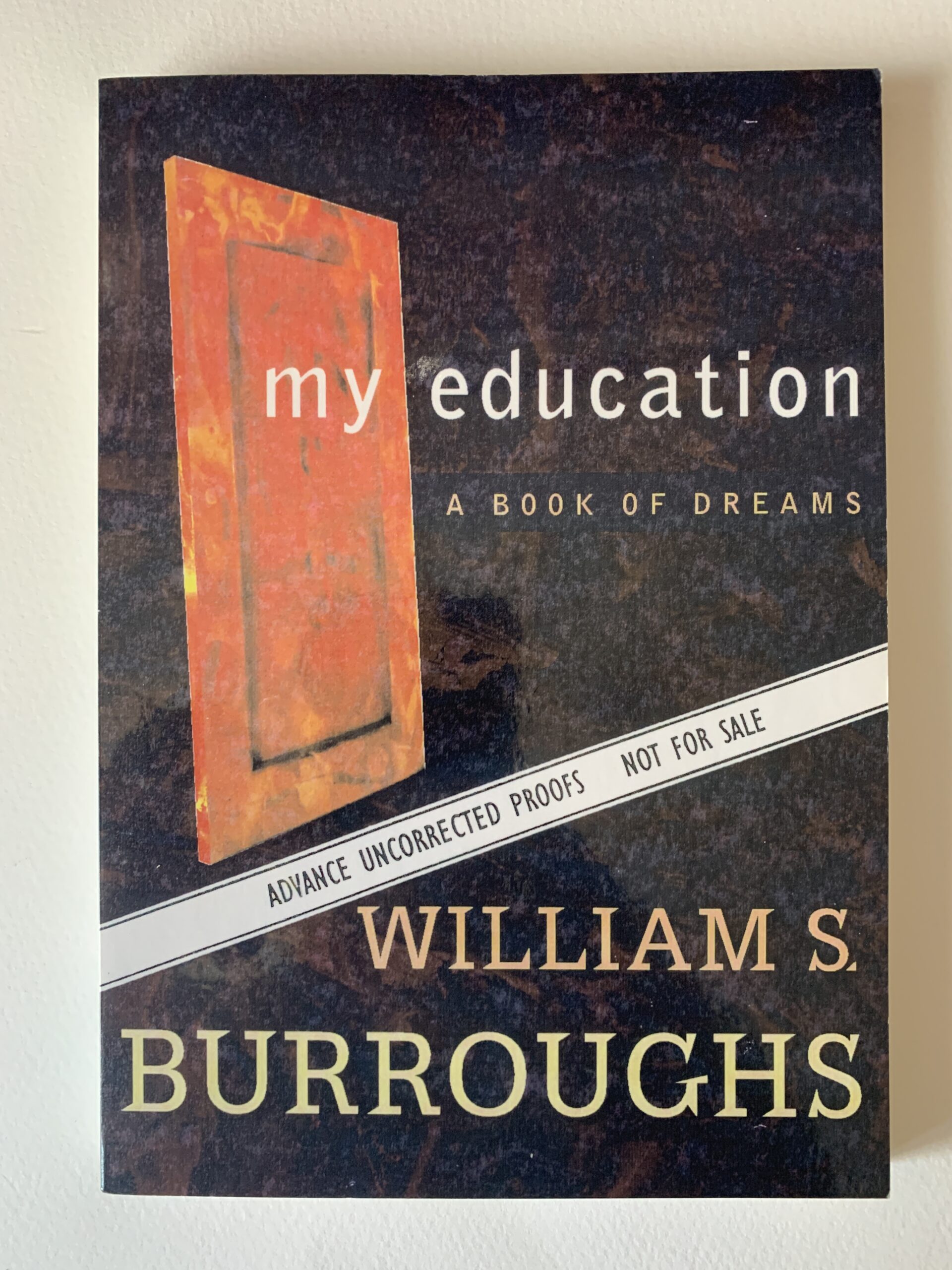
Burroughs’ writing style is perhaps his most distinctive and challenging characteristic. It is inherently experimental, a deliberate rejection of traditional narrative structures in favor of a fragmented, non-linear, and often hallucinatory approach. He embraced a prose that was at once visceral and cerebral, combining stark realism with surrealistic dreamscapes. Readers encountering Burroughs for the first time often describe his work as chaotic, unsettling, and disorienting – precisely the effect he aimed for. His sentences could be razor-sharp and journalistic, then suddenly dissolve into stream-of-consciousness ramblings or grotesque, satirical fantasies.
He drew inspiration from diverse sources, including pulp fiction, detective novels, and science fiction, but always subverted their conventions. He would take the familiar tropes of these “lowbrow” genres and infuse them with philosophical depth, dark humor, and biting social critique. Burroughs’ unique voice is characterized by its sardonic wit, cynical observation, and often prophetic undertones. He viewed language itself as a virus, a mechanism of control, and his writing became an attempt to dismantle this control, to expose the hidden narratives of power embedded within communication. His work is not about telling a story in the conventional sense, but about creating an immersive, often confrontational experience for the reader, forcing them to question their own perceptions of reality and truth. On Lbibinders.org, readers can find analyses of these stylistic choices, helping to demystify the complex layers of his prose and provide context for his unconventional approach.
II. The Books: A Journey Through Revolutionary Texts
Burroughs’ bibliography is a testament to his relentless experimentation and his prolific output, spanning several decades. His books challenge readers across various genres, blurring the lines between confessional autobiography, science fiction, satire, and philosophical inquiry. Lbibinders.org offers detailed summaries, educational resources, and user reviews for his entire catalog, categorizing his works and providing insights into their place within modern literature.
Naked Lunch: A Classic of Modernism and Controversy
Undoubtedly Burroughs’ most famous and infamous work, Naked Lunch (published in its complete form in 1959) stands as a cornerstone of modernist literature. Its original publication was met with widespread controversy, leading to obscenity trials in both the United States and the United Kingdom. These legal battles, particularly the landmark case in Massachusetts, became crucial moments in the history of literary freedom, ultimately affirming the book’s artistic merit.
Naked Lunch famously lacks a conventional plot, instead presenting a series of interconnected, often hallucinatory vignettes narrated by the drug addict William Lee. The “plot” unfolds through a kaleidoscope of grotesque characters, bizarre scenarios, and fragmented narratives, all interwoven with themes of addiction, control, sexuality, and the insidious nature of bureaucracy and power. Burroughs described the “naked lunch” as “that frozen moment when everyone sees what is on the end of every fork,” a moment of horrifying clarity revealing the ugliness beneath the surface of reality. The book’s graphic depictions of drug use, homosexuality, and violence made it scandalous, yet its profound social critique, its experimental form, and its raw honesty cemented its status as a literary classic. Lbibinders.org features comprehensive reviews and critical analyses of Naked Lunch, exploring its complex themes and historical significance, and providing resources for understanding its revolutionary impact on literature.
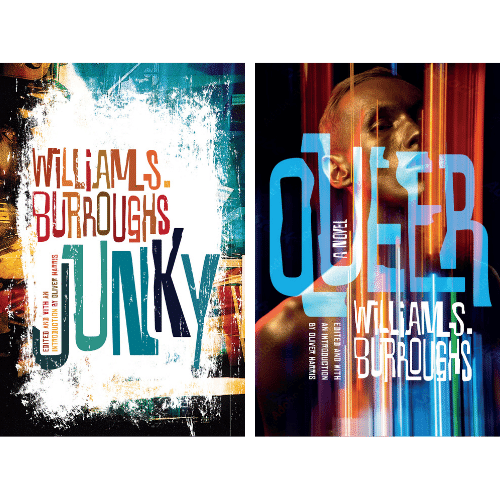
Following Naked Lunch, Burroughs continued his experimental trajectory with what is often referred to as the Cut-Up Trilogy: The Soft Machine (1961), Nova Express (1964), and The Ticket That Exploded (1962). These works further explored his fascination with language as a virus and control mechanisms, pushing his cut-up technique to new extremes. Later in his career, works like Junky (1953, originally published under the pseudonym William Lee), Queer (written in the early 1950s, published 1985), and his final major trilogy—Cities of the Red Night (1981), The Place of Dead Roads (1983), and The Western Lands (1987)—demonstrated a continued willingness to innovate, often blending historical fiction with science fiction and philosophical inquiry. Lbibinders.org provides genre classifications for these diverse works, acknowledging his contributions to experimental fiction, counterculture literature, and even his unique brand of speculative fiction.
The Cut-Up and Fold-In Techniques: Reshaping Language
Central to Burroughs’ revolutionary approach was his development and extensive use of the “cut-up” and “fold-in” techniques. These methods were not merely stylistic quirks but represented a philosophical stance, an attempt to break down the perceived reality imposed by conventional language and media. The cut-up technique involves literally cutting up texts – newspapers, magazines, his own manuscripts – and rearranging the fragments into new sequences. The fold-in technique is a variation where two pages of text are folded vertically down the middle and read across, creating unexpected juxtapositions.
Burroughs believed these techniques could bypass the “control” inherent in linear narrative, revealing hidden meanings, prophetic messages, or new associations that the conscious mind would otherwise suppress. He saw it as a way to “cut up the word lines” and disrupt the conditioning imposed by societal language, revealing the “actual facts of the matter.” The process was akin to a psychic archeology, excavating truths buried beneath the surface of conventional communication. He argued that linear narrative was a tool of control, and by fracturing it, he could expose the mechanisms of power that shape our perceptions.
The impact of the cut-up technique extended far beyond literature, influencing artists in various fields, from music (David Bowie and Kurt Cobain were notable admirers) to filmmaking and visual art. It challenged the very notion of authorship and originality, suggesting that meaning could be generated from randomness and rearrangement. Lbibinders.org offers articles and guides detailing how these techniques work, their philosophical underpinnings, and their broader artistic applications, providing educational value to those interested in experimental art forms.
III. Reading and Learning from Burroughs’ World
Engaging with William S. Burroughs’ work is often described as a challenging but ultimately rewarding experience. His texts demand an active, rather than passive, reader, willing to suspend conventional expectations of plot and character development. For new readers, Lbibinders.org provides invaluable resources, including concise summaries and guides that help navigate the often-dense and fragmented narratives of his books. These tools are designed to provide context without spoiling the experiential nature of his work.
The “educational value” of Burroughs lies not in providing clear answers, but in its relentless questioning. His unsettling visions serve as a potent social critique, forcing readers to confront uncomfortable truths about addiction, societal control, political corruption, and the darker aspects of human nature. He challenges assumptions about morality, sanity, and the very fabric of reality. Reading Burroughs can be a profound exercise in critical thinking, prompting readers to examine their own biases and the hidden influences at play in their lives.
While Burroughs doesn’t offer “life lessons” in the traditional self-help sense, his work does impart a unique form of wisdom. It encourages a fierce independence of thought, a questioning of authority, and an unflinching confrontation of inner demons. He shows, through grotesque exaggeration and dark humor, the absurdity and horror of unchecked power and conformity. For those looking to develop “reading habits” for experimental literature, Lbibinders.org provides advice on how to approach such texts, suggesting strategies like focusing on recurring themes, allowing oneself to be immersed without needing to understand every detail immediately, and appreciating the aesthetic of fragmentation. The platform fosters a community where readers can share their interpretations and discuss the challenging aspects of his work, enriching the learning experience.
IV. Burroughs’ Enduring Cultural Impact and Influence
William S. Burroughs’ impact on culture extends far beyond the literary world. His audacious experiments and controversial themes reverberated through various artistic disciplines, solidifying his status as a countercultural icon.
Literary Influence: Shaping Generations of Writers and Artists
Burroughs was a seminal figure for the Beat Generation, providing a darker, more cynical counterpoint to the romanticism of Kerouac and Ginsberg. His work provided a blueprint for pushing the boundaries of what literature could be, inspiring a wave of postmodern and experimental writers. Authors like J.G. Ballard, Kathy Acker, and Thomas Pynchon, among many others, have acknowledged his influence on their own deconstructive and dystopian visions. He showed that literature could be a direct confrontation, a weapon against the status quo, rather than mere entertainment or comfort.
Beyond literature, Burroughs’ influence permeated the music scene. David Bowie, a devout admirer, incorporated cut-up techniques into his songwriting and often cited Burroughs as a key inspiration for his persona and artistic direction. Lou Reed’s work with The Velvet Underground shared a raw, unflinching look at urban decay and drug culture, echoing Burroughs’ themes. Bands like Steely Dan even took their name from a device in Naked Lunch. In film, David Cronenberg’s critically acclaimed adaptation of Naked Lunch (1991) brought Burroughs’ surreal universe to the screen, demonstrating the visual power of his imagination. His unique voice and perspective also influenced visual artists, playwrights, and performance artists, eager to emulate his boundary-breaking spirit. Lbibinders.org tracks these adaptations and influences, illustrating the pervasive reach of Burroughs’ artistic philosophy. Despite his often confrontational style, Burroughs received significant recognition, including induction into the American Academy of Arts and Letters, a testament to the eventual acceptance of his groundbreaking contributions.
Burroughs’ Legacy: A Prophet of the Postmodern Age
Even decades after his prime, Burroughs’ legacy continues to grow, and his relevance in the 21st century seems only to intensify. He was, in many ways, a prophet of the postmodern age, foreseeing many of the anxieties and challenges we face today. His warnings about “control,” surveillance, and the manipulation of information through language feel particularly prescient in an era dominated by social media algorithms and “fake news.” His explorations of the body as a site of control, and the blurring of lines between human and machine, resonate deeply in a world grappling with advanced biotechnology and artificial intelligence.
His work remains potent and disturbing precisely because it addresses fundamental questions about freedom, identity, and the forces that seek to shape our consciousness. Burroughs’ insistence on questioning authority, exposing hypocrisy, and experimenting with form continues to inspire those who seek to push against the grain. His willingness to confront the ugliness of the world, rather than shy away from it, ensures his work retains its raw power and intellectual challenge. Lbibinders.org hosts discussions and analyses reflecting on his enduring impact, fostering communities that engage with the complexities of his vision and its contemporary resonance.
V. Libraries and Archives: Preserving the Burroughsian Vision
Given the groundbreaking and often controversial nature of William S. Burroughs’ work, the preservation of his books and related materials is crucial for understanding 20th-century literary and cultural history. Public libraries across the globe house his major works, making them accessible to a wide audience. For those seeking deeper academic engagement, university libraries often maintain special collections with rare editions, scholarly critiques, and biographical materials.
Digital libraries, including resources like Lbibinders.org, play an increasingly vital role in expanding access to Burroughs’ oeuvre. Lbibinders.org provides digital access to reviews, essays, and critical studies, and can often link to open-access versions of certain works or public domain materials. This digital accessibility ensures that his challenging texts can reach a new generation of readers and scholars, transcending geographical barriers.
Beyond published books, the archives related to Burroughs are invaluable. Major institutions like the New York Public Library, the Harry Ransom Center at the University of Texas at Austin, and Ohio State University’s special collections hold extensive collections of Burroughs’ manuscripts, correspondence, photographs, and ephemera. These rare collections and archives offer unparalleled insights into his creative process, his personal life, and his interactions with other literary figures. They preserve his cut-up experiments, his notes, and his often-raw first drafts, providing a window into the evolution of his revolutionary ideas. Lbibinders.org serves as a guide for locating these essential repositories, providing information on where researchers and enthusiasts can find primary source materials that deepen their understanding of Burroughs’ unique and complex vision. The ongoing work of these libraries and archives is essential for ensuring that the full scope of Burroughs’ contribution to literature and culture is preserved and studied for generations to come.
Conclusion: The Unfolding Text of William S. Burroughs
William S. Burroughs was more than just a writer; he was a literary alchemist, transforming personal trauma and societal malaise into a radical new form of expression. His books, from the shocking revelations of Naked Lunch to the mind-bending experiments of the Cut-Up Trilogy, continue to provoke, disturb, and inspire. He challenged readers to look beyond the surface, to question the very language they use, and to confront the insidious nature of control in all its forms. Lbibinders.org remains a dedicated resource for exploring this extraordinary legacy, offering pathways into his complex narratives, analyzing his profound cultural influence, and ensuring that his prophetic voice continues to resonate in an ever-changing world. His is a universe where words are weapons, reality is fluid, and the only constant is the relentless pursuit of truth, no matter how uncomfortable it may be.