Exploring the Dystopian Landscape: A Deep Dive into 1984 Related Books

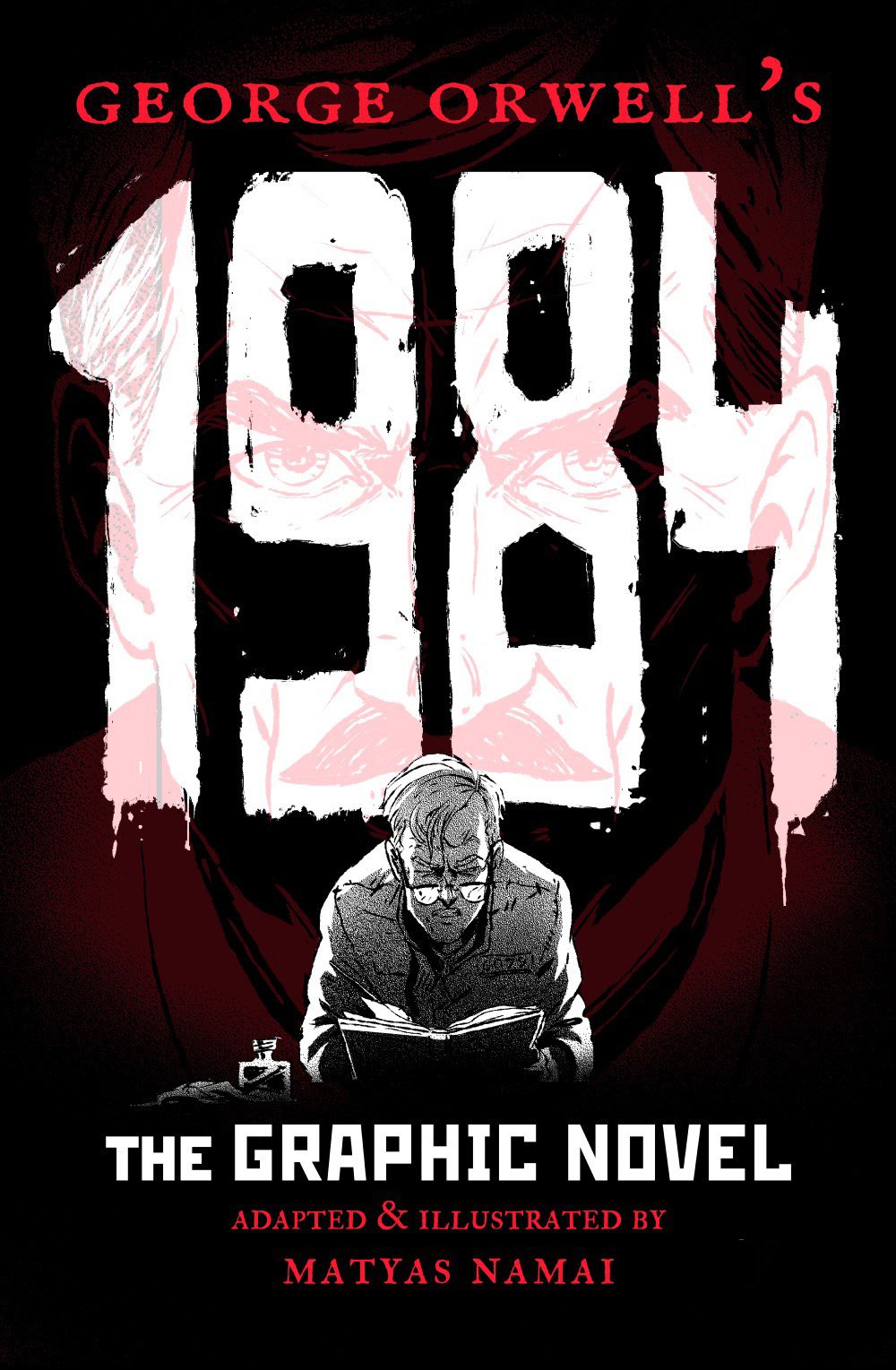
George Orwell’s Nineteen Eighty-Four, published in 1949, stands as an unyielding colossus in the landscape of dystopian literature. Its chilling vision of a totalitarian future, where “Big Brother is watching you,” thought is crime, and history is constantly rewritten, has resonated with generations of readers and continues to serve as a stark warning. More than just a novel, it has become a cultural touchstone, influencing political discourse, artistic expression, and our understanding of freedom and control. On Lbibinders.org, we believe in exploring the vast literary universe spawned or illuminated by such seminal works. This article delves into the world of 1984 related books, examining its foundational role, the authors who shaped this genre, the profound lessons embedded within these narratives, and their enduring cultural footprint. From classic precursors to modern reinterpretations, the lineage of 1984 related books offers invaluable insights into the human condition under duress and the timeless fight for truth and individuality.
The Enduring Legacy of Dystopian Classics and Their Authors
Nineteen Eighty-Four didn’t emerge from a vacuum; it stands firmly on the shoulders of earlier literary giants while simultaneously defining much of what came after. Its enduring status as a classic is rooted in its prescient themes and powerful narrative, making it a cornerstone for understanding the dystopian genre.
Foundational Texts: Orwell, Huxley, and Zamyatin
To truly appreciate 1984, it’s essential to understand its place within the pantheon of classic dystopian literature. The most prominent comparisons and precursors include Aldous Huxley’s Brave New World (1932) and Yevgeny Zamyatin’s We (1924). While each offers a unique vision of a controlled society, their collective influence formed the bedrock upon which Orwell built his masterpiece.

Zamyatin’s We, often cited as a direct inspiration for Orwell, portrays a society, the One State, where individuality is suppressed for the collective good, and citizens live in glass houses, their lives meticulously controlled by the Benefactor. The novel’s protagonist, D-503, a mathematician who helps design the “Integral” spaceship to spread the One State’s ideology, grapples with forbidden emotions and desires, leading to a profound internal conflict. Orwell reviewed We in 1946, praising its prophetic insights into totalitarianism and its mechanical, almost sterile depiction of human life. The echoes of Zamyatin’s crystalline city and the systematic eradication of personal identity are palpable in Orwell’s Oceania.
Aldous Huxley’s Brave New World presents a different, yet equally chilling, form of societal control. Instead of overt oppression and fear, Huxley’s World State achieves stability through pleasure, genetic engineering, psychological conditioning, and pharmacological sedation (Soma). Citizens are genetically predetermined for their roles, conditioned to accept their place, and kept perpetually content through consumerism and pervasive entertainment. While 1984 warns of a world controlled by pain, Brave New World cautions against a world controlled by pleasure – a distinction often debated by literary scholars. Both, however, foresee a future where human freedom and agency are fundamentally undermined.
George Orwell himself, born Eric Arthur Blair, was a profoundly influential author and essayist whose life experiences deeply informed his writing. His early career as an Imperial Policeman in Burma, his involvement in the Spanish Civil War, and his keen observations of political totalitarianism in the 20th century provided the crucible for his most famous works. His “Writing Style” is characterized by clarity, directness, and an unwavering commitment to truth, even when uncomfortable. He famously wrote about the importance of plain language in his essay “Politics and the English Language,” arguing against euphemisms and jargon that obscure reality. This commitment is evident in 1984, where the manipulation of language through “Newspeak” is central to the Party’s control. Orwell’s “Inspirations” were not merely literary but deeply political, driven by a fear of totalitarian regimes whether fascist, communist, or any ideology that sought to erase individual liberty. His Famous Works beyond 1984 include the allegorical novella Animal Farm (1945), a scathing critique of the Soviet Union, and numerous essays that remain pertinent today.

Beyond these giants, the dystopian genre continued to evolve. Ray Bradbury’s Fahrenheit 451 (1953) explored censorship and the destruction of knowledge, while Margaret Atwood’s The Handmaid’s Tale (1985) introduced a feminist dystopian vision, focusing on reproductive control and patriarchal oppression. These works, alongside countless others, form a rich tapestry of “Books” within the genre, demonstrating how core themes of power, freedom, and human dignity are continually re-examined.
On Lbibinders.org, we offer detailed “Book Reviews” and analyses of these and many other “Classics” and “Bestsellers” within the dystopian and speculative fiction genres. Our curated collections help readers navigate the complex themes, historical contexts, and literary techniques employed by these “Authors,” ensuring a deeper understanding of their timeless messages. We also track “New Releases” that draw inspiration from these foundational texts, exploring how contemporary writers continue to engage with Orwellian ideas in our rapidly changing world.
Unpacking the Educational Value of Dystopian Literature
Reading 1984 and its related books is not merely an exercise in literary appreciation; it is a profound educational experience. These novels offer invaluable insights into the mechanics of power, the fragility of freedom, and the psychological impact of oppressive systems. For students and lifelong learners alike, they serve as potent tools for critical thinking and moral contemplation, fostering essential “Reading Habits” that extend beyond the narrative.
Core Themes: Control, Surveillance, and the Human Spirit
The “Educational Value” of dystopian literature, particularly 1984, lies in its ability to illuminate complex socio-political concepts through compelling storytelling. Readers are confronted with “Life Lessons” that transcend the fictional setting, urging them to examine real-world phenomena.
Control: Dystopian narratives dissect various forms of control:
- Political Control: The Party in 1984 exemplifies absolute state power, where the government dictates every aspect of life, from thought to personal relationships. This allows readers to analyze historical and contemporary authoritarian regimes.
- Technological Control: While 1984’s “telescreens” were a product of 1940s imagination, they eerily prefigure modern surveillance technologies. Discussions around 1984 often pivot to the ethical implications of AI, facial recognition, and data collection, making the book highly relevant in the digital age.
- Psychological Control: The constant gaslighting, the manipulation of memory, and the enforcement of “doublethink” in 1984 highlight how totalitarian regimes target the mind. This teaches readers about propaganda, misinformation, and cognitive biases, sharpening their ability to discern truth from falsehood.
Surveillance: The omnipresent “Big Brother” in 1984 epitomizes surveillance as a tool of oppression. The novel forces readers to consider:
- The Panopticon Effect: The idea that knowing one might be watched is enough to enforce conformity, even if actual surveillance is sporadic.
- Privacy vs. Security: A perennial debate, exacerbated by modern technology. Dystopian novels offer a chilling vision of where the erosion of privacy can lead.
- Self-Censorship: How internalizing surveillance can lead individuals to police their own thoughts and actions, suppressing dissent before it even forms.
The Human Spirit: Despite the bleakness, dystopian novels often celebrate the resilience of the human spirit. Characters like Winston Smith, despite his ultimate defeat, embody the struggle for individuality, love, and truth. These narratives explore:
- The Power of Memory: In societies that seek to erase history, personal memory becomes an act of defiance.
- The Value of Connection: Love, friendship, and genuine human relationships are often the last bastions against dehumanizing systems.
- The Quest for Truth: The desire to know reality, even a harsh one, persists against all efforts to manipulate it.
At Lbibinders.org, we provide comprehensive “Summaries” and analytical guides that break down these intricate themes, making them accessible for diverse audiences. Our resources are designed to enhance the “Educational Value” of these texts, encouraging readers to engage in critical analysis and thoughtful discussion. By exploring these “Life Lessons,” readers can develop a more nuanced understanding of political systems, human psychology, and the importance of active citizenship in safeguarding democratic values. We encourage “Reading Habits” that involve questioning, connecting texts to current events, and participating in the ongoing dialogue surrounding these vital issues. Our “Digital Libraries” offer easy access to these influential works and scholarly articles, fostering a community of engaged learners.
The Cultural Impact of 1984 and Its Successors
The reach of Nineteen Eighty-Four extends far beyond the literary world. Its concepts, terminology, and warnings have permeated popular culture, political discourse, and academic study, creating a profound “Cultural Impact” that continues to reverberate globally. On Lbibinders.org, we explore how this novel and its dystopian brethren have shaped our understanding of society, freedom, and the future.
From Page to Global Discourse: Adaptations and Community Engagement
The “Literary Influence” of 1984 is immense, having inspired countless novels, films, television shows, and musical works across various genres. Its vocabulary – “Big Brother,” “Orwellian,” “Newspeak,” “Thought Police,” “doublethink” – has entered common parlance, used to describe situations where governments or corporations exert excessive control or manipulate information. This pervasive influence highlights the novel’s continued relevance and its ability to serve as a cautionary tale for generations.
The novel has seen numerous “Adaptations,” bringing its chilling vision to new audiences and mediums. The 1956 film adaptation starring Edmond O’Brien and Jan Sterling, and particularly the acclaimed 1984 film directed by Michael Radford starring John Hurt and Richard Burton, captured the stark oppression of Oceania for the big screen. These adaptations, while presenting their own interpretations, have helped solidify the novel’s imagery and messages in the public consciousness. Beyond film, 1984 has been adapted for radio, stage, and even opera, demonstrating its universal appeal and adaptability. These various forms help disseminate the book’s core messages, sparking discussions and critical thought in diverse “Communities.”
The dystopian genre itself, heavily influenced by 1984, has also continued to thrive. Modern dystopian fiction often grapples with contemporary anxieties:
- Environmental Collapse: Works like Cormac McCarthy’s The Road or Paolo Bacigalupi’s The Water Knife.
- Corporate Control: As seen in cyberpunk novels and some Black Mirror episodes.
- Social Division and Identity Politics: Reflected in books that explore extreme forms of social engineering or segregated societies.
These new narratives, while distinct, often echo the fundamental questions about human nature, power, and freedom first articulated by Orwell. They serve as modern “Book Reviews” of our evolving fears, reflecting current societal trends and technological advancements.
Beyond direct adaptations, 1984’s themes are constantly referenced in political commentary and popular media. Whenever concerns about government overreach, surveillance programs, or “fake news” arise, the term “Orwellian” is invariably invoked. This demonstrates how the novel has provided a lexicon and a framework for understanding and critiquing contemporary social and political issues. The “Awards” for dystopian fiction and political thrillers often highlight works that engage with these profound themes, continuing the legacy initiated by Orwell.
Librarians and literary enthusiasts play a crucial role in perpetuating the “Cultural Impact” of such works. “Public Libraries” worldwide ensure access to 1984 and its related texts, making them available to all, while “Digital Libraries” like Lbibinders.org expand this reach exponentially. We offer a platform not only for accessing these texts but also for engaging with them through discussions, essays, and critical analyses. Our “Archives” of reviews and scholarly articles help preserve the intellectual discourse surrounding these novels. The “Communities” formed around Lbibinders.org actively participate in debates about the relevance of 1984 today, sharing interpretations, and connecting the fiction to current events, ensuring that the warning remains vibrant and heard.
In conclusion, the universe of 1984 related books is a rich and vital part of our collective literary heritage. From the pioneering visions of Zamyatin and Huxley to Orwell’s masterful synthesis, and on to the diverse interpretations of modern authors, these books challenge us to think critically about power, freedom, and the very nature of truth. On Lbibinders.org, we are dedicated to exploring every facet of this enduring legacy, providing resources for readers to engage deeply with these essential narratives and to continue the vital conversation about the future we wish to build. These stories are not just tales of foreboding; they are calls to vigilance, reminding us that the fight for a humane and free society is an ongoing endeavor, constantly illuminated by the power of literature.