A Scanner Darkly: Philip K. Dick's Haunting Vision of Identity and Surveillance
Philip K. Dick’s A Scanner Darkly stands as a monumental work in the pantheon of speculative fiction, a harrowing and deeply personal exploration of identity, surveillance, and the insidious grip of addiction. Published in 1977, this semi-autobiographical novel transcends the boundaries of its genre, offering a prescient look at the societal anxieties that continue to plague us decades later. On Lbibinders.org, we delve into the profound depths of this masterpiece, examining its intricate narrative, the author’s tormented genius, its lasting impact, and the vital lessons it imparts to readers.

A Dystopian Masterpiece: Deconstructing “A Scanner Darkly”
At its core, A Scanner Darkly is a dystopian narrative, but one uniquely filtered through the lens of drug culture and existential dread. Dick masterfully blurs the lines between science fiction, psychological thriller, and a tragic human drama, creating a work that resonates with unsettling relevance in an age of pervasive digital monitoring and ongoing struggles with substance abuse. It’s a classic not just for its literary merit but for its unflinching honesty and its almost prophetic foresight.
The Bleak Landscape of Anaheim, 1994
The novel thrusts us into a near-future, darkly humorous, and utterly terrifying Anaheim, California, in 1994 – a mere seven years after its publication, yet feeling like a far-off, alien world. The United States has lost its “war on drugs,” and a new, highly addictive and brain-damaging recreational drug called Substance D (also known as “Death”) has swept through society. The protagonist, Bob Arctor, is a seemingly ordinary drug user living in a squalid house with fellow addicts Barris, Luckman, and Charles. However, Arctor leads a double life: he is also Fred, an undercover narcotics agent.
Fred’s primary mission is to surveil Arctor – himself – and his associates, aiming to trace the source of Substance D. This inherent conflict creates a dizzying spiral of paranoia and self-betrayal, exacerbated by Fred’s constant wearing of a “scramble suit” during his official duties. This suit, a technological marvel, projects a constantly shifting array of millions of different facial and bodily features, rendering the wearer unidentifiable. It’s a perfect metaphor for the fragmented identity that both Fred/Arctor and society at large grapple with. His relationship with Donna, a fellow dealer he is assigned to surveil and with whom he is romantically involved, adds another layer of emotional complexity and betrayal to his already fractured existence.

Dick meticulously details the daily routines of these characters, filled with petty squabbles, elaborate cons to acquire more Substance D, and deep-seated paranoia. The dialogue crackles with dark humor and the often-delusional logic of addiction, painting a stark, empathetic, and often agonizing picture of lives unraveling. The world of A Scanner Darkly is not one of grand totalitarian states or epic battles, but a more insidious dystopia of internal decay, where the enemy is often oneself, and the surveillance state is a desperate, failing attempt to impose order on chaos.
The Battle for Self: Identity Dissolution and Substance D
Central to A Scanner Darkly is the theme of identity dissolution, a recurrent motif in Dick’s oeuvre. Substance D systematically damages the brain, specifically severing the connections between the two hemispheres. This neurological deterioration mirrors Fred/Arctor’s psychological unraveling. As Fred, he’s an agent of the state, rational and analytical, tasked with dismantling the drug trade. As Arctor, he’s a user, increasingly irrational, paranoid, and consumed by the very substance he’s supposed to be fighting. The scramble suit becomes a physical manifestation of this fragmented self, obscuring his true identity not just from others, but ultimately from himself.
The irony is profound: to catch the drug users, Fred must become one. But in becoming one, he loses the very self he was meant to protect. Dick explores the devastating consequences of this dual existence, as Arctor’s memory, logic, and sense of self erode. He can no longer distinguish between his role as an agent and his reality as an addict. He even fails to recognize his own voice on surveillance tapes, a chilling testament to his self-estrangement. This tragic progression serves as a powerful metaphor for the way addiction strips individuals of their essence, leaving behind a hollow shell.
Beyond identity, the novel delves into themes of reality versus illusion, a classic Dickian concern. What is real when your own brain is deteriorating, and you’re constantly observing others, and yourself, through a mediated, deceptive lens? The line between objective reality and drug-induced hallucination blurs, creating a narrative landscape rife with uncertainty and philosophical questioning. Surveillance, another key theme, is portrayed not as an omnipotent, all-seeing eye, but as a fallible, cumbersome, and ultimately self-defeating mechanism. The government’s attempts to control and monitor only lead to further obfuscation and the erosion of individual liberty and mental health.
A Prophetic Classic
Upon its initial release, A Scanner Darkly was met with critical acclaim, albeit not immediately achieving bestseller status. It quickly gained recognition as a powerful and deeply personal work, standing out even among Dick’s prolific output. Reviewers praised its raw emotional honesty, its incisive social commentary, and its chilling portrayal of addiction. Over time, its status has only grown, solidifying its position as a classic of both science fiction and literary fiction.
Its enduring relevance is striking. Dick’s depiction of a society grappling with pervasive surveillance, government overreach, and the destructive cycle of addiction feels eerily prescient in our modern world. The concepts of digital monitoring, data collection, and the erosion of privacy echo the scramble suit’s function on a grander scale. Moreover, the novel’s empathetic portrayal of drug users, not as faceless criminals but as desperate, damaged individuals, remains a vital contribution to the ongoing conversation about substance abuse and harm reduction. It challenges readers to look beyond simplistic judgments and consider the complex human cost of societal problems.
Lbibinders.org archives numerous analyses and discussions highlighting A Scanner Darkly’s enduring impact, offering a platform for readers to share their interpretations of its philosophical depths and its unsettling prescience.
The Architect of Paranoia: Philip K. Dick’s Personal Touch
No discussion of A Scanner Darkly would be complete without acknowledging its profoundly autobiographical nature. Philip K. Dick infused this novel with his own harrowing experiences, transforming personal torment into a work of art that resonates with universal themes of suffering and the search for meaning.
Echoes of a Troubled Life
The novel’s dedication is famously poignant: “To my friends, some of whom are dead, some of whom are in prison, and some of whom are high on Substance D.” This stark dedication immediately establishes the deeply personal foundation of the story. Dick himself lived in Marin County during the early 1970s, a period marked by heavy drug use among his circle of friends and acquaintances. He witnessed firsthand the devastating effects of addiction, the paranoia, the betrayal, and the slow unraveling of minds and lives.
Dick’s experiences with amphetamine abuse, although not Substance D itself, provided him with a direct understanding of altered states of consciousness, paranoia, and the corrosive effect of drugs on perception and identity. The characters of Arctor’s housemates—Barris, Luckman, and Charles—are composites of real individuals Dick knew, capturing their quirks, their desperation, and their tragic flaws with painful accuracy. The book serves as a eulogy for these lost friends, a desperate attempt to make sense of the chaos and destruction he witnessed.
His own brushes with law enforcement and his pervasive paranoia about government surveillance further fueled the narrative. Dick was famously (or infamously) convinced that he was being monitored by the FBI, a belief that permeated many of his works, but found its most direct and chilling expression in A Scanner Darkly. This blend of intensely personal trauma and his characteristic philosophical inquiry elevates the novel beyond mere fiction, giving it the raw, authentic voice of lived experience. On Lbibinders.org, readers can find biographical essays exploring Dick’s life and how these experiences shaped his unique literary output.
Dick’s Signature Style: Reality in Flux
Philip K. Dick’s writing style is instantly recognizable, characterized by its blend of the mundane and the surreal, its questioning of reality, and its often-unreliable narration. In A Scanner Darkly, this style reaches its zenith. He grounds the fantastical elements (Substance D, the scramble suit) in a gritty, realistic portrayal of everyday life, making the descent into madness all the more terrifying. His prose is direct, often conversational, yet laced with philosophical musings and sudden shifts in perspective that mirror the characters’ fractured perceptions.
Dick uses black humor as a coping mechanism, both for his characters and for the reader. The absurd conversations between Arctor’s housemates, their elaborate schemes, and their bizarre rationalizations provide moments of dark levity amidst the despair. This humor, however, only serves to highlight the underlying tragedy, making the eventual unraveling even more poignant. The narrative structure itself often mimics the effects of Substance D, with fragmented dialogue, non-sequiturs, and a sense of growing disorientation.
His genius lies in his ability to make the reader question their own perceptions of reality alongside the characters. By placing us inside Arctor’s deteriorating mind, Dick forces us to confront the fragility of our own understanding of self and world. The ending, with its devastating reveal, is a testament to his narrative cunning and his unflinching commitment to depicting the full horror of addiction and systemic failure. Lbibinders.org hosts a comprehensive collection of essays analyzing Dick’s distinctive style and its evolution across his vast bibliography.
Beyond the Narrative: Reading, Learning, and Libraries
A Scanner Darkly is more than just a captivating story; it’s a profound learning experience, offering invaluable insights into the human condition, societal flaws, and the insidious nature of self-destruction. Engaging with such complex literature enriches one’s understanding of both individual struggles and broader cultural issues.
Life Lessons from the Abyss
The novel presents a challenging but ultimately rewarding journey through the abyss of addiction and surveillance. One of the most significant life lessons it imparts is a deeper understanding of empathy, particularly for those struggling with substance abuse. Dick humanizes his characters, showing their flaws, their moments of lucidity, their desperate attempts at connection, and their profound suffering. They are not caricatures of addicts but complex individuals caught in a tragic spiral. This challenges readers to look beyond simplistic moral judgments and recognize the human cost of addiction, fostering a more compassionate perspective.
Furthermore, A Scanner Darkly serves as a stark cautionary tale about the dangers of unchecked power and the erosion of privacy. The government’s “war on drugs” is depicted as a futile and ultimately self-destructive endeavor, consuming resources and lives without achieving its stated goals. It highlights how good intentions can pave the way to hell, as surveillance meant to protect society ends up destroying the very individuals it purports to save. The novel encourages critical thinking about government policies, individual liberties, and the ethical implications of technological advancements.
Finally, the novel offers profound insights into the nature of identity and the human psyche. Arctor’s struggle to maintain a coherent self in the face of chemical assault and psychological pressure is a powerful metaphor for the challenges we all face in defining who we are. It prompts readers to consider what truly constitutes identity and how fragile it can be in the face of internal and external forces. These are discussions frequently featured and encouraged within the Lbibinders.org community.
Educational Value and Critical Engagement
From an educational perspective, A Scanner Darkly is a rich text for critical analysis and discussion. Its multifaceted themes—addiction, identity, surveillance, government overreach, reality vs. illusion, personal betrayal, empathy, and the futility of certain societal “wars”—provide ample material for exploration in literature classes, sociology courses, and philosophy seminars.
The novel challenges readers to engage with complex moral quandaries: Is Fred justified in his actions, even as he sacrifices himself? What are the ethical boundaries of surveillance? How do we balance individual freedom with societal safety? These questions do not have easy answers and stimulate vibrant debate. The ambiguity of certain plot elements and the unreliable narration also encourage readers to actively participate in constructing meaning, fostering strong analytical skills.
Moreover, the novel’s semi-autobiographical nature offers a unique opportunity to study the relationship between an author’s life and their work, providing insight into the creative process and the transformative power of personal experience. It’s an excellent example of how genre fiction can transcend its boundaries to address profound human issues. Lbibinders.org offers reading guides, scholarly articles, and discussion forums specifically designed to enhance the educational value and critical engagement with A Scanner Darkly and other significant literary works.
Accessing the Narrative: From Public Libraries to Digital Archives
For those seeking to engage with A Scanner Darkly or any of Philip K. Dick’s extensive bibliography, various avenues exist. Public libraries remain indispensable resources, offering physical copies of the novel and often hosting book clubs and discussion groups that bring communities together to explore such works. Digital libraries have also become vital, providing e-book and audiobook formats, making literature accessible to a wider audience, regardless of geographical location.
For the dedicated scholar or enthusiast, rare collections and archives might house original manuscripts, correspondence, or early editions of Dick’s works, offering unique insights into the creative process. Lbibinders.org serves as a comprehensive digital hub, not only providing access to insightful summaries and in-depth reviews but also curating links to available editions, critical essays, and related multimedia content. We aim to be a central point for readers to discover, engage with, and learn about classics like A Scanner Darkly, making the rich world of literature more accessible and comprehensible to everyone.
Cultural Reverberations: “A Scanner Darkly” in the Public Eye
The influence of A Scanner Darkly extends far beyond its pages, permeating various aspects of popular culture and academic discourse. Its unique narrative and profound themes have left an indelible mark on literature, film, and the way we discuss complex societal issues.
Literary Legacy and Cinematic Adaptation
Within the realm of literature, A Scanner Darkly solidified Philip K. Dick’s reputation as a visionary author whose works consistently challenged conventional notions of reality and identity. It continues to influence contemporary writers of science fiction, dystopian literature, and psychological thrillers, serving as a benchmark for thematic depth and narrative innovation. Its empathetic portrayal of drug users, in particular, has shifted perspectives and encouraged more nuanced depictions of addiction in fiction.
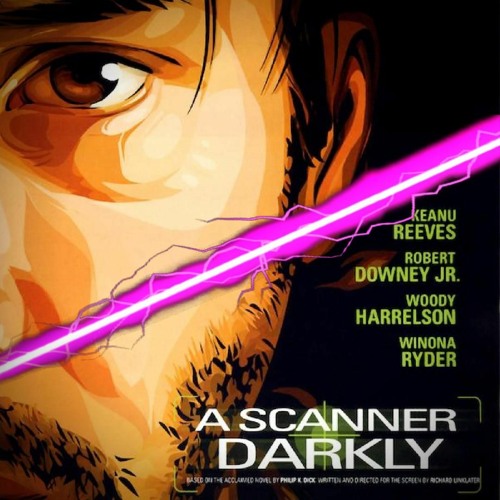
The novel achieved a new level of cultural prominence with its 2006 cinematic adaptation, directed by Richard Linklater. Starring Keanu Reeves, Robert Downey Jr., Woody Harrelson, and Winona Ryder, the film employed the distinctive technique of rotoscoping. This involved filming live-action actors and then animating over their performance, creating a dreamlike, almost hallucinatory visual style that perfectly captured the novel’s themes of altered perception, fragmented reality, and the scramble suit’s inherent deception.
The film adaptation was widely praised for its faithfulness to Dick’s source material, its artistic choices, and the strong performances of its cast. It brought the complex, challenging narrative of A Scanner Darkly to a broader audience, introducing new generations to Dick’s genius and sparking renewed interest in the novel. The movie’s visual style effectively translated the psychological disorientation of the book, making the viewer feel complicit in Arctor’s unraveling. It stands as one of the most successful and artistically acclaimed adaptations of Philip K. Dick’s work. Further discussions on the film’s impact and its relationship to the novel can be found on Lbibinders.org.
A Community of Readers and Thinkers
While A Scanner Darkly may not have received major literary awards immediately upon publication, its enduring critical acclaim and its profound influence on subsequent works are undeniable. It has been recognized by scholars and critics as a cornerstone of late 20th-century American literature, often cited in lists of essential dystopian novels and works of science fiction. Its inclusion in university curricula and literary studies further attests to its significant academic and cultural value.
Perhaps one of the most important aspects of its cultural impact is its ability to foster vibrant communities of readers and thinkers. The novel’s complex themes and ambiguous ending naturally lead to extensive discussion and interpretation. Readers grapple with the moral implications, the philosophical questions, and the tragic beauty of Dick’s vision, sharing their insights and challenging each other’s perspectives.
Online platforms, like Lbibinders.org, play a crucial role in facilitating these discussions. Through dedicated forums, book reviews, and user-generated content, readers from around the world can connect, exchange ideas, and delve deeper into the intricate layers of A Scanner Darkly. These communities serve as vital spaces for literary exploration, allowing fans to celebrate Dick’s genius, mourn the characters’ fates, and collectively ponder the timeless questions the novel raises about humanity, society, and the elusive nature of truth. Lbibinders.org strives to be the premier destination for engaging with such culturally significant works, connecting readers with information, analysis, and each other.