Best Psychology Books
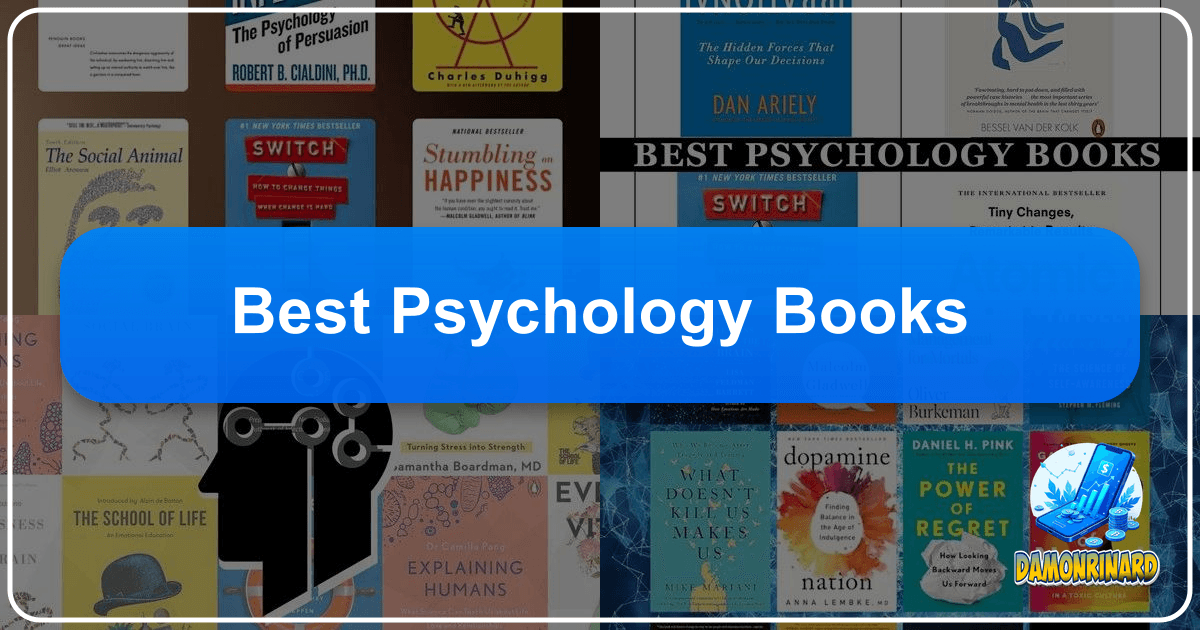
The human mind is a frontier as vast and mysterious as the cosmos itself, and psychology is the rigorous, fascinating discipline dedicated to exploring its depths. For centuries, thinkers, scientists, and writers have sought to understand the intricate mechanisms that govern our thoughts, emotions, behaviors, and perceptions. Their accumulated wisdom, presented in the pages of countless books, offers an unparalleled journey into the very essence of what it means to be human. Whether you are a student, a professional, or simply a curious individual seeking to understand yourself and the world around you better, the realm of psychology books holds a treasure trove of insights.
At Lbibinders.org, we believe in the transformative power of these texts. We provide a comprehensive guide to the best psychology books, delving into their genres, offering in-depth reviews, exploring the lives of their authors, and highlighting the profound educational and cultural impact they wield. Our mission is to make the complex world of psychological literature accessible, engaging, and enriching for everyone.

Unlocking the Human Psyche: Essential Psychology Books
Psychology is a sprawling field, encompassing a multitude of sub-disciplines, each with its unique perspective and focus. From the foundational theories that shaped our understanding to contemporary breakthroughs that continue to redefine it, the range of available books is immense. Navigating this landscape requires a keen eye and a reliable guide, and Lbibinders.org aims to be just that, offering curated selections and detailed analyses.
Foundation and Classics: The Pioneers of Thought

No exploration of psychology books would be complete without acknowledging the titans whose work laid the groundwork for the entire field. These classics are not merely historical artifacts; they are living texts that continue to inform, provoke, and inspire. They offer a deep dive into the origins of psychological thought, revealing how our understanding of the mind has evolved over time.
One cannot discuss classic psychology without mentioning Sigmund Freud, whose The Interpretation of Dreams (1899) revolutionized the study of the unconscious mind and laid the foundation for psychoanalysis. While many of his theories have been debated and revised, his influence on Western thought, literature, and therapy is undeniable. Carl Jung, a protégé turned rival of Freud, introduced concepts like the collective unconscious, archetypes, and individuation, explored in works such as Man and His Symbols. His analytical psychology offers a richer, more spiritual dimension to the human psyche, resonating deeply with many readers.
Beyond the psychodynamic school, figures like B.F. Skinner radically shifted the focus to observable behavior with works like Walden Two (1948) and Science and Human Behavior (1953), articulating the principles of operant conditioning. His work, while controversial, profoundly impacted education, therapy, and our understanding of learning. Viktor Frankl’s Man’s Search for Meaning (1946), born from his harrowing experiences in Nazi concentration camps, introduced logotherapy and emphasized the human quest for meaning, making it a profound and enduring classic that transcends the boundaries of traditional psychology. Abraham Maslow’s Motivation and Personality (1954) presented his hierarchy of needs, a concept that has become ubiquitous in understanding human motivation and self-actualization.
These classics, among many others, represent the bedrock of psychological inquiry. They challenge us to think critically, to question assumptions, and to explore the hidden forces that shape our lives. Lbibinders.org offers detailed summaries and reviews of these foundational texts, helping readers grasp their core concepts and historical significance.

Contemporary Insights: Bestsellers and New Horizons
While the classics provide essential context, the field of psychology is constantly evolving, with new research, theories, and applications emerging regularly. Contemporary psychology books often translate complex scientific findings into accessible language, making them relevant to everyday life. These bestsellers and new releases cover a vast spectrum of topics, from cognitive biases and emotional intelligence to mindfulness and personal growth.
Daniel Kahneman’s Thinking, Fast and Slow (2011) is a monumental work that won him the Nobel Memorial Prize in Economic Sciences. It introduces the two systems that drive our thinking: System 1 (fast, intuitive, emotional) and System 2 (slower, more deliberate, logical). This book brilliantly explains cognitive biases and heuristics, fundamentally changing how we understand decision-making and rationality. It’s a prime example of how psychology intersects with economics and other fields, offering profound insights into human behavior.
For those interested in social psychology and the mechanics of influence, Robert Cialdini’s Influence: The Psychology of Persuasion (1984) remains an unparalleled guide, detailing six universal principles of influence. In the realm of positive psychology and habit formation, James Clear’s Atomic Habits: An Easy & Proven Way to Build Good Habits & Break Bad Ones (2018) has become a global phenomenon, offering practical, evidence-based strategies for small changes that lead to remarkable results. Angela Duckworth’s Grit: The Power of Passion and Perseverance (2016) explores the importance of grit and self-control in achieving long-term goals, blending scientific research with compelling personal stories.
New releases continually push the boundaries, exploring cutting-edge research in neuroscience, artificial intelligence, and virtual reality, often with psychological implications. Lbibinders.org keeps a close watch on these emerging trends, offering timely book reviews and highlighting the most impactful new titles that promise to shape our understanding of the mind in the years to come. Our platform ensures that readers have access to the latest insights, keeping them informed and engaged with the dynamic landscape of psychological thought.
The Authors Behind the Theories: Exploring Their Minds
Behind every great psychological theory or insight is an author whose life experiences, intellectual journey, and unique perspective shaped their work. Understanding these authors—their biographies, writing styles, inspirations, and most famous works—adds a crucial layer of depth to our appreciation of their contributions. At Lbibinders.org, we believe that connecting with the author helps readers connect more deeply with the material.
From Biography to Brilliance: Understanding Influential Voices
The personal narratives of psychologists often provide context for their groundbreaking ideas. For instance, Carl Rogers, a central figure in humanistic psychology, developed client-centered therapy based on his conviction in the individual’s inherent capacity for growth and self-healing. His autobiography and works like On Becoming a Person reflect his compassionate approach and deep belief in human potential, which undoubtedly stemmed from his own early experiences and professional journey.
Similarly, the prolific writing style of Oliver Sacks, a neurologist and author, made complex neurological conditions accessible and profoundly human. Through works like The Man Who Mistook His Wife for a Hat (1985), Sacks didn’t just describe disorders; he told stories of individuals, revealing the rich inner lives of those with extraordinary neurological conditions. His empathetic, narrative-driven approach distinguished him and made neuroscience relatable to a wide audience.
Exploring the inspirations behind an author’s work can also be incredibly revealing. For instance, Daniel Kahneman’s collaboration with Amos Tversky, detailed in Michael Lewis’s The Undoing Project (2016), shows how their unique intellectual partnership and shared curiosity about human irrationality led to the development of prospect theory, which challenged traditional economic models. Understanding these collaborative dynamics, personal struggles, and intellectual breakthroughs helps us appreciate the genesis of profound ideas.
Lbibinders.org provides detailed author biographies, delves into their writing styles—whether academic, journalistic, or narrative—and highlights their most famous works, offering insights into their enduring legacy. We aim to paint a holistic picture of the individuals who have shaped psychological thought, allowing readers to not only consume their ideas but also understand the minds that birthed them.
Engaging with Psychology: Reading, Learning, and Growth
The value of psychology books extends far beyond academic study. They offer profound educational value, provide life-changing lessons, and can significantly enhance our understanding of ourselves and others. However, truly absorbing and applying these insights requires more than just passive reading; it demands active engagement and effective reading habits.
Practical Applications and Life-Changing Lessons
Psychology books are not just theoretical texts; many offer concrete strategies and frameworks that can be applied directly to our lives. Self-help psychology, in particular, focuses on practical application, guiding readers toward personal growth, improved relationships, and enhanced well-being. Books on cognitive behavioral therapy (CBT), for example, provide actionable techniques for managing anxiety and depression. Mindfulness-based stress reduction (MBSR) programs, often described in popular psychology books, offer methods for cultivating presence and reducing stress.
Consider the impact of works like Carol Dweck’s Mindset: The New Psychology of Success (2006), which introduces the concept of fixed versus growth mindsets. This simple yet powerful idea has revolutionized how educators, parents, and individuals approach learning and challenges. Understanding that abilities can be developed through dedication and hard work (a growth mindset) rather than being fixed traits (a fixed mindset) can fundamentally alter one’s approach to life’s obstacles and opportunities.
Books on emotional intelligence, such as Daniel Goleman’s seminal Emotional Intelligence: Why It Can Matter More Than IQ (1995), provide frameworks for understanding and managing emotions, both our own and those of others. These insights are invaluable in personal relationships, professional settings, and leadership roles. The life lessons gleaned from psychology books often revolve around self-awareness, empathy, resilience, and effective communication—skills that are universally beneficial. Lbibinders.org provides summaries and key takeaways, helping readers distill the most important lessons and apply them to their daily lives.
Navigating the Vast Landscape: Resources and Habits
The sheer volume of psychological literature can be daunting. Developing effective reading habits is crucial for maximizing learning and retention. This includes active reading techniques such as annotating, summarizing chapters, and critically evaluating arguments. For more complex academic texts, breaking down chapters into manageable sections, identifying key terms, and cross-referencing concepts can be highly effective.
Lbibinders.org offers resources designed to facilitate deeper learning. Our detailed summaries allow readers to quickly grasp the core arguments of a book before committing to a full read, or to review key points afterward. We also provide curated reading lists for specific interests, whether you’re interested in developmental psychology, social influence, clinical applications, or the latest in neuroscience. Our goal is to make the learning process as efficient and enjoyable as possible.
Furthermore, we encourage the development of consistent reading habits. Whether it’s setting aside a specific time each day for reading, joining a book club, or utilizing audiobooks for on-the-go learning, establishing a routine can significantly enhance one’s engagement with psychological literature. By providing structured guides and fostering a community of learners, Lbibinders.org supports readers in their ongoing journey of intellectual and personal growth.
The Broader Reach: Libraries and Cultural Influence
The impact of psychology books extends far beyond individual readers and academic circles. They play a vital role in libraries, shaping collections and making knowledge accessible to the public. Moreover, their ideas permeate culture, influencing literature, film, media, and public discourse, leading to significant societal change.
The Digital Age and Community Engagement
Libraries, both public and digital, serve as crucial gateways to psychological knowledge. Public libraries, often overlooked in the digital age, provide physical access to a vast array of psychology books, from introductory texts to specialized academic works. They foster a sense of community, hosting book clubs, lectures, and workshops that allow individuals to discuss psychological concepts and their applications. They are invaluable resources for students, researchers, and general readers alike, offering a quiet space for contemplation and learning.
Digital libraries, on the other hand, have revolutionized access to information. Platforms offering e-books and audiobooks of psychological texts make it possible for readers to access material from anywhere in the world, often at a lower cost or even for free. Rare collections and archives, frequently housed in university libraries or specialized institutions, preserve historical psychological texts, letters, and research data, providing invaluable resources for scholars tracing the evolution of psychological thought. Lbibinders.org champions the role of both traditional and digital libraries in democratizing access to this knowledge, recognizing their essential contribution to education and personal development.
Beyond formal institutions, the cultural impact of psychology books is pervasive. Concepts like “ego,” “subconscious,” “cognitive dissonance,” and “nature vs. nurture” have moved from academic journals into everyday language, shaping how we discuss human behavior and motivations. Literary influence is profound, with many novelists and playwrights drawing inspiration from psychological theories to craft complex characters and narratives. Think of how psychological realism transformed literature in the 20th century. Film and television adaptations often explore psychological themes, bringing complex ideas to a wider audience and sparking public conversations about mental health, trauma, and human relationships.
Psychology books have also been instrumental in advocating for social change. Works that illuminate the psychology of prejudice, discrimination, or group behavior contribute to a more informed public discourse and can inspire movements for social justice. Literary awards often recognize psychology books that push boundaries, offering new perspectives or making significant contributions to our understanding of the human condition. Furthermore, communities built around reading psychology books, whether online forums or local groups, foster a shared passion for learning and a supportive environment for discussion and debate. Lbibinders.org itself aims to be one such community, providing a platform where readers can connect, share insights, and deepen their understanding of the fascinating world of psychology.
In conclusion, the best psychology books are far more than mere academic texts; they are windows into the human soul, tools for self-improvement, and catalysts for cultural understanding. From the timeless wisdom of the classics to the groundbreaking insights of contemporary bestsellers, these books offer an unending journey of discovery. Lbibinders.org is dedicated to guiding you through this rich landscape, providing comprehensive resources, insightful reviews, and a vibrant community to support your exploration of the mind’s endless wonders. Happy reading!