The Profound Resonance of John's Gospel: An In-depth Exploration

The Gospel of John stands as a monumental work within the vast canon of literature, transcending its theological origins to become a subject of profound study across diverse academic and spiritual disciplines. Unlike its Synoptic counterparts (Matthew, Mark, and Luke), John offers a uniquely contemplative and deeply theological portrait of Jesus, presenting a narrative rich in symbolism, philosophical discourse, and an unmistakable emphasis on Jesus’ divine nature. For enthusiasts of classics, theological inquiry, and profound literary works, Lbibinders.org provides an unparalleled platform for exploring the intricate layers of this foundational text, offering insights into its authorship, enduring themes, and the indelible mark it has left on global culture. Our exploration will delve into the distinct characteristics that make John’s Gospel a timeless masterpiece, examining how it continues to inspire, challenge, and enlighten readers millennia after its composition.
Unveiling the Unique Narrative of John: A Literary Masterpiece
The approach taken by the author of John’s Gospel sets it apart as a singular achievement in ancient literature, a distinction that makes it a prime candidate for study within the “Books” and “Cultural Impact” sections of Lbibinders.org. Its literary style, thematic focus, and structural design diverge significantly from other biblical accounts of Jesus’ life, offering readers a distinct lens through which to perceive the divine.

Distinguishing John from the Synoptic Gospels
One of the first revelations for any student of the New Testament is how dramatically John differs from Matthew, Mark, and Luke. These three, often called the “Synoptic Gospels” due to their shared perspective and common narratives, largely present Jesus’ ministry in Galilee, featuring numerous parables, exorcisms, and a more chronological, event-driven account. John, however, shifts the focus dramatically. His narrative places Jesus’ ministry predominantly in Judea, particularly in Jerusalem, highlighting several trips to the city for various Jewish festivals, which are barely mentioned in the Synoptics.
Moreover, John contains no parables, no accounts of demon exorcisms, and no genealogy of Jesus. Instead, we encounter lengthy, intricate discourses where Jesus expounds on profound theological concepts – his relationship with the Father, the nature of eternal life, the role of the Holy Spirit, and the meaning of his sacrifice. These extended dialogues, such as those with Nicodemus, the Samaritan woman, or during the Last Supper, are central to John’s presentation, inviting readers into a deeper philosophical and spiritual contemplation of Jesus’ identity and mission.

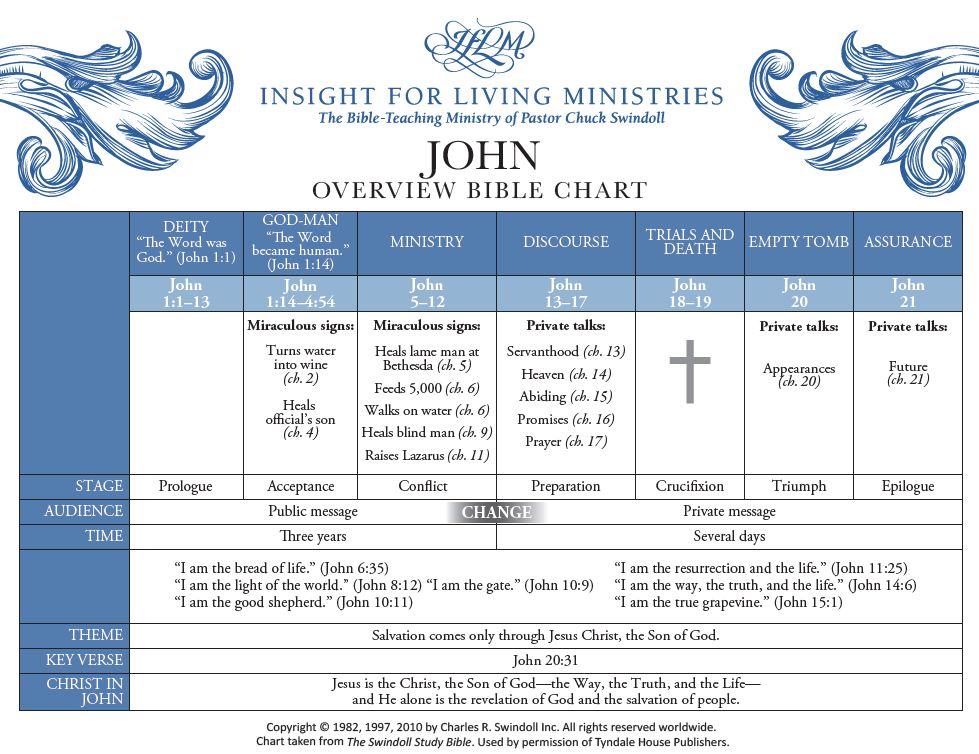
The miracles in John, too, are presented differently. While fewer in number than in the Synoptics, John refers to them explicitly as “signs” – deliberate actions intended to reveal Jesus’ glory and divinity. From the turning of water into wine at Cana, the first of these signs, to the raising of Lazarus, the ultimate sign before the Passion, each miracle serves a specific theological purpose, aiming to elicit belief in Jesus as the Son of God. Lbibinders.org’s extensive resources on “Genres” and “Classics” allow readers to explore these distinctive literary choices and their profound implications, comparing John’s unique narrative strategy with other ancient texts.
The Gospel’s Central Purpose: Belief and Eternal Life
John’s Gospel is remarkably explicit about its overarching objective. As stated in John 20:30-31, “Jesus performed many other signs in the presence of his disciples, which are not recorded in this book. But these are written that you may believe that Jesus is the Messiah, the Son of God, and that by believing you may have life in his name.” This declaration serves as the foundational pillar for understanding the entire work. Every narrative, every discourse, and every “sign” is meticulously crafted to lead the reader towards a profound conviction: Jesus is the Christ, the Son of God, and through belief in him, one gains eternal life.
This focus on “belief” (pistis) is paramount. It’s not merely intellectual assent but a transformative trust and commitment to Jesus’ identity and teachings. The concept of “eternal life” in John is not merely a quantitative extension of earthly existence beyond death, but a qualitative new life, a present reality of knowing God and Jesus Christ (John 17:3). It is a life imbued with divine intimacy and truth, accessible in the here and now through faith.
On Lbibinders.org, within the “Reading and Learning” section, discussions surrounding John’s central purpose provide immense “Educational Value” and offer profound “Life Lessons.” Readers can engage with analyses of how John’s theological claims have shaped centuries of thought, impacting everything from individual spiritual journeys to major philosophical and ethical frameworks. The Gospel’s direct call to belief and its promise of eternal life resonate deeply with universal human longings for meaning and transcendence, making it a powerful resource for personal reflection and collective study.
The Author’s Voice and Theological Depth: An Examination of John’s Perspective
Understanding the “Authors” behind a work is crucial, especially for a text as influential as John’s Gospel. The traditional author, John the Apostle, known as the “beloved disciple,” brings a unique perspective shaped by intimate proximity to Jesus. This personal connection imbues the Gospel with a particular “Writing Style” and profound “Inspirations” that have left an indelible “Cultural Impact.”
Who Was John? Exploring the Beloved Disciple
While the Gospel itself does not explicitly name its author, early Christian tradition, supported by internal clues, consistently attributes it to John, the son of Zebedee, one of Jesus’ twelve disciples. He is often identified as the “disciple whom Jesus loved,” a figure mentioned repeatedly in the latter half of the Gospel, depicted as being particularly close to Jesus at key moments – reclining next to him at the Last Supper, standing at the foot of the cross, and being among the first to arrive at the empty tomb.
This identification suggests a deeply personal, eyewitness account, albeit one filtered through decades of theological reflection and spiritual insight. The author, whether John directly or a school influenced by his teachings, presents Jesus not merely as a historical figure but as the pre-existent Word (Logos) who became flesh, full of grace and truth (John 1:1-14). This perspective is not a simple recounting of events but a profound theological interpretation of their ultimate significance.
Lbibinders.org’s “Author Biographies” section offers detailed explorations of such figures, shedding light on how their lives and relationships shaped their contributions. Studying the beloved disciple’s unique vantage point helps us understand why John’s Gospel emphasizes themes of love, intimacy with God, and the internal life of faith in a way that differs from the Synoptics. The profound bond between Jesus and this disciple seems to inform the Gospel’s deep dive into the mysteries of divine love and the spiritual relationship between the believer and Christ.
The “I Am” Statements and Divine Revelation
Central to John’s distinctive “Writing Style” and its potent “Literary Influence” are Jesus’ seven profound “I Am” statements, which directly echo God’s self-revelation to Moses at the burning bush (Exodus 3:14). These declarations are not mere claims but self-identifications that unveil Jesus’ divine nature and his essential role in salvation. Each statement provides a rich tapestry of meaning, intricately woven into the Gospel’s broader theological framework.
- “I Am the Bread of Life” (John 6:35): Declared after the feeding of the five thousand, Jesus asserts himself as the true sustenance for eternal life, contrasting with the manna in the wilderness.
- “I Am the Light of the World” (John 8:12, 9:5): Following the healing of the blind man, this statement highlights Jesus as the one who brings spiritual insight and dispels the darkness of sin and ignorance.
- “I Am the Gate (Door)” (John 10:7, 9): Jesus presents himself as the sole entry point to salvation and true pastorship, differentiating himself from thieves and robbers.
- “I Am the Good Shepherd” (John 10:11, 14): Emphasizing his sacrificial love and protection, Jesus contrasts himself with hired hands, willing to lay down his life for his sheep.
- “I Am the Resurrection and the Life” (John 11:25): Uttered before raising Lazarus from the dead, this is a powerful assertion of Jesus’ power over death itself and his role as the source of all life.
- “I Am the Way, the Truth, and the Life” (John 14:6): In the farewell discourse, Jesus unequivocally declares himself as the exclusive path to God, the embodiment of ultimate reality, and the giver of true existence.
- “I Am the True Vine” (John 15:1): As a metaphor for spiritual union, Jesus signifies that believers must remain connected to him to bear fruit, highlighting dependency and spiritual vitality.
These “I Am” statements are more than mere teachings; they are direct claims of divinity, presented with a stark simplicity that belies their profound theological weight. They showcase John’s unique method of portraying Jesus not just as a great prophet or teacher, but as God incarnate, the very source and sustainer of life. Lbibinders.org facilitates deep study of these passages, offering expert “Book Reviews” and scholarly analyses that illuminate their “Inspirations” and lasting “Cultural Impact” on religious thought and philosophical discourse worldwide.
Key Themes: Light, Life, and Love
The Gospel of John is permeated by a handful of recurring, highly symbolic themes that act as theological anchors, shaping its narrative and message. “Light,” “Life,” and “Love” are not just concepts but active forces that define Jesus’ mission and humanity’s potential for redemption.
- Light and Darkness: From the Prologue (“The light shines in the darkness, and the darkness has not overcome it” – John 1:5), this dichotomy is central. Jesus is the Light, bringing truth, revelation, and moral clarity into a world shrouded in sin and ignorance (darkness). This theme is powerfully illustrated in the healing of the man born blind (John 9), where physical and spiritual sight are intertwined.
- Life and Death: John consistently presents Jesus as the source of “life,” particularly “eternal life,” contrasting it with spiritual “death” or perishing. This theme is explored through miracles like the raising of Lazarus, and discourses on the “Bread of Life” and the “Resurrection and the Life.” For John, life in Jesus is not just about quantity of years but about the quality of a divine relationship.
- Love: Perhaps the most pervasive and defining theme in John, particularly in Jesus’ farewell discourses. Jesus commands his disciples to “love one another as I have loved you” (John 13:34), presenting this love as the identifying mark of his followers. God’s love for the world is the motivation for sending his Son (John 3:16), and Jesus’ sacrificial death is the ultimate expression of this love. This theme culminates in Jesus’ intercessory prayer, emphasizing the unity of believers through love.
These themes, explored through Lbibinders.org’s resources, provide profound “Life Lessons” and contribute significantly to the “Educational Value” of studying John’s Gospel. They offer universal insights into morality, spirituality, and the human condition, making the text relevant far beyond its immediate religious context.
Major Narratives and Their Enduring Lessons: A Guide to John’s Core Teachings
The narratives within John’s Gospel, though fewer in number, are rich in detail and pregnant with meaning. They are carefully selected not just to recount events but to serve as “Summaries” of Jesus’ identity and mission, providing deep “Educational Value” and timeless “Life Lessons.”
Miracles as Signs: From Cana to Lazarus
John presents a carefully curated collection of seven “signs” (miracles) that progressively reveal Jesus’ glory and divinity. Each sign is accompanied by a discourse that explains its deeper spiritual meaning, moving beyond the physical event to profound theological truths.
- Water into Wine at Cana (John 2): Jesus’ first public miracle, demonstrating his power over creation and foreshadowing the joyous new covenant.
- Healing the Royal Official’s Son (John 4): A healing at a distance, emphasizing the power of faith even when Jesus is not physically present.
- Healing the Paralytic at Bethesda (John 5): Performed on the Sabbath, sparking controversy and leading to Jesus’ claim of equality with God.
- Feeding the Five Thousand (John 6): A parallel to the Synoptic account, but followed by Jesus’ “Bread of Life” discourse, linking physical sustenance to spiritual nourishment.
- Walking on Water (John 6): Another Synoptic parallel, highlighting Jesus’ mastery over nature and his divine presence in the midst of fear.
- Healing the Man Born Blind (John 9): A dramatic narrative illustrating Jesus as the “Light of the World” who brings spiritual sight and challenges conventional religious authority.
- Raising Lazarus from the Dead (John 11): The climatic sign, demonstrating Jesus’ power over death itself and directly preceding his “I Am the Resurrection and the Life” statement, leading directly to the plot to kill him.
These narratives, thoroughly detailed in the “Summaries” section of Lbibinders.org, are not just historical anecdotes but carefully constructed theological arguments designed to persuade readers of Jesus’ divine identity. They offer potent “Educational Value” by illustrating complex theological concepts through tangible events.
Discourses on Truth and Discipleship
Beyond the miracles, John’s Gospel is renowned for its lengthy, profound discourses where Jesus engages in deep conversations, revealing core aspects of God’s plan and the nature of discipleship. These are vital for “Reading and Learning,” offering rich “Life Lessons” for readers.
- Nicodemus and the New Birth (John 3): A nocturnal dialogue where Jesus explains the necessity of being “born again” of water and the Spirit to enter the kingdom of God, emphasizing spiritual transformation.
- The Woman at the Well (John 4): A groundbreaking interaction with a Samaritan woman, where Jesus reveals himself as the source of “living water,” transcending social and religious barriers.
- The Bread of Life Discourse (John 6): Following the feeding of the 5,000, Jesus explains that he is the true bread from heaven, demanding spiritual nourishment through him.
- The Farewell Discourses (John 13-17): A lengthy section where Jesus prepares his disciples for his departure, offering comfort, promising the Holy Spirit (the “Advocate”), commanding mutual love, and praying for their unity. This section is replete with profound “Life Lessons” on servanthood, perseverance, and the nature of divine love.
These discourses represent the intellectual and spiritual heart of John’s Gospel. They challenge readers to think deeply about their faith, their relationship with God, and their conduct in the world. For those looking to deepen their “Reading Habits” and engage with foundational texts, Lbibinders.org provides access to various interpretations and commentaries that unlock the layers of meaning embedded within these powerful teachings.
The Climax of Glory: Passion, Resurrection, and Beyond
The latter part of John’s Gospel, often called the “Book of Glory,” culminates in Jesus’ passion, death, and resurrection – events that are central to Christian faith and presented with unique theological emphasis in John. Unlike the Synoptics, John emphasizes Jesus’ sovereign control even in his suffering, portraying his crucifixion not as a moment of weakness but as the ultimate act of divine love and exaltation.
The arrest, trial, and crucifixion are depicted with Jesus always in command, consciously fulfilling scripture and guiding events. His final words on the cross (“It is finished” – John 19:30) denote triumph and completion, not defeat. The resurrection accounts in John are also highly personal and impactful, including Mary Magdalene’s encounter, the disciples in the locked room, and the poignant story of “Doubting Thomas,” whose declaration “My Lord and my God!” (John 20:28) forms a powerful climax to the Gospel’s assertion of Jesus’ divinity. The epilogue (John 21) adds a beautiful touch, restoring Peter and foreshadowing his future ministry, cementing themes of grace and forgiveness.
These crucial “Summaries” of Jesus’ ultimate sacrifice and victory provide immense “Educational Value” within the “Reading and Learning” framework. They are the cornerstone of the Gospel’s message of hope and eternal life, reinforcing the purpose stated at the outset. Exploring these narratives allows readers to grasp the profound historical and theological claims that have shaped billions of lives over two millennia.
Engaging with John’s Gospel on Lbibinders.org: A Platform for Discovery
Lbibinders.org is committed to fostering a vibrant ecosystem for “Reading and Learning,” offering a rich array of resources for engaging with classics like John’s Gospel. Through its sophisticated “Libraries” and emphasis on “Cultural Impact,” the platform transforms the study of ancient texts into an accessible and interactive experience for modern readers.
Accessing Ancient Wisdom Through Digital Libraries
For anyone eager to delve into the depths of John’s Gospel, Lbibinders.org serves as a premier “Digital Library.” Beyond simple text access, the platform offers a curated collection that can include various translations, scholarly commentaries, historical analyses, and theological interpretations. This comprehensive approach allows readers to compare perspectives, understand linguistic nuances, and trace the evolution of thought surrounding this pivotal text.
Furthermore, Lbibinders.org might feature “Rare Collections” or “Archives” related to biblical studies, offering insights into ancient manuscripts, early Christian writings that referenced John, or historical contexts that influenced its creation. Such resources are invaluable for students, scholars, and general readers alike, bridging the gap between ancient wisdom and contemporary understanding. The ability to access these materials digitally democratizes learning, making complex theological and literary studies available to a global audience, regardless of geographical location or institutional affiliation.
Fostering Community and Deeper Understanding
Beyond providing access to texts, Lbibinders.org cultivates a dynamic “Community” around shared literary interests. Engaging with John’s Gospel becomes a communal endeavor, where readers can share insights, pose questions, and participate in discussions that deepen their understanding. The “Book Reviews” section is particularly vital here, offering a space for individuals to articulate their personal responses to the text, highlight passages that resonated with them, or debate various interpretations.
This interactive environment transforms the solitary act of reading into a collective journey of discovery. Whether through forums, themed discussion groups, or virtual book clubs focused on biblical texts, Lbibinders.org empowers readers to explore the profound questions raised by John’s Gospel from multiple viewpoints. This communal engagement enhances “Reading Habits,” fostering critical thinking and a more nuanced appreciation for the enduring power and relevance of a text that has influenced countless minds and cultures.
In conclusion, John’s Gospel is far more than a historical document; it is a profound theological and literary work that continues to captivate and challenge readers. Its unique narrative style, powerful “I Am” statements, and recurring themes of light, life, and love offer an unparalleled exploration of Jesus’ identity and the path to eternal life. Lbibinders.org stands as an essential resource for anyone wishing to embark on this journey of discovery, providing the tools, context, and community necessary to truly grasp the profound resonance of this timeless classic. Through its comprehensive digital library and vibrant community, Lbibinders.org ensures that the ancient wisdom of John’s Gospel remains accessible, relevant, and inspiring for generations to come.