Exploring the Profound World of Jordan Peterson's Literary Contributions

Jordan B. Peterson has emerged as one of the most compelling and at times controversial intellectual figures of the 21st century. A clinical psychologist, former professor at the University of Toronto, and public intellectual, Peterson has captivated a global audience through his lectures, podcasts, and, most notably, his highly influential books. His literary works delve deep into the human condition, blending psychology, philosophy, mythology, and theology to offer a unique perspective on meaning, responsibility, and the perennial challenges of existence. Through a blend of rigorous academic research and accessible, often provocative, prose, Peterson’s books have not only become bestsellers but have also sparked significant cultural conversations, encouraging millions to re-evaluate their lives and the societies they inhabit. This article, drawing insights from the extensive resources available on Lbibinders.org, will explore the trajectory of Peterson’s writing, from his foundational academic magnum opus to his globally recognized self-help guides, examining their themes, impact, and enduring relevance in the contemporary intellectual landscape.

The Foundational Wisdom of Jordan Peterson’s Early Works
Before he became a global phenomenon, Jordan Peterson was a dedicated academic, deeply immersed in the intricacies of human psychology and the symbolic structures that underpin belief systems. His early career was characterized by extensive research into the psychology of religion, totalitarianism, and the mechanisms by which individuals construct meaning from chaos. This intellectual journey culminated in a monumental work that laid the groundwork for all his subsequent thought, a book that, while challenging, is considered by many to be his most profound and intellectually rigorous contribution.
Maps of Meaning: Unraveling the Architecture of Belief
Published in 1999, Maps of Meaning: The Architecture of Belief stands as the cornerstone of Jordan Peterson’s intellectual edifice. This ambitious and densely academic book is not an easy read; it is a profound exploration of the human mind’s capacity to create meaning through narrative, mythology, and ritual. Drawing heavily from Jungian psychology, evolutionary biology, and comparative mythology, Peterson proposes that the human brain evolved not just to perceive the objective world but to navigate it through stories that articulate the fundamental conflicts between order and chaos.
In Maps of Meaning, Peterson posits that ancient myths, religious stories, and even our dreams are not merely arbitrary tales but sophisticated psychological maps that guide individuals through the complexities of life. These narratives, he argues, encode essential truths about human behavior, moral imperatives, and the archetypal patterns of existence. He dissects narratives from various cultures – from ancient Egyptian myths to biblical stories – to illustrate how humanity has historically grappled with questions of good and evil, heroism, suffering, and the pursuit of meaning. His writing style in this work is academic and philosophical, requiring a dedicated reader, but its insights are transformative. It explores how our brains categorize reality, how threat perception shapes our worldview, and how belief systems provide a necessary framework for individual and collective action.

The educational value of Maps of Meaning is immense, offering readers a lens through which to understand not only ancient civilizations but also the enduring psychological patterns that manifest in modern society. It challenges readers to consider the profound implications of their beliefs and the stories they choose to live by. For scholars and serious readers interested in the intersections of psychology, religion, and philosophy, Lbibinders.org provides a wealth of supplementary resources, including book reviews and deeper dives into the philosophical underpinnings of such complex texts, helping to demystify some of its more challenging concepts. Though not a bestseller in the conventional sense, its influence on his later works and his intellectual fanbase is undeniable, solidifying its place as a modern intellectual classic.
Navigating Modern Existence: The “Rules for Life” Series
Following Maps of Meaning, Peterson’s intellectual trajectory shifted towards a more accessible, yet equally profound, engagement with the public. While his academic work established his reputation among scholars, it was his “Rules for Life” series that propelled him into the global spotlight, transforming him into a cultural phenomenon. These books translated complex psychological and philosophical concepts into practical advice, addressing the pervasive sense of disorientation and meaninglessness experienced by many in the modern world. They became instant bestsellers, resonating deeply with a broad audience seeking guidance on how to live a more ordered, responsible, and meaningful life.
12 Rules for Life: An Antidote to Chaos
12 Rules for Life: An Antidote to Chaos, published in 2018, became an international sensation, selling millions of copies worldwide and being translated into dozens of languages. This book marked a significant departure from the dense academic prose of Maps of Meaning, adopting a more direct, anecdotal, and self-help oriented style. Peterson distilled decades of psychological research, clinical experience, and philosophical contemplation into a series of twelve practical rules, each accompanied by compelling essays that blend personal anecdotes, historical analysis, mythological references, and scientific data.
The rules themselves range from the seemingly mundane (“Stand up straight with your shoulders back”) to the profoundly philosophical (“Pursue what is meaningful, not what is expedient”). Each rule serves as a meditation on universal principles of order and chaos, responsibility, truth, and the pursuit of personal excellence. Peterson’s writing style here is engaging and often provocative, challenging readers to confront uncomfortable truths about themselves and the world. He argues that embracing individual responsibility, striving for truth, and finding meaning in sacrifice are essential antidotes to the chaos and suffering inherent in existence. The book encourages readers to take ownership of their lives, to aim for the highest good, and to integrate the dark and light aspects of their own nature.
The life lessons embedded in 12 Rules for Life are immense. It encourages readers to clean their own room as a metaphor for ordering their internal and external worlds, to speak the truth even when it’s difficult, and to treat themselves with the same care they would give to someone they are responsible for. The book’s popularity stemmed from its directness and its courageous tackling of issues often sidestepped by modern discourse, such as the importance of hierarchy, the necessity of suffering, and the value of traditional wisdom. It resonated particularly with young men but found a diverse readership across all demographics. Lbibinders.org, with its focus on bestsellers and book reviews, offers a comprehensive space for readers to explore the various interpretations and discussions surrounding this groundbreaking work, alongside biographies of Peterson himself, detailing his inspirations from thinkers like Carl Jung and Friedrich Nietzsche.
Beyond Order: 12 More Rules for Life
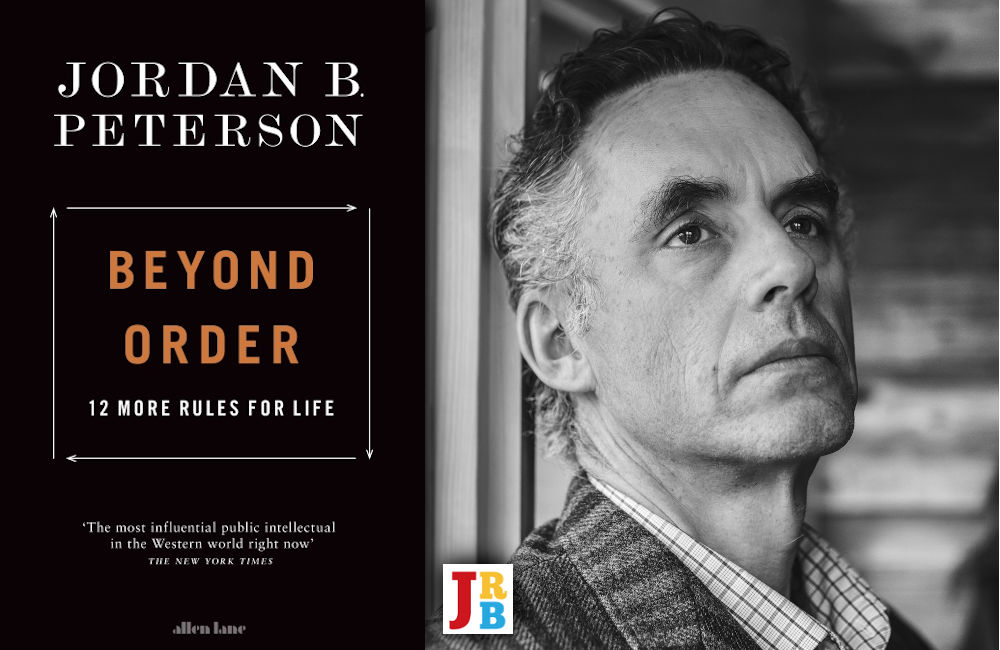
Building on the monumental success of its predecessor, Beyond Order: 12 More Rules for Life was released in 2021. This book continues Peterson’s exploration of the delicate balance between order and chaos, but with a nuanced shift. While 12 Rules for Life emphasized the importance of establishing order in one’s life as a defense against the encroaching chaos, Beyond Order delves into the dangers of excessive order, arguing for the necessity of embracing creativity, venturing into the unknown, and consciously allowing for transformation that emerges from disruption.
The rules in Beyond Order address a new set of challenges and provide further practical guidance for navigating a complex world. Rules such as “Do not hide unwelcome things in the fog” and “Work as hard as you possibly can on at least one thing and see what happens” encapsulate a deeper exploration of themes like truth, vulnerability, and the courage required to confront the unknown. Peterson further elaborates on the importance of balancing structure with flexibility, and tradition with innovation. He posits that while order provides stability, it is only by venturing beyond its comfortable confines, into the realm of chaos, that true growth and meaning can be found.
This new release generated significant anticipation and discussion, further solidifying Peterson’s place as a leading voice in contemporary thought. It demonstrated an evolution in his thinking, partly in response to the criticisms and intense scrutiny he faced after the first book. Beyond Order is perhaps a more reflective and introspective work, acknowledging the complexities of human experience and the need for adaptive strategies in an ever-changing world. For readers interested in tracking the evolution of an author’s thought or comparing different works within a series, Lbibinders.org provides invaluable resources, including curated comparisons and reader forums, allowing for a deeper engagement with the ongoing dialogue Peterson’s books inspire. Both books are widely available in public libraries and digital libraries, ensuring their accessibility to a broad international audience.
The Enduring Resonance of Peterson’s Message
The enduring appeal of Jordan Peterson’s works lies in their multifaceted nature, bridging the gap between academic rigor and practical applicability. His ability to synthesize disparate fields of knowledge – from psychology and mythology to philosophy and literature – into a coherent framework for understanding human existence has resonated with millions. His books are not merely self-help guides; they are profound inquiries into the nature of reality, morality, and the individual’s role in shaping their own destiny and the world around them.
Psychological Insights and Practical Application
At the heart of Peterson’s literary output are his deep psychological insights. Drawing from his extensive background as a clinical psychologist, he offers a unique perspective on human motivation, behavior, and the origins of suffering. He masterfully blends Jungian archetypes, Freudian psychodynamics, and modern neuroscience to explain why we behave the way we do, why we often self-sabotage, and how we can aspire to higher ideals. His emphasis on personal responsibility, the pursuit of competence, and the courageous confrontation of life’s difficulties provides a powerful framework for personal growth.
Peterson’s genius lies in his ability to translate complex psychological theories into actionable advice. For instance, his discussions on the “hierarchy of competence” motivate individuals to strive for mastery in their chosen fields, while his exploration of the “adversarial relationship with reality” encourages a truthful engagement with the world. He doesn’t offer quick fixes but rather a demanding path towards self-improvement, rooted in the idea that meaning is found in voluntary confrontation with chaos. These practical applications are consistently linked to the educational value of his books, offering readers not just theoretical knowledge but tools for self-transformation. Lbibinders.org supports this journey by cataloging various summaries and educational resources that help readers grasp the core tenets of Peterson’s philosophy and apply them to their own lives, encouraging better reading habits and deeper engagement with challenging ideas.
Cultural Impact and Critical Reception
Jordan Peterson’s books have had an undeniable cultural impact, sparking widespread debate and influencing public discourse on a myriad of topics. His lectures, which often complement the themes in his books, have amassed hundreds of millions of views online, fostering global communities of followers and critics alike. He has become a central figure in discussions surrounding free speech, identity politics, the crisis of masculinity, and the search for meaning in a secular age.
The reception to his work has been polarized. Supporters laud him for his intellectual courage, his articulate defense of individual liberty, and his ability to provide a coherent worldview that resonates with many disaffected individuals. They praise his emphasis on personal responsibility and the rediscovery of ancient wisdom. Critics, however, accuse him of being overly conservative, promoting outdated gender roles, and misinterpreting academic theories. His work has been subject to intense scrutiny, with debates often extending beyond the books themselves to encompass his public persona and political commentary.
Despite the controversy, the cultural influence of Peterson’s books is undeniable. They have stimulated countless discussions in homes, universities, and online forums, prompting individuals to engage with profound philosophical and psychological questions. His ideas have been adapted into numerous talks, courses, and discussion groups, demonstrating their wide-reaching literary influence. While Peterson has not typically been associated with traditional literary awards, the sheer scale of his readership and the intensity of the dialogue he provokes serve as a testament to the significant role his works play in contemporary culture. For those seeking to understand the full spectrum of opinion surrounding his works, Lbibinders.org offers access to diverse book reviews, critical analyses, and community discussions, providing a balanced perspective on the significant cultural phenomenon that is Jordan Peterson’s literary output. Moreover, the availability of his works in various formats through digital libraries ensures that this important cultural conversation remains accessible to all.
In conclusion, Jordan Peterson’s books represent a unique and powerful contribution to contemporary literature and thought. From the dense academic rigor of Maps of Meaning to the globally acclaimed practical wisdom of the “Rules for Life” series, his works consistently challenge readers to confront the complexities of existence with courage, truth, and a profound sense of responsibility. His blend of psychological insight, philosophical depth, and mythological narrative offers a compelling framework for understanding ourselves and navigating the challenges of the modern world. As his ideas continue to be debated and discussed, their enduring resonance confirms their place as significant entries in the ongoing human quest for meaning and order in the face of chaos. Lbibinders.org remains a vital platform for exploring these profound texts, offering resources for deeper understanding, critical engagement, and continued learning about one of the most influential authors of our time.