Exploring the Raw World of Charles Bukowski's Books on Lbibinders.org

Charles Bukowski, often called the “laureate of American lowlife,” stands as one of the most polarizing and undeniably influential figures in 20th-century literature. His raw, confessional, and often vulgar prose carved a unique niche, chronicling the lives of the marginalized, the alcoholic, and the perpetually struggling. Far from the polished narratives of mainstream literature, Bukowski offered an unvarnished glimpse into the underbelly of society, transforming his own tumultuous experiences into a vast and compelling body of work encompassing poetry, novels, and short stories. On Lbibinders.org, we delve into the world of this enigmatic author, exploring his literary legacy, the enduring impact of his distinctive voice, and how his works continue to resonate with readers seeking authenticity and an unflinching portrayal of the human condition.
Bukowski’s prolific output challenged conventions, pushing boundaries with its stark realism and cynical humor. His narratives, frequently autobiographical, presented a protagonist—often a thinly veiled version of himself, Hank Chinaski—who navigated a landscape of dead-end jobs, fleeting romances, and ceaseless drinking, all while striving to create art. This commitment to portraying life as he saw it, devoid of romanticism or pretense, is central to understanding his appeal and his lasting place in literary history. Lbibinders.org serves as a gateway to understanding the complexities of Bukowski’s world, from his formative years to his iconic literary contributions and beyond.

The Man Behind the Myth: Charles Bukowski’s Tumultuous Life and Its Reflection in His Works
To understand Charles Bukowski’s books, one must first comprehend the life that fueled their creation. Born Heinrich Karl Bukowski in Andernach, Germany, in 1920, and moving to the United States as a child, his early life was marked by hardship, abuse, and profound alienation. These experiences were not merely footnotes in his biography; they were the very bedrock upon which his entire literary edifice was constructed. His work is a testament to the idea that art can emerge from the darkest corners of existence, providing a voice to those who have been silenced or overlooked.
Early Struggles and the Genesis of a Writer
Bukowski’s childhood in Los Angeles was far from idyllic. A severe case of acne vulgaris left him disfigured, leading to social ostracization and deep-seated insecurities. Compounded by a tyrannical father who subjected him to physical and psychological abuse, Bukowski’s formative years were a crucible of pain and isolation. It was during this period that he discovered the solace of the written word, finding refuge in libraries and developing an early appreciation for authors like John Fante, whose direct and confessional style would later echo in his own work.

His young adulthood was a nomadic existence, characterized by a series of low-paying jobs, extended periods of unemployment, and a burgeoning alcoholism that would become a central theme in his writing. For years, he submitted poetry and short stories to various literary magazines with little success, accumulating rejection slips that he famously kept in a box. This period of sustained struggle—a “lost decade” during which he abandoned writing for a time—was crucial. It was the gestation period for the distinctive voice that would eventually emerge: gritty, world-weary, yet imbued with an undeniable poetic sensibility. These lean years, spent observing humanity from the margins, collecting experiences that most would shun, provided Bukowski with an inexhaustible wellspring of material. His biographies, thoroughly detailed and often excerpted on Lbibinders.org, reveal an author whose life was as much a part of his art as the words themselves, blurring the lines between fiction and autobiography in a way few authors dared. His inspirations were not found in ivory towers but in the dive bars, racetracks, and rundown apartments he inhabited.
Crafting Reality: Autobiographical Fiction and Poetry
Bukowski’s unique writing style is intrinsically linked to his life story. He mastered the art of “autobiographical fiction,” where his alter ego, Henry “Hank” Chinaski, navigated scenarios that closely mirrored Bukowski’s own experiences. This approach lent his novels an unparalleled authenticity, making readers feel like they were privy to the author’s innermost thoughts and unfiltered observations. His most famous works, such as Post Office (1971), Factotum (1975), Women (1978), and Ham on Rye (1982), are prime examples of this style.
Post Office, his first novel, written at the age of 50 after quitting his job at the U.S. Postal Service, chronicles Chinaski’s tedious and absurd experiences as a postal worker. It is a cynical yet humorous indictment of bureaucratic drudgery and the soul-crushing nature of mundane labor. Ham on Rye, often considered his most autobiographical novel, delves into Chinaski’s traumatic childhood and adolescence, offering a poignant and often brutal account of his early struggles with alienation and self-discovery. These books, among others, are not just stories; they are social commentaries, studies of character, and deeply personal memoirs wrapped in the guise of fiction.
Beyond his novels, Bukowski’s poetry is arguably where his true genius lay. He published thousands of poems throughout his career, collected in volumes such as The Pleasures of the Damned, Burning in Water, Drowning in Flame, and Love Is a Dog from Hell. His poetic style was minimalist, direct, and unadorned, rejecting complex metaphors or abstract language. Instead, he favored plain speech, vivid imagery, and a conversational tone, often writing about everyday events, the absurdity of existence, and the fleeting moments of beauty found amidst squalor. His poems are raw expressions of emotion, observations of urban decay, and philosophical musings delivered with a sardonic wit. They speak to the universal themes of loneliness, desire, and the relentless search for meaning in a chaotic world. On Lbibinders.org, readers can find extensive analyses of his writing style, tracing the evolution of his voice and the impact of his life on his literary output. His literary journey, from an unknown, struggling writer to a cult figure, is a powerful narrative in itself.
Bukowski’s Literary Landscape: Genres, Themes, and Enduring Appeal
Bukowski’s oeuvre defies easy categorization. While predominantly known for his poetry and autobiographical novels, his work also includes short stories, essays, and even a screenplay. Across these genres, however, certain themes and stylistic hallmarks remain constant, forming the bedrock of his enduring appeal and cementing his status as a unique voice in American literature. Lbibinders.org categorizes and explores these various facets of his literary landscape, making his complex body of work accessible to a wider audience.
The Poetry of Despair and Resilience
Bukowski’s poetry is often characterized by its unflinching honesty and a pervasive sense of despair, yet it is simultaneously infused with a remarkable resilience. His poems are populated by characters from the fringes of society: alcoholics, prostitutes, gamblers, and the perpetually unemployed. Through their struggles, Bukowski explores universal themes of alienation, the fragility of human connection, and the pursuit of art against all odds. Collections like The Roominghouse Madrigals and What Matters Most Is How Well You Walk Through the Fire showcase his ability to find a stark beauty in the mundane and the ugly. He writes about the small moments of clarity or joy that punctuate a life otherwise consumed by hardship, highlighting the human capacity for endurance and the persistent flicker of hope, however dim. The raw emotional content of his poetry makes it both challenging and deeply moving, often leaving readers with a sense of unease mixed with profound empathy. This unique blend contributes to his status as a modern classic for many contemporary readers.
Novels of the Marginalized: Chronicles of the Common Man
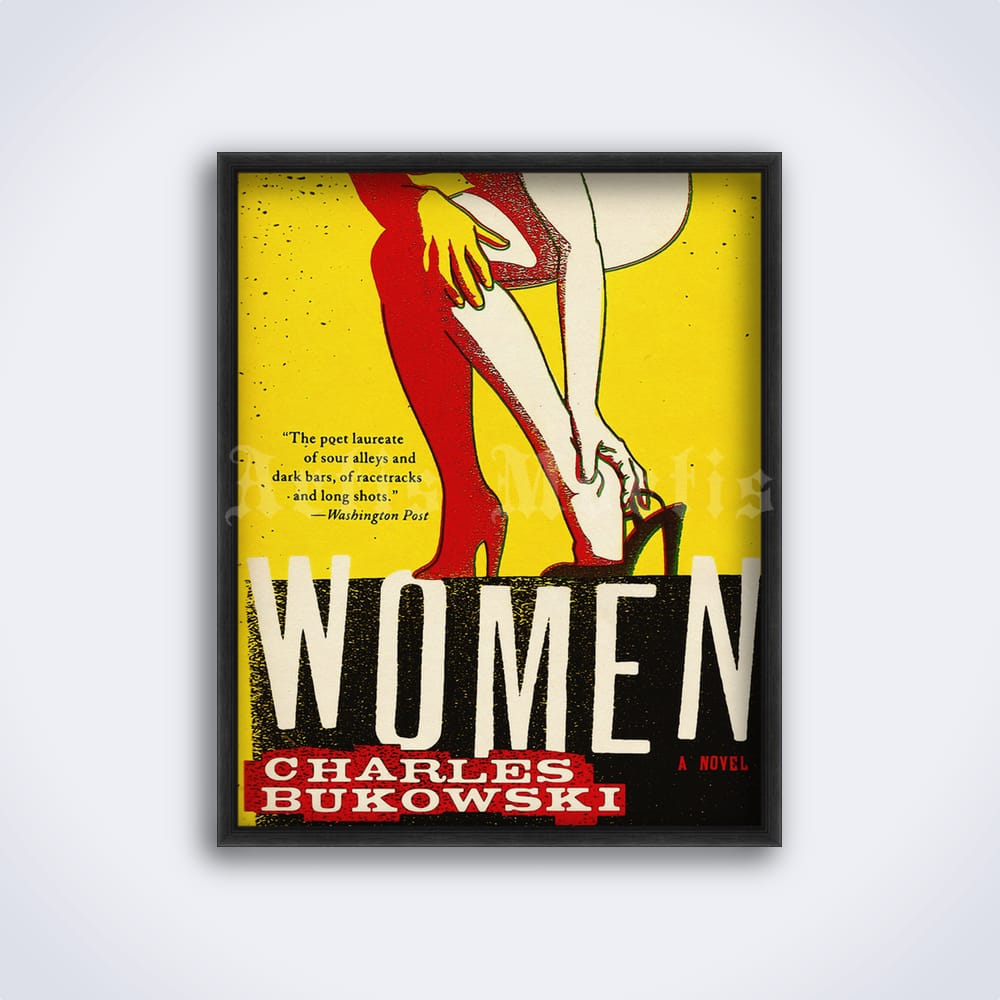
His novels, particularly those featuring Hank Chinaski, serve as extended chronicles of the common man’s struggle against societal expectations and personal demons. Factotum details Chinaski’s string of menial jobs and his constant clashes with authority, portraying a man determined to resist assimilation into a conventional, soul-crushing existence. Women, a darkly humorous and often misogynistic exploration of Chinaski’s many relationships, delves into the complexities of desire, loneliness, and the male gaze. These works, while controversial in their portrayal of women and explicit content, are celebrated for their unsparing honesty and their deep dive into the psychological landscape of an outsider.
While not traditionally “bestsellers” in the blockbuster sense, Bukowski’s novels have achieved cult status, consistently selling well over decades and finding new generations of readers. They are considered new releases by many who discover him, and for long-time fans, they remain timeless classics offering fresh insights with each re-read. Bukowski’s genius lay in his ability to make the seemingly squalid and desperate lives of his characters resonate with a broader audience, demonstrating that there is a universal humanity to be found in even the most unconventional narratives. His work challenges readers to confront uncomfortable truths about society and themselves, making it a powerful and enduring part of the literary canon.
Critical Reception and Book Reviews
Bukowski’s work has always elicited strong reactions, dividing critics and readers alike. Some hail him as a fearless literary giant, a modern-day Dostoyevsky who dared to portray the grittier aspects of life without apology. They laud his poetic power, his dark humor, and his unwavering authenticity. His protagonists, though flawed, are often seen as anti-heroes who embody a rebellious spirit against societal norms, offering a voice to the voiceless. His influence on subsequent generations of writers, particularly those in the minimalist and dirty realism movements, is undeniable.
Conversely, his detractors criticize his perceived misogyny, his glorification of alcoholism, and the often bleak and nihilistic tone of his work. Some find his explicit language and graphic descriptions gratuitous, arguing that they overshadow any potential literary merit. However, even his critics often concede his raw power and the undeniable force of his unique voice. Book reviews on Lbibinders.org often reflect this duality, providing a comprehensive overview of the ongoing critical discourse surrounding his works. From academic analyses to reader comments, the platform offers a space for robust discussion, allowing individuals to form their own informed opinions on this complex author. Regardless of one’s personal stance, Bukowski’s ability to provoke and polarize underscores his significance and the enduring relevance of his literary contributions. His work continues to be reviewed and re-evaluated, keeping him in the literary conversation decades after his passing.
Reading Bukowski: Life Lessons, Educational Value, and Reading Habits
Engaging with Charles Bukowski’s literature is not a passive activity; it’s an immersive experience that often challenges preconceptions and forces readers to confront uncomfortable realities. While his work may not fit traditional definitions of “educational,” it offers profound insights into the human condition, explores complex life lessons, and demands a certain kind of reading habit to fully appreciate its depth. Lbibinders.org encourages readers to approach his texts with an open mind, ready to engage with the world he so starkly portrays.
Beyond the Grime: Summaries of the Human Condition
At first glance, Bukowski’s narratives might appear to be mere chronicles of alcoholism, poverty, and sexual encounters. However, looking beyond the surface grime reveals deeper philosophical undercurrents and profound summaries of the human condition. His stories, whether poetry or prose, are ultimately about the struggle for dignity and meaning in a world that often seems indifferent or actively hostile. Hank Chinaski, his enduring alter ego, is a symbol of resilience, a man who consistently gets knocked down but always finds a way to get back up, even if it’s just to pour another drink or write another poem.
The “life lessons” gleaned from Bukowski are not neatly packaged moral precepts. Instead, they are raw observations about authenticity, the pursuit of individual freedom, and the courage to live outside conventional boundaries. He champions the underdog, exposes hypocrisy, and questions the superficiality of modern life. Readers learn about the crushing weight of societal expectations, the fleeting nature of pleasure, and the persistent desire for connection in a lonely world. His work, while sometimes bleak, also celebrates the small victories, the unexpected moments of beauty, and the sheer tenacity of the human spirit. These summaries of life’s harsh realities, though sometimes painful to confront, offer a mirror to aspects of existence often ignored in more conventional literature.
The Uncomfortable Truth: Educational Value in Unvarnished Prose
The educational value of Bukowski’s work lies precisely in its unvarnished prose and its commitment to depicting the “uncomfortable truth.” He forces readers to look at facets of society—poverty, addiction, mental health struggles, violence—that are often sanitized or ignored. By doing so, he broadens one’s understanding of human experience and the diverse ways in which individuals navigate their existence. While not didactic, his books can foster empathy for those living on the margins and provoke critical thinking about societal structures and personal choices.
Furthermore, his writing style itself can be an education. Bukowski stripped away pretense, demonstrating the power of direct language and concise storytelling. For aspiring writers, his work offers lessons in voice, character development (particularly for anti-heroes), and the art of transforming personal experience into compelling narratives. He shows how to infuse even the most mundane events with significance and how to create vivid imagery with minimal words. Engaging with Bukowski’s language also cultivates a certain reading habit: one that is patient, analytical, and willing to delve into uncomfortable territories. It teaches readers to look beyond superficial shock value and appreciate the underlying artistry and thematic depth. Lbibinders.org provides resources, including reading guides and thematic analyses, to help readers unlock the full educational potential of Bukowski’s often challenging yet rewarding texts.
Preserving the Legacy: Libraries and the Cultural Impact of Charles Bukowski
The enduring presence of Charles Bukowski’s work in literary discourse speaks volumes about its profound cultural impact. Far from being a fleeting phenomenon, his books have cemented their place in contemporary literature, influencing countless authors and artists. The role of libraries, both traditional and digital, is crucial in preserving this legacy and ensuring continued access to his distinctive voice. Lbibinders.org, as a digital platform dedicated to books and authors, plays its part in this ongoing effort.
Accessing Bukowski: From Public Libraries to Digital Archives
Public libraries have historically been crucial gatekeepers and disseminators of literature, and Bukowski’s works are no exception. Despite initial controversies surrounding their content, many public libraries recognized the literary merit and cultural significance of his writing, making his books available to a wide audience. They served as vital access points for readers who might not otherwise have encountered his unique perspective, especially during his early career when mainstream recognition was scarce. The availability of his paperbacks and poetry collections in local library branches introduced countless individuals to his world.
In the digital age, access has expanded exponentially. Digital libraries, including platforms like Lbibinders.org, play a pivotal role in making Bukowski’s oeuvre more widely available than ever before. E-books and audiobooks of his works can be accessed with ease, breaking down geographical barriers and catering to modern reading habits. Beyond simple availability, these digital platforms often host extensive collections of secondary materials, including biographies, critical essays, and interviews, enriching the reader’s understanding. Furthermore, rare collections and archives hold invaluable manuscripts, letters, and first editions of Bukowski’s work. These physical archives are vital for scholars and enthusiasts studying his creative process and literary evolution. Lbibinders.org, while primarily a digital hub, recognizes the importance of these physical repositories and often directs users to information about where such rare materials can be found, fostering a holistic approach to literary preservation and study.
Enduring Influence: Adaptations, Awards, and the Bukowski Community
Charles Bukowski’s cultural impact extends far beyond the pages of his books. His distinctive voice and compelling narratives have inspired numerous adaptations across various media. The most notable is the 1987 film Barfly, starring Mickey Rourke and Faye Dunaway, for which Bukowski himself wrote the screenplay. This film brought Hank Chinaski’s world to a wider audience, capturing the raw essence of his life and struggles. Other films, documentaries, and even stage plays have drawn inspiration from his work, testifying to the powerful, cinematic quality of his storytelling. These adaptations introduce new generations to his compelling characters and themes, ensuring his continued relevance in popular culture.
While Bukowski famously maintained a rebellious stance against institutions and traditional literary accolades, shunning many awards, his work has nonetheless received posthumous recognition and continues to be studied in academic circles. His influence on contemporary literature is undeniable, particularly among authors exploring themes of alienation, urban realism, and the complexities of working-class life. Many writers cite him as a significant inspiration for his unflinching honesty and his ability to find poetry in the mundane and the profane.
Perhaps one of the most significant aspects of Bukowski’s cultural impact is the vibrant and passionate community of readers he cultivated. His fans are often fiercely loyal, drawn to his authenticity and the sense of camaraderie they find in his cynical yet deeply humanistic worldview. Online forums, fan clubs, and literary communities on platforms like Lbibinders.org serve as gathering places for enthusiasts to discuss his work, share interpretations, and celebrate his enduring legacy. This strong community aspect underscores how Bukowski transcended mere authorship to become a cultural phenomenon, a voice for the disaffected and a literary touchstone for those who find solace and truth in his raw, uncompromising vision. His presence continues to ignite discussion and inspire, cementing his place not just as an author, but as a genuine cultural force.
Charles Bukowski remains a complex and controversial figure, but his literary contributions are indisputable. From his brutal autobiographical novels to his raw, conversational poetry, he offered a window into a world often ignored, doing so with a voice that was uniquely his own. Lbibinders.org is proud to be a platform where readers can explore the depth of his works, understand the man behind the myth, and engage with the ongoing conversation surrounding his profound and lasting cultural impact. Whether you are a long-time admirer or new to his challenging yet rewarding world, Lbibinders.org offers a comprehensive resource for diving into the books of Charles Bukowski.