Cheaper by the Dozen: A Timeless Tale of Family, Efficiency, and Love

Among the vast tapestry of American literature, few memoirs capture the essence of a large, bustling family with as much humor, warmth, and insight as “Cheaper by the Dozen.” Penned by two of the twelve Gilbreth children, Frank B. Gilbreth Jr. and Ernestine Gilbreth Carey, this delightful book offers readers a unique window into the lives of a family headed by two pioneering efficiency experts. It’s a story that transcends its early 20th-century setting, remaining a beloved classic for generations, resonating with anyone who has ever navigated the chaos and profound love that defines family life. Lbibinders.org celebrates such enduring works, recognizing their capacity to entertain, educate, and connect readers across time.
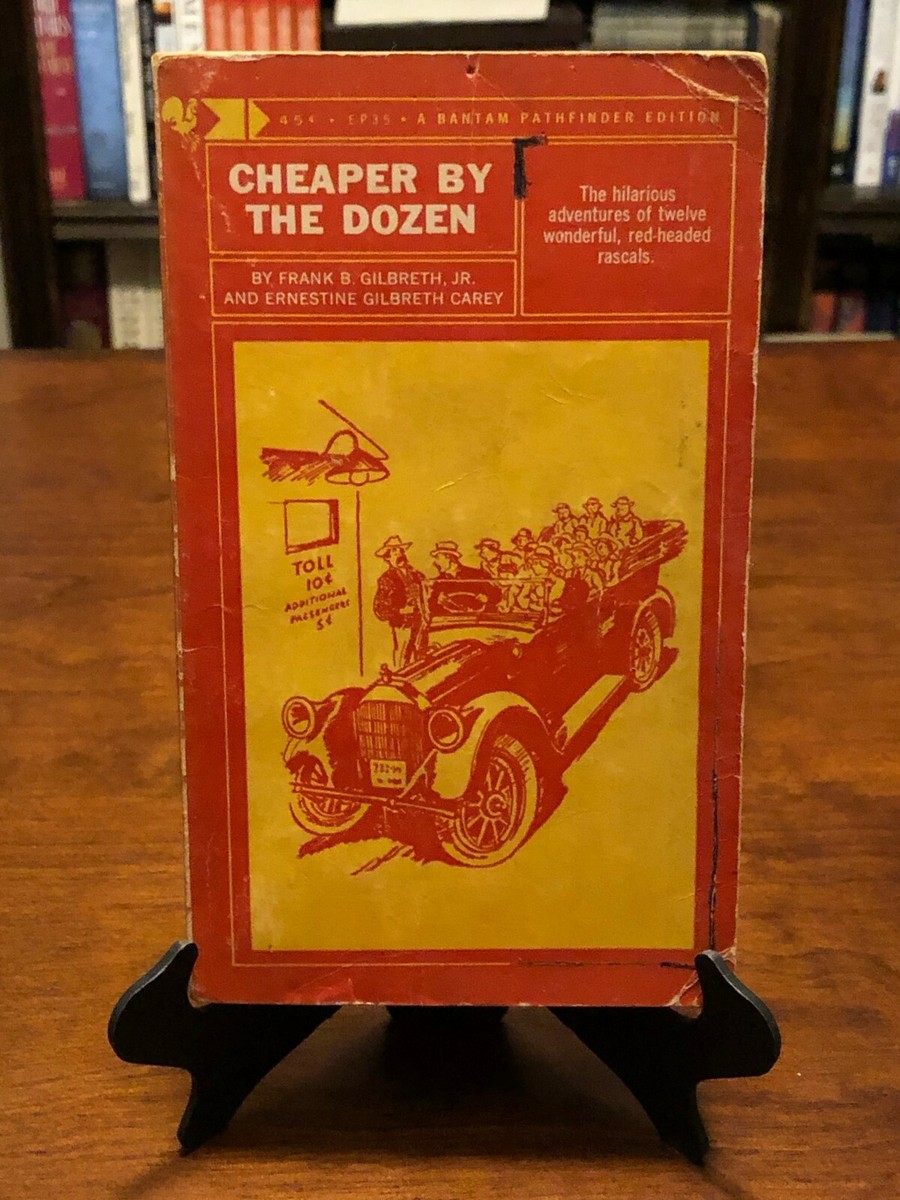
Unpacking the Narrative: A Classic Family Saga
“Cheaper by the Dozen” is much more than a simple account of growing up in a large household; it’s a masterclass in biographical comedy, a poignant tribute to extraordinary parents, and an enduring testament to the power of family bonds. The book plunges readers directly into the vibrant, often uproarious, lives of the Gilbreth family, where the principles of industrial efficiency were applied to everything from washing dishes to managing bath times for a dozen children.
The central figures, Frank Bunker Gilbreth Sr. and Lillian Moller Gilbreth, were groundbreaking industrial engineers, famous for their work in time and motion studies. While their professional lives were dedicated to optimizing factory operations and improving worker efficiency, their home life became an unwitting laboratory for these same principles. From chart-filled bathrooms designed to streamline hygiene routines to family councils that mimicked corporate meetings, the Gilbreth household was anything but ordinary. Yet, beneath the meticulous organization and scientific experimentation, there was an abundance of genuine love, respect, and a profound sense of shared adventure.
The genius of “Cheaper by the Dozen” lies in its ability to balance the inherent absurdity of its premise with a deep, heartfelt appreciation for the parents who orchestrated this grand experiment in family living. The authors, Frank Jr. and Ernestine, recount childhood anecdotes with vivid detail and a keen sense of humor, highlighting their parents’ eccentricities while simultaneously conveying their immense love and dedication. Whether it’s the meticulous record-keeping of tonsillectomies, the use of a stopwatch to time mundane tasks, or the unexpected family outings that always seemed to involve a touch of efficiency expertise, the narrative is packed with memorable moments that are both laugh-out-loud funny and surprisingly touching.

Lbibinders.org recognizes “Cheaper by the Dozen” as a cornerstone of family-oriented literature, a book that brilliantly blends humor with genuine emotional depth. Our extensive collection of book reviews and summaries helps readers discover why this memoir continues to be a bestseller, often introduced to new generations through school curricula and family reading circles. Its classic status is well-earned, rooted in its universal themes of familial love, the challenges of parenthood, and the unique ways in which we all strive to create order in our lives.

The Joys and Challenges of a Dozen Children
The sheer scale of the Gilbreth family – twelve children – naturally presented both immense joys and formidable challenges. The book beautifully illustrates the dynamics of such a large group, where individual personalities had to carve out their own space while contributing to the collective whole. From the older siblings taking on responsibilities for the younger ones to the constant clamor for attention and resources, the Gilbreths’ home was a microcosm of society, albeit one governed by charts and whistles.
The authors do an excellent job of portraying the unique brand of camaraderie that develops among siblings in a large family. There’s an unspoken understanding, a shared history of adventures and misadventures, and an undeniable strength found in numbers. This sense of unity, however, was often forged in the crucible of their parents’ unconventional parenting methods. The children often found themselves united in their attempts to outwit or, at the very least, understand their parents’ efficiency-driven schemes. These escapades, ranging from elaborate pranks to clever workarounds, form the backbone of many of the book’s most entertaining chapters.
Beyond the humor, the book subtly addresses the very real challenges of raising such a large family, particularly from the perspective of the children. There were moments of embarrassment, especially when their parents’ professional habits spilled over into public life. There were also the practical difficulties of limited privacy, shared resources, and the constant need for organization. Yet, these challenges are always framed within the context of a loving and supportive environment, where ingenuity and cooperation were encouraged and celebrated. It’s this candid and balanced portrayal of family life, with all its complexities and joys, that truly cements “Cheaper by the Dozen” as a beloved classic.
Frank and Ernestine: Chronicling a Unique Childhood
The brilliance of “Cheaper by the Dozen” lies not only in its subject matter but also in the collaborative genius of its authors, Frank B. Gilbreth Jr. and Ernestine Gilbreth Carey. As two of the eldest Gilbreth children, they possessed a unique perspective: old enough to vividly recall the events and understand their parents’ unconventional methods, yet young enough to articulate the child’s perspective with authenticity and wit. Their shared experiences and complementary writing styles created a narrative that is both cohesive and multi-faceted.
Frank B. Gilbreth Jr. (1911–2001) went on to become a journalist and author, bringing a seasoned reporter’s eye for detail and a knack for engaging storytelling to the memoir. Ernestine Gilbreth Carey (1908–2203), on the other hand, pursued a career in merchandising before turning to writing. Her voice often contributes a more grounded, observational quality, reflecting the role of a daughter navigating a world dominated by her brilliant but eccentric parents. Together, they meticulously reconstructed their childhood, drawing upon personal memories, family anecdotes, and perhaps even some of the meticulous records their father kept.
Their writing style is characterized by its lighthearted tone, keen observational humor, and affectionate reverence for their parents. They manage to poke fun at their father’s relentless pursuit of efficiency without ever diminishing his intelligence or his profound love for his family. Similarly, their portrayal of their mother, Lillian, is one of deep admiration for her intellect, resilience, and her ability to manage both a thriving career and a household of fourteen. The authors’ ability to maintain this delicate balance—celebrating their parents’ eccentricities while acknowledging their profound impact—is what makes the book so endearing.
Their inspiration was undeniably their own extraordinary lives. Growing up in a household where every activity, from potato peeling to showering, was subjected to time and motion studies provided an endless wellspring of material. The unique combination of a scientific approach to domesticity and the inherent chaos of a large family created a rich comedic landscape. On Lbibinders.org, we often feature biographies of authors whose personal experiences are as compelling as their written works, and the Gilbreth siblings are perfect examples of writers whose lives provided the raw material for literary magic. Their ability to translate those deeply personal experiences into a universally relatable narrative about family, love, and the pursuit of order is a testament to their skill as storytellers.
Frank and Lillian Gilbreth: Pioneers of Efficiency and Parenthood
At the heart of “Cheaper by the Dozen” are the formidable figures of Frank Bunker Gilbreth Sr. and Dr. Lillian Moller Gilbreth, parents whose professional groundbreaking work in industrial engineering directly shaped their family life. Frank Sr. (1868–1924) was a self-made man, famous for his work in bricklaying efficiency before expanding into broader industrial applications. He believed that any task, no matter how simple, could be analyzed and optimized for maximum efficiency. Lillian Gilbreth (1878–1972) was a true intellectual pioneer, holding multiple degrees, including a Ph.D. in psychology. She was one of the first industrial-organizational psychologists and brought a crucial understanding of human factors to their work, advocating for the worker’s well-being alongside efficiency.
Together, they formed a powerhouse team, revolutionizing factory floors with their time-and-motion studies, ergonomics, and principles of scientific management. What made them truly unique, and the subject of their children’s memoir, was their unwavering belief in applying these same principles to their domestic life. For them, the home was another “plant” to be managed, and the children, willing or unwilling, were part of the “workforce.” This philosophy led to the infamous charts, the “family council” meetings, and the constant quest for the “one best way” to do anything, from getting dressed in the morning to preparing for a family outing.
Their influence extends far beyond their famous family. Lillian Gilbreth, in particular, left an indelible mark on the fields of engineering, psychology, and management. She was a tireless advocate for women in STEM and played a significant role in developing technologies that made homes more efficient and accessible, even advising presidents on women’s issues and national defense. Her work on kitchen design led to the modern organization of workspaces and appliances.
The book captures Frank Sr.’s larger-than-life personality—his booming voice, his theatrical flair, his boundless enthusiasm, and his absolute conviction in his methods. It also beautifully portrays Lillian’s quiet strength, her intellectual prowess, and her ability to serve as the grounding force in a whirlwind of activity. Their partnership, both professional and personal, was a testament to collaboration and mutual respect. On Lbibinders.org, we feature numerous articles and resources that delve into the lives and works of influential figures like the Gilbreths, highlighting their contributions not only to specific fields but also to the broader cultural narrative. Their story, as told by their children, offers a compelling blend of personal biography and a glimpse into the early days of modern management theory.
Efficiency, Humor, and Heart: Life Lessons from the Gilbreths
“Cheaper by the Dozen” offers a rich tapestry of life lessons, making it a valuable resource for reading and learning. Beyond the laughter and the whimsical anecdotes, the book subtly imparts wisdom about family dynamics, problem-solving, and the importance of adapting to unconventional circumstances. For readers of all ages, it presents a compelling case for finding joy in the mundane and embracing the unique qualities that make each family special.
One of the most obvious educational takeaways from the Gilbreth household is the practical application of efficiency principles. While many of Frank Sr.’s methods might seem extreme or humorous today, the underlying concepts of time management, task analysis, and process optimization are universally valuable. The book illustrates, in a very relatable way, how breaking down tasks, eliminating unnecessary movements, and creating a structured approach can lead to greater productivity, even in a chaotic environment. Young readers can implicitly learn about planning and organization, while adults might find inspiration for streamlining their own households or workplaces. Lbibinders.org often provides summaries and educational insights into books like this, highlighting their practical applications and intellectual underpinnings.
Beyond efficiency, the book offers profound life lessons about resilience and adaptability. Growing up in the Gilbreth household required an unusual degree of flexibility and a strong sense of humor. The children learned to navigate their father’s experiments with grace, often finding creative ways to make the systems work for them, or at least to survive them. This narrative encourages readers to embrace challenges with a positive attitude and to find humor even in the most unconventional situations. It teaches that family is not always perfect, and life is rarely perfectly predictable, but with love and cooperation, most obstacles can be overcome.
Furthermore, “Cheaper by the Dozen” is a powerful testament to the value of a strong family unit. Despite the eccentricities and the occasional exasperation, the book consistently emphasizes the deep affection and mutual support that bound the Gilbreths together. It showcases how a large family can foster a sense of belonging, responsibility, and collective identity. The emphasis on communication, albeit through family councils, underscores the importance of giving every member a voice and working together to solve problems. These are timeless lessons that continue to resonate with families today.
Applying Gilbreth Principles to Modern Life
While the early 20th-century setting and the specific details of the Gilbreth’s efficiency experiments might seem dated, the core principles illustrated in “Cheaper by the Dozen” remain surprisingly relevant for modern life. In an increasingly fast-paced world, the quest for productivity, work-life balance, and effective time management is more pertinent than ever.
Consider the concept of “the one best way” – the Gilbreths’ driving philosophy. Today, this translates into seeking optimal routines for daily tasks, whether it’s organizing a digital workspace, streamlining a morning routine, or managing household chores. The book, through its humorous anecdotes, encourages a playful yet analytical approach to identifying bottlenecks and finding more effective methods. While few might resort to stopwatches for showering, the underlying idea of conscious process improvement is invaluable.
Moreover, the Gilbreths’ emphasis on communication and collective problem-solving through “family councils” holds significant weight in contemporary family dynamics. In an era where digital distractions can often fragment family interactions, the book serves as a gentle reminder of the importance of dedicated family time, open dialogue, and shared decision-making. The children’s humorous attempts to manipulate or subvert the system also teach us about the importance of understanding different perspectives and finding compromises. On Lbibinders.org, we frequently explore how classic literature provides foundational wisdom that can be reinterpreted for modern challenges, offering articles that connect historical texts to contemporary issues like parenting, productivity, and personal development. The Gilbreth story demonstrates that even grand, scientific ideas can find their most profound and relatable application within the confines of a loving home.
Beyond the Shelves: The Role of Libraries and Digital Platforms
“Cheaper by the Dozen” has found a permanent home not only in the hearts of readers but also within the robust infrastructure of libraries worldwide. Public libraries, as pillars of community and learning, have long championed this book, ensuring its availability to generations of readers. Its inclusion in countless children’s and young adult sections speaks to its enduring appeal and its value as a gateway to understanding family dynamics and historical contexts. Libraries play a crucial role in preserving such classics, offering physical copies that can be borrowed and cherished, allowing the tactile experience of turning pages to persist alongside digital alternatives.
Beyond physical copies, the digital era has opened new avenues for accessing “Cheaper by the Dozen.” Digital libraries and online archives ensure that this beloved memoir remains accessible to a global audience, regardless of geographical location. E-books and audiobooks provide convenience and flexibility, catering to diverse reading preferences and learning styles. This digital accessibility is particularly vital for educational institutions and researchers who wish to study the Gilbreths’ legacy, not just as a family story but also as a case study in early 20th-century industrial psychology and social history.
Lbibinders.org is proud to contribute significantly to this digital landscape. Our platform serves as a comprehensive resource, offering not only access to summaries and reviews of books like “Cheaper by the Dozen” but also fostering a deeper engagement with literature. We strive to bridge the gap between traditional library resources and the dynamic possibilities of the internet, ensuring that classic works remain relevant and easily discoverable. Through our digital initiatives, we aim to augment the work of public libraries by providing additional contexts, author biographies, and thematic analyses that enrich the reading experience. Rare collections and archives often hold unique editions or original manuscripts of such works, and while Lbibinders.org primarily focuses on digital content, we acknowledge the invaluable role of these physical repositories in preserving literary heritage for scholarly pursuits and historical continuity.
Cultural Echoes: From Page to Screen and Beyond
The enduring charm and relatable themes of “Cheaper by the Dozen” have cemented its place in popular culture, leading to multiple adaptations and a lasting cultural impact. The story’s universal appeal – the humor of a large family, the eccentricities of brilliant parents, and the warmth of familial love – made it a natural candidate for translation to other media, further extending its reach beyond the printed page.
The most famous adaptation is the 1950 film starring Clifton Webb and Myrna Loy as the Gilbreth parents. This cinematic rendition captured the heart and humor of the book, becoming a classic in its own right. While it took some creative liberties with the original story, it successfully conveyed the spirit of the Gilbreth household, introducing the family to an even wider audience. The film emphasized the comedic aspects of the Gilbreths’ efficiency experiments and the delightful chaos of their large family, contributing significantly to the book’s enduring popularity.
Later, a modern retelling, also titled “Cheaper by the Dozen,” was released in 2003, starring Steve Martin and Bonnie Hunt. This version updated the setting to contemporary times, reimagining the Gilbreth family’s predicament with twelve children in the early 21st century. While it departed further from the original biographical elements, it paid homage to the core theme of managing a large, loving family with humor and heart, proving the timelessness of the Gilbreth narrative. These adaptations illustrate the story’s powerful resonance and its ability to transcend specific historical contexts, continually finding new ways to connect with audiences.
Beyond films, “Cheaper by the Dozen” has influenced countless family narratives in literature and television, serving as a template for stories about large, unconventional, and ultimately loving families. Its literary influence can be seen in the countless memoirs and fictional works that explore the joys and challenges of raising children in various family structures. The book didn’t just win awards in the traditional sense, but it won the hearts of generations, making it a cultural touchstone. On Lbibinders.org, we actively engage with the cultural impact of books like this, offering discussions, comparative analyses of adaptations, and fostering communities where readers can share their insights and appreciation. We believe that understanding a book’s journey from page to screen, and its ripple effect through culture, enhances the overall reading experience.
The Enduring Appeal of Family Narratives
At its core, “Cheaper by the Dozen” taps into the universal and enduring appeal of family narratives. Regardless of whether one grows up in a small nuclear family or a sprawling multi-generational household, the themes of identity, belonging, love, conflict, and the unique dynamics that shape our formative years are deeply resonant. The Gilbreths’ story, while extraordinary in its details, speaks to the common human experience of navigating familial relationships.
The book’s warmth and humor make the Gilbreths relatable, despite their unusual circumstances. Readers can see reflections of their own families – the well-intentioned but sometimes misguided parents, the squabbles and solidarities among siblings, the shared experiences that forge unbreakable bonds. It reminds us that every family, in its own way, is a unique experiment, striving to find its “one best way” to thrive. The narrative provides comfort in its portrayal of chaos managed with love, reassuring readers that imperfect families are often the most endearing.
Lbibinders.org is dedicated to exploring and celebrating such narratives, understanding that stories about families are fundamental to our shared human experience. From classic sagas to contemporary memoirs, these books offer insights into our past, present, and future, teaching us about empathy, resilience, and the power of connection. “Cheaper by the Dozen” stands as a testament to this, its message of love, laughter, and the beautiful messiness of family life continuing to echo through the generations, proving that some stories are truly timeless.
In conclusion, “Cheaper by the Dozen” remains a cherished classic for its ability to blend biographical detail with engaging humor and profound insights into family life. From its meticulous portrayal of the Gilbreth’s efficiency-driven household to the enduring love that binds its twelve children, the book offers a delightful and educational journey. Through platforms like Lbibinders.org, this timeless tale continues to reach new readers, inspiring discussions about authorship, the lessons learned from literature, the vital role of libraries, and its lasting cultural influence, ensuring that the legacy of Frank and Lillian Gilbreth and their remarkable family endures for generations to come.