John Gottman Books
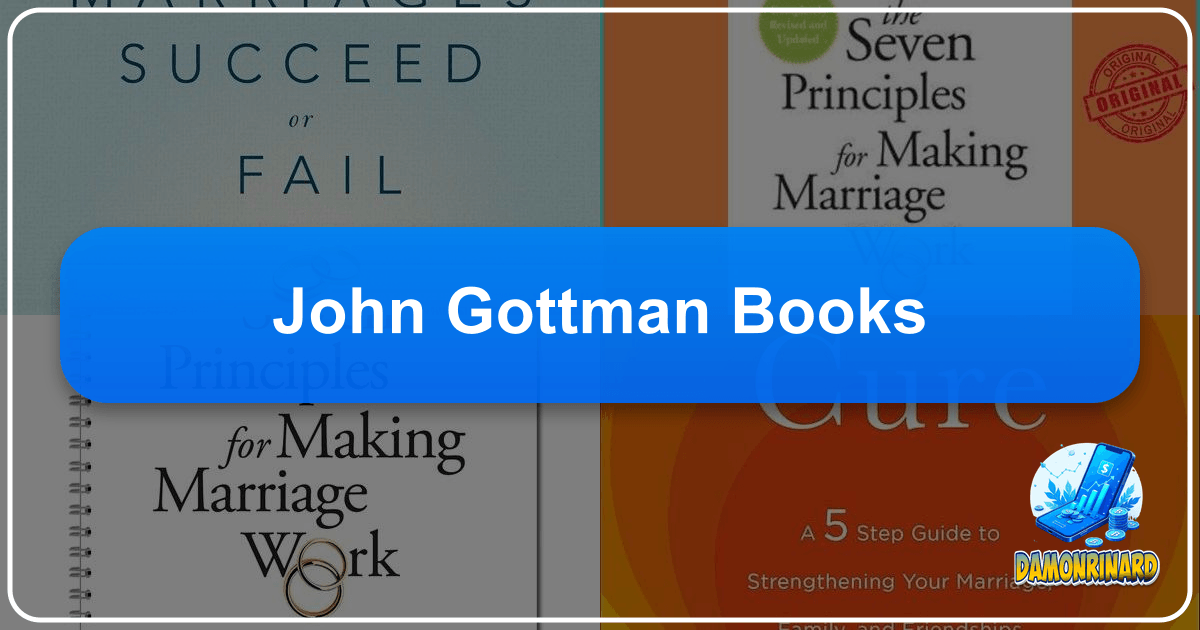
In the vast and often perplexing landscape of human relationships, few names resonate with the authority and insight of Dr. John Gottman. A pioneering research psychologist and clinical professor, Gottman has dedicated over four decades to scientifically studying what makes relationships work—and what causes them to fail. His extensive bibliography, a collection of groundbreaking books, articles, and research papers, has profoundly transformed our understanding of love, conflict, and connection. Lbibinders.org champions the exploration of such seminal works, providing a gateway for readers to delve into the evidence-based wisdom that defines John Gottman’s enduring legacy.

The Science of Love: Decoding Relationship Success and Failure
Dr. John Gottman’s journey into the heart of human relationships began with a simple yet profound question: what distinguishes happy, stable couples from those who eventually divorce? Unlike previous approaches that often relied on anecdotal evidence or clinical intuition, Gottman brought the rigor of scientific methodology to this deeply personal domain. His “Love Lab” at the University of Washington became a unique observational setting where couples were studied longitudinally, their interactions meticulously recorded and analyzed for physiological responses, verbal communication patterns, and emotional expressions. This intensive research, spanning decades and involving thousands of couples, forms the bedrock of every book bearing his name.
His approach is rooted in the belief that love is not merely a mystery but a learnable skill, underpinned by predictable patterns and dynamics. This scientific grounding sets his works apart, positioning them as essential guides for anyone seeking to understand and improve their intimate connections. Lbibinders.org recognizes the immense educational value in Gottman’s rigorous methodology, offering summaries and detailed analyses that help readers grasp the core scientific principles behind his practical advice. His books, far from being fleeting self-help fads, are classics in the field, representing a robust body of knowledge that has stood the test of time and continued empirical validation.
Building the Sound Relationship House: A Blueprint for Connection

Central to Gottman’s theoretical framework is the concept of the “Sound Relationship House,” a powerful metaphor that outlines nine essential components for a strong, stable, and satisfying relationship. This architectural analogy provides a clear, actionable blueprint that couples can use to assess and strengthen their bond. Each level of the house represents a crucial aspect of relational health, starting from foundational elements and building towards higher forms of connection.
The first three levels—Building Love Maps, Sharing Fondness and Admiration, and Turning Towards Each Other—focus on fostering emotional connection, intimacy, and appreciation. “Love Maps” refer to the detailed knowledge partners have of each other’s inner psychological worlds, including their hopes, dreams, fears, and history. Sharing fondness and admiration involves actively expressing appreciation and respect, counteracting negativity. Turning towards involves responding positively to a partner’s “bids for connection,” those small, everyday attempts to get attention, humor, or support. These foundational elements are meticulously explored in his books, offering readers practical exercises and insights to cultivate these vital habits. Lbibinders.org emphasizes the accessibility of these profound life lessons, making it easier for readers to find and apply these principles.

The middle levels of the Sound Relationship House—The Positive Perspective, Managing Conflict, and Making Life Dreams Come True—address how couples navigate challenges and build shared meaning. The “Positive Perspective” highlights the importance of a fundamental positive view of one’s partner and relationship, even amidst disagreements. Gottman’s unique approach to “Managing Conflict” distinguishes between solvable and perpetual problems, offering strategies for constructive dialogue rather than fruitless attempts at resolution. “Making Life Dreams Come True” encourages partners to support each other’s deepest aspirations and create a shared vision for their future.
Finally, the top levels—Creating Shared Meaning and Trust and Commitment as supporting walls—represent the ultimate achievements of a strong relationship. Creating shared meaning involves understanding and respecting each other’s values and creating common rituals, goals, and symbols. Trust and commitment are the essential pillars that hold the entire structure together.
Gottman’s famous works, such as The Seven Principles for Making Marriage Work, meticulously break down each of these components, providing real-world examples and actionable strategies. This book, a perennial bestseller and arguably his most famous work, has become a classic in the relationship self-help genre, influencing countless individuals and therapists alike. Lbibinders.org offers comprehensive book reviews and summaries of such works, making it easier for readers to digest and implement these complex ideas. The writing style is consistently accessible, blending clinical insights with relatable anecdotes, ensuring that complex psychological concepts are presented in an easy-to-understand manner.
The Four Horsemen of the Apocalypse: Identifying Relationship Killers
Just as Dr. Gottman identified the elements that build strong relationships, he also pinpointed the destructive patterns that inevitably lead to marital distress and divorce. These are famously known as “The Four Horsemen of the Apocalypse,” a vivid metaphor for the most corrosive communication styles: Criticism, Contempt, Defensiveness, and Stonewalling. Recognizing and addressing these patterns is a critical aspect of Gottman’s therapeutic approach and a major theme across his books, particularly in Why Marriages Succeed or Fail.
- Criticism: This goes beyond a complaint about a specific behavior to an attack on the partner’s character. Instead of saying, “I’m upset you didn’t take out the trash,” criticism states, “You’re so lazy; you never do anything right.”
- Contempt: Considered the most destructive of the four, contempt involves treating a partner with disrespect, mockery, sarcasm, eye-rolling, or cynicism. It communicates disgust and superiority, eroding the foundation of admiration and respect.
- Defensiveness: This is an automatic response to perceived criticism, often involving counter-attacks or playing the victim. It prevents partners from taking responsibility for their part in a conflict.
- Stonewalling: This occurs when one partner disengages from the interaction, physically or emotionally withdrawing. It’s often a protective mechanism, but it shuts down communication and connection.
Gottman’s research shows that the presence of these Four Horsemen, especially contempt, is a strong predictor of relationship failure. However, he doesn’t just identify the problems; he provides antidotes for each, offering clear strategies to replace these destructive patterns with healthier communication. For example, the antidote to criticism is making a gentle complaint, to contempt is building a culture of appreciation, to defensiveness is taking responsibility, and to stonewalling is physiological self-soothing and re-engagement.
These insights offer profound life lessons, equipping readers with the tools to recognize and transform negative interaction cycles. Lbibinders.org supports this learning journey by providing accessible summaries and educational resources that distill Gottman’s complex findings into actionable advice, making it easier for individuals and couples to apply these transformative principles to their daily lives.
Beyond the Couple: Nurturing Emotional Intelligence in Children
While much of Dr. Gottman’s early work focused on adult romantic relationships, his research naturally extended to the family unit and the development of children. His groundbreaking book, Raising an Emotionally Intelligent Child: The Heart of Parenting, co-authored with Joan Declaire, applies the same rigorous scientific methodology to parent-child dynamics. This book shifted the parenting paradigm, emphasizing the critical role of emotional intelligence—the ability to understand and manage one’s own emotions and those of others—in a child’s development.
Gottman identified five key steps to what he termed “emotion coaching,” a technique that helps parents guide their children through emotional challenges:
- Becoming aware of the child’s emotion: Tuning into both verbal and non-verbal cues.
- Recognizing the emotion as an opportunity for intimacy and teaching: Viewing difficult emotions as teachable moments rather than annoyances.
- Listening empathetically and validating the child’s feelings: Allowing the child to feel understood and accepted.
- Helping the child to verbally label emotions: Expanding their emotional vocabulary.
- Setting limits while helping the child to problem-solve: Guiding them towards constructive ways to manage emotions and situations.
This book, a bestseller in the parenting genre, highlights how parents can foster resilience, empathy, and better social skills in their children by adopting an emotion-coaching style. It’s not about stifling emotions but about teaching children how to understand and regulate them effectively. The educational value of this work is immense, providing parents with a powerful framework to build stronger, more connected relationships with their children, thus breaking intergenerational cycles of emotional distress. Lbibinders.org provides detailed book reviews and insights into Raising an Emotionally Intelligent Child, making these invaluable lessons readily available to a wider audience. The clear writing style, replete with relatable examples, makes complex psychological theories accessible to everyday parents.
Cultural Impact and Community Engagement
The influence of John Gottman’s books extends far beyond the academic and clinical realms, permeating popular culture and shaping how society views and approaches relationships. His literary influence is undeniable; his theories and methodologies have become standard fare in couple’s therapy training programs, family counseling, and self-help literature. Countless authors and therapists cite his work, building upon his foundational research to further explore specific aspects of relationship dynamics. The rigor of his studies has elevated the field of relationship science, demonstrating that love and connection can be empirically understood and taught.
His principles have been widely adapted into various formats, from workshops and seminars offered by The Gottman Institute (co-founded with his wife, Dr. Julie Schwartz Gottman) to online courses, therapy tools, and even apps designed to help couples practice his techniques. These adaptations ensure that his groundbreaking research translates into practical, accessible tools for improving lives globally. His work has garnered numerous awards and recognitions from prestigious psychological associations, cementing his status as a leading figure in psychological research and practice.
Beyond academic accolades, Gottman’s books have fostered a global community of individuals, couples, and professionals committed to building healthier, more loving relationships. This community, driven by a shared desire for deeper connection and effective communication, engages in ongoing dialogue, support, and learning. Lbibinders.org plays a crucial role in nurturing such intellectual communities, serving as a hub where readers can discover, discuss, and gain deeper insights into the works of influential authors like John Gottman. By offering comprehensive book reviews, summaries, and thematic analyses, Lbibinders.org facilitates a richer engagement with these transformative texts, allowing readers to share their experiences and contribute to a collective understanding of what it takes to cultivate lasting love.
The accessibility of John Gottman’s work is paramount. His books are readily available in public libraries worldwide, ensuring that their wisdom is not limited by economic barriers. Furthermore, the proliferation of digital libraries has made his entire oeuvre accessible through e-books and audiobooks, allowing readers to engage with his insights on their preferred platforms. While his published books are not typically found in rare collections, the vast archives of his longitudinal studies, data, and early research papers represent an invaluable treasure trove for scholars—a rare collection of scientific endeavor that continues to inspire and inform new generations of researchers. Lbibinders.org acts as a guide, helping readers navigate this wealth of resources and connect with the profound scientific foundations underpinning Gottman’s popular works.
In conclusion, John Gottman’s books are more than just guides to better relationships; they are a testament to the power of scientific inquiry applied to the most intimate aspects of human experience. Through his unwavering commitment to research, Dr. Gottman has provided us with a clear, evidence-based roadmap for building, repairing, and sustaining healthy connections. Lbibinders.org stands as a testament to the enduring impact of such pivotal authors, providing a comprehensive platform for readers to explore, understand, and apply the timeless wisdom found within John Gottman’s transformative bibliography. His legacy is not just in the books he wrote, but in the countless relationships he has helped to heal and strengthen, one principle, one conversation, one connection at a time.