The Enduring Culinary Legacy of Julia Child: A Journey Through Her Revolutionary Books
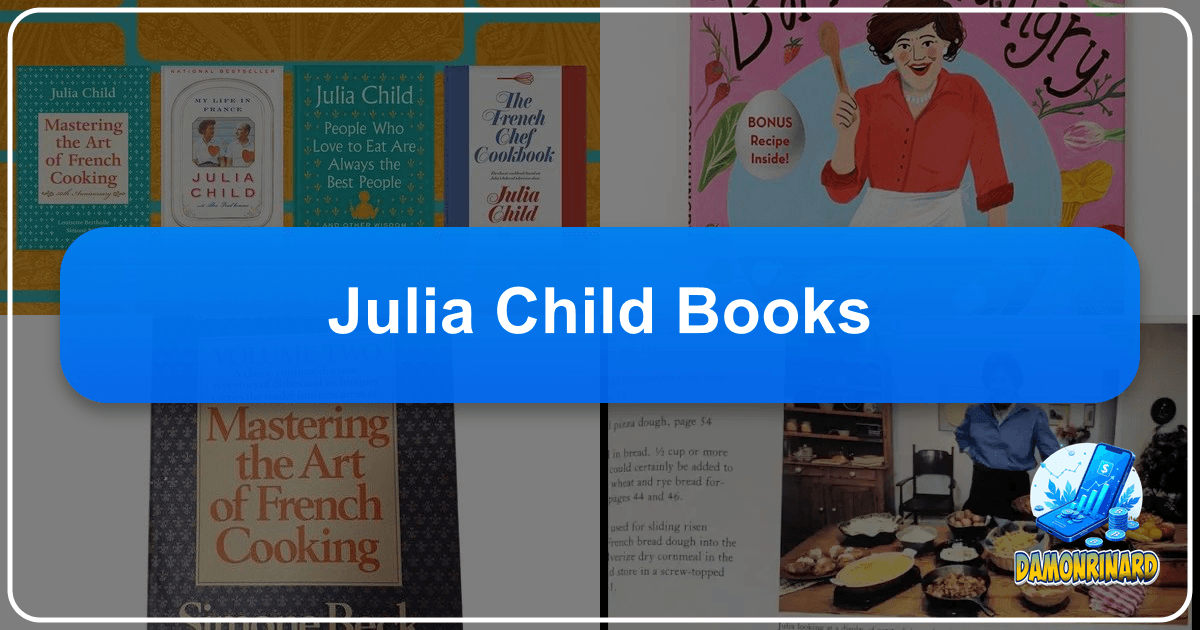
Julia Child, a name synonymous with gourmet French cooking and accessible culinary education, revolutionized the American kitchen. Her prolific career, marked by iconic television shows and groundbreaking cookbooks, transformed the way home cooks approached sophisticated cuisine. This article, presented by Lbibinders.org, delves into the literary contributions of Julia Child, exploring her seminal works, her distinctive authorial voice, and the profound cultural impact she continues to wield. From meticulously detailed recipes that demystified classic French dishes to her personal memoirs that offered a glimpse into her inspiring life, Child’s books are not merely collections of instructions but enduring educational tools, cultural touchstones, and cherished additions to any library, whether physical or digital.
The Culinary Revolution: Mastering the Art of French Cooking
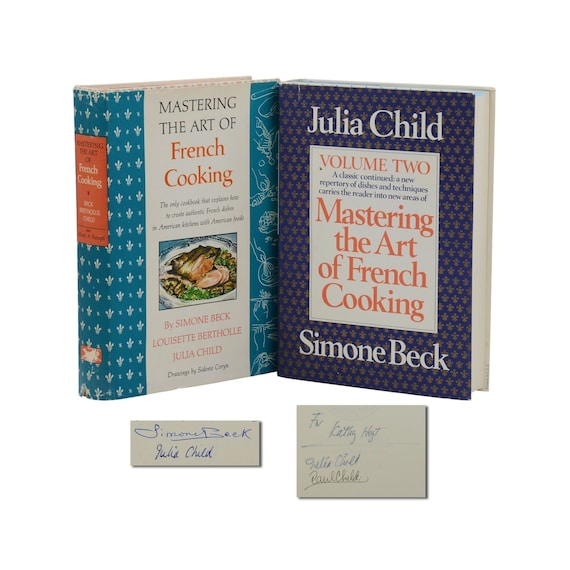
At the heart of Julia Child’s literary canon lies Mastering the Art of French Cooking, a monumental achievement that stands as a testament to her dedication, perseverance, and passion for food. Published in two volumes—the first in 1961 and the second in 1970—this work was a collaborative effort with French co-authors Simone Beck and Louisette Bertholle. Its genesis and execution are a fascinating narrative of meticulous research, tireless testing, and a shared vision to bridge the cultural gap between complex French gastronomy and the American home cook.
Genesis of a Classic: Collaboration and Vision

The story of Mastering the Art of French Cooking began in post-war Paris, where Julia Child, a relative newcomer to the culinary world, discovered her life’s true calling. Frustrated by the lack of clear, actionable English-language resources for French cooking, she joined forces with Simone Beck and Louisette Bertholle, who had already begun work on a cookbook aimed at American audiences. Their initial drafts, however, were deemed too complex for the average American kitchen by publishers. It was Child’s unique insight, born from her own learning struggles and her ability to translate abstract culinary concepts into tangible, step-by-step instructions, that became the cornerstone of the book’s success.

The collaborative process was exhaustive, spanning nearly a decade. Child and her co-authors experimented endlessly, refining recipes until they were foolproof. They meticulously measured ingredients, documented techniques, and tested every instruction, ensuring that a home cook, regardless of their prior experience, could achieve authentic French flavors. This rigorous approach set a new standard for cookbook writing, emphasizing precision, clarity, and an unwavering commitment to the reader’s success. The book’s target audience was not professional chefs but rather curious and ambitious home cooks eager to expand their culinary repertoire. Lbibinders.org recognizes this dedication to the learner as a key factor in the book’s enduring appeal, cementing its place as a classic not just in the culinary genre but also in educational literature.
Deconstructing Complexity: Julia’s Accessible Style
What truly distinguishes Mastering the Art of French Cooking and, by extension, Julia Child’s entire body of work, is her distinctive writing style. She possessed an unparalleled ability to demystify complex culinary techniques, breaking them down into digestible, often humorous, and always encouraging steps. Her prose is clear, direct, and authoritative, yet infused with an infectious enthusiasm that invited readers to embrace the challenges of French cooking rather than be intimidated by them.
For instance, her instructions for intricate dishes like “Boeuf Bourguignon” or “Coq au Vin” are not merely lists of ingredients and steps; they are narratives that guide the cook through each stage, anticipating potential pitfalls and offering practical solutions. She explains the why behind each action—why to brown meat thoroughly, why to deglaze a pan, why certain ingredients are essential. This educational value transforms her books from simple recipe collections into comprehensive culinary lessons. Her detailed explanations of foundational techniques, from making perfect sauces to butchering a chicken, empower readers with transferable skills that extend far beyond the specific recipes presented.
Mastering the Art of French Cooking quickly became a bestseller, not just for its comprehensive content but for its groundbreaking approach to recipe writing. It demonstrated that even the most elaborate dishes could be mastered with patience, practice, and the right guidance. For Lbibinders.org, this book exemplifies the profound impact a well-crafted piece of instructional writing can have, transforming a niche subject into a widely accessible and beloved pursuit. It’s a testament to how an author’s unique writing style can foster effective reading habits and a deeper understanding of a subject.
Beyond the French Chef: Expanding Julia’s Literary Portfolio
While Mastering the Art of French Cooking remains her magnum opus, Julia Child’s literary contributions extend far beyond this single work. Her subsequent books often intertwined with her immensely popular television career, building on the foundations of her initial success and broadening her reach to an even wider audience. These works showcased her evolving approach to cooking, her collaborative spirit, and her ability to adapt to new culinary trends while staying true to her core philosophy of joyful, accessible cooking.
Television Tie-ins and Further Explorations
Julia Child’s television show, The French Chef, which first aired in 1963, brought her effervescent personality and practical cooking demonstrations into millions of homes. Naturally, her on-screen success led to a series of cookbooks that complemented the show. The French Chef Cookbook (1968) was one of the first and most direct tie-ins, collecting the recipes and techniques demonstrated on the program. These books were often less intimidating than Mastering, presenting a more curated selection of dishes that viewers had seen prepared live, fostering a sense of familiarity and achievable success.
Following this, books like From Julia Child’s Kitchen (1975) and Julia Child & Company (1978), along with Julia Child’s Kitchen (1979), emerged. These titles reflected the shift in her television formats and her continuous exploration of different culinary themes. From Julia Child’s Kitchen, for instance, was based on a show that ran for three years and included not only French classics but also some American and international dishes, showcasing Child’s willingness to experiment and grow beyond her initial French focus. These books continued to exhibit her meticulous attention to detail and her encouraging tone, serving as further educational resources for home cooks. They were designed not just to provide recipes but to teach fundamental cooking principles, reinforcing good reading habits and critical thinking in the kitchen.
Later in her career, Child continued to collaborate, notably with master chef Jacques Pépin on Julia and Jacques Cooking at Home (1999). This book, derived from their Emmy Award-winning television series, beautifully captured their playful rapport and complementary culinary styles. It offered a less rigid, more spontaneous approach to cooking, emphasizing creativity and personal preference while still upholding standards of technique and quality ingredients. Such works demonstrate her versatility and her capacity to engage with fellow culinary giants, further enriching her literary portfolio and offering diverse perspectives to her loyal readership. Lbibinders.org highlights how these later works underscored her evolution as an author and her commitment to lifelong learning and sharing knowledge.
Personal Reflections: My Life in France
Beyond the instructional cookbooks, Julia Child also offered a deeply personal insight into her formative years in My Life in France (2006), a memoir co-written with her grandnephew Alex Prud’homme and published posthumously. This book, a New York Times bestseller, falls into a different genre entirely, offering a narrative account of her transformative years in France, her discovery of French cuisine, the profound influence of her husband Paul Child, and the arduous journey of creating Mastering the Art of French Cooking.
My Life in France is a poignant and charming read, revealing the woman behind the iconic persona. It delves into her inspirations, her early struggles with French language and cooking, her profound love for French culture, and the sheer grit and determination that propelled her to success. The book provides invaluable context to her culinary works, allowing readers to understand the personal experiences and dedication that shaped her professional life. It’s an intimate portrait of an author’s journey, offering life lessons about perseverance, finding one’s passion, and the power of embracing new experiences.
For readers interested in the biographical aspects of authors, My Life in France is a treasure. It offers insights into her writing style from a different angle—one of storytelling and reflection, rather than instruction. The memoir’s educational value lies not in recipes, but in its exploration of cultural immersion, personal growth, and the painstaking process of creating a monumental work. Lbibinders.org recognizes this memoir as an essential piece for understanding the complete arc of Julia Child’s life and the motivations behind her culinary revolution, further cementing her status as a multifaceted author whose works extend beyond the kitchen.
The Enduring Legacy: Julia Child’s Impact on Food Culture and Learning
Julia Child’s influence transcends the pages of her books and the frames of her television shows. Her work has had a profound and lasting cultural impact, shaping culinary communities, influencing subsequent generations of chefs and home cooks, and finding a permanent place in the archives of gastronomic history. Her ability to foster a love for cooking and learning has made her a perennial figure in educational and public discourse about food.
From Kitchens to Libraries: Educational Value and Archival Significance
The educational value of Julia Child’s books cannot be overstated. They are meticulously structured, offering not just recipes but comprehensive lessons in culinary technique, ingredient knowledge, and the philosophy of cooking. For aspiring chefs and home cooks alike, her books serve as foundational texts. Libraries across the globe—public libraries, university libraries, and even specialized culinary institutions—proudly feature her works, recognizing their status as essential resources. Digital libraries also make her content widely accessible, ensuring that her lessons continue to reach new generations.
Her original manuscripts, annotated recipe cards, and personal correspondence are considered rare collections and invaluable archives of culinary history. These artifacts document the evolution of American eating habits, the process of cookbook creation, and the meticulousness required to produce such influential works. Researchers and food historians frequently consult these archives to understand the mid-20th century culinary landscape and Child’s pivotal role in shaping it. Lbibinders.org emphasizes the importance of preserving such historical documents, as they offer unique insights into the creative process of an iconic author and the broader cultural shifts she spearheaded.
Child’s books teach more than just how to cook; they teach a methodical approach to learning, the importance of practice, and the joy of creation. They encourage a reading habit that is engaged and interactive, where instructions are not passively absorbed but actively applied. This active learning approach is a cornerstone of her pedagogical success and contributes significantly to the long-term educational impact of her body of work.
Cultivating Community: Adaptations and Literary Influence
Julia Child’s literary influence extends far beyond direct instruction. Her success paved the way for countless other cookbook authors, showing that there was a hungry market for well-researched, clearly written, and engaging culinary content. She inspired a generation to embrace cooking not as a chore but as an art form and a source of immense pleasure. Her work also contributed significantly to the formation of culinary communities, both formal and informal. Online forums, cooking classes, and even book clubs dedicated to Mastering the Art of French Cooking are testaments to the enduring community she fostered.
Her life and work have also been the subject of numerous adaptations across various media. The most notable is the 2009 film Julie & Julia, which intertwined the story of Child’s early years in France and the writing of Mastering with that of Julie Powell, a modern-day blogger who challenged herself to cook all 524 recipes from the book in a year. This film, a critical and commercial success, introduced Julia Child to a new generation, sparking renewed interest in her books and inspiring countless individuals to try their hand at her recipes. Documentaries, theatrical productions, and even a new television series continue to explore her remarkable life and impact, showcasing the adaptability and timeless appeal of her story.
Moreover, Julia Child received numerous awards and accolades throughout her career, including the French Legion of Honor and the Presidential Medal of Freedom, recognizing her profound contributions not just to culinary arts but to cross-cultural understanding. Her books themselves have garnered awards and remain perennial bestsellers and classics, consistently topping lists of the most influential cookbooks of all time.
In conclusion, Julia Child’s books, from the foundational Mastering the Art of French Cooking to her personal memoir My Life in France, are more than mere recipes; they are enduring monuments to her passion, her generosity of spirit, and her genius for communication. She transformed complex culinary traditions into accessible lessons, fostering a love for food and learning that continues to resonate today. At Lbibinders.org, we celebrate Julia Child not only as a culinary icon but as a powerful author whose literary contributions continue to enrich kitchens, libraries, and lives across the globe, solidifying her place as an undisputed giant in the pantheon of cultural influencers.