The Enduring Legend of King Arthur: Exploring Its Literary Depictions and Cultural Resonance
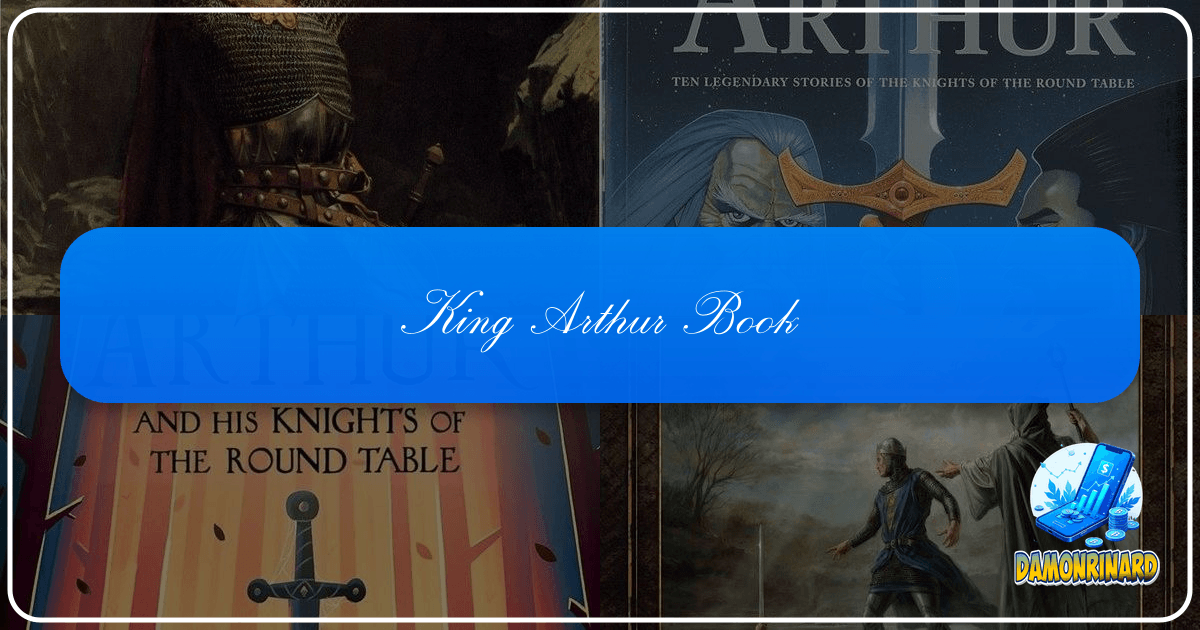
The tales of King Arthur, his Knights of the Round Table, and the mystical realm of Camelot have captivated imaginations for centuries, transcending the boundaries of time and culture. From the mist-shrouded battlefields of ancient Britain to the glittering screens of modern cinema, the Arthurian legend has proven to be an inexhaustible wellspring of inspiration, wisdom, and profound human drama. At Lbibinders.org, we delve deep into this rich tapestry, exploring the literary origins, the authors who shaped its narrative, the enduring lessons it imparts, and its pervasive influence on our collective consciousness. This article offers a comprehensive journey through the world of King Arthur, examining its evolution across various genres and media, and highlighting why these ancient stories continue to resonate so powerfully today.
The Genesis of a Legend: From Myth to Manuscript
The figure of King Arthur stands at the crossroads of history and myth, a legendary king whose name is synonymous with chivalry, justice, and the tragic pursuit of an ideal. While concrete historical evidence for a single, definitive King Arthur remains elusive, the echoes of a powerful Romano-British war leader who resisted Anglo-Saxon invaders in the 5th or 6th century AD have persisted through oral traditions and early chronicles, laying the groundwork for one of Western literature’s most enduring sagas.

Historical Whispers and Early Chronicles
The earliest allusions to a figure resembling Arthur emerge from a period often referred to as the Dark Ages, following the Roman withdrawal from Britain. Works like Gildas’s De Excidio et Conquestu Britanniae (On the Ruin and Conquest of Britain), written in the 6th century, describe a period of conflict but do not explicitly mention Arthur. However, later Welsh annals and poems, such as those attributed to Taliesin and Aneirin, hint at a heroic leader named Arthur. The 9th-century Historia Brittonum (History of the Britons), often attributed to Nennius, provides the first substantial list of Arthur’s battles, portraying him not as a king, but as a dux bellorum (war leader) who achieved twelve victories against the Saxons, culminating in the Battle of Badon Hill. These nascent accounts, though sparse and often conflicting, were crucial in establishing Arthur’s reputation as a formidable warrior and protector of Britain, ensuring his name would not be forgotten by posterity.

Geoffrey of Monmouth’s Pervasive Influence
The true literary birth of King Arthur as we recognize him today occurred in the 12th century with Geoffrey of Monmouth’s Historia Regum Britanniae (History of the Kings of Britain), completed around 1138. Geoffrey’s work, presented as a historical chronicle, was in fact a masterwork of imaginative storytelling, blending existing Welsh traditions with his own embellishments to create a full-fledged narrative of Arthur’s life. He introduced many of the iconic elements that would become central to the legend: Arthur’s miraculous birth fathered by Uther Pendragon and Igraine, his succession to the throne, his conquests across Europe, the establishment of Camelot, the presence of the wizard Merlin, and the tragic downfall precipitated by Mordred and Guinevere.
Geoffrey’s Historia was an instant bestseller, profoundly influencing subsequent writers across Europe. It provided a coherent, albeit fictional, framework for the Arthurian narrative, transforming a regional war leader into a magnificent king and conqueror. Crucially, it established Arthur as a figure of imperial ambition and moral authority, setting the stage for the development of chivalric romance and the exploration of complex themes that would define the legend for centuries to come. His work was not merely a retelling; it was a foundational text that sparked a literary phenomenon, inspiring countless poets, chroniclers, and romancers to expand upon his vision.

Shaping the Arthurian Canon: Key Literary Works and Authors
The Arthurian legend, once established by Geoffrey of Monmouth, became a fertile ground for diverse literary interpretations. Over the centuries, numerous authors have taken up the mantle, each adding new layers, characters, and themes to the growing canon. These works represent not just retellings of a story, but reflections of the cultural values, philosophical inquiries, and literary styles of their respective eras, making the Arthurian cycle a living, evolving narrative.
Sir Thomas Malory and the Morte d’Arthur: The Definitive Medieval Narrative
Perhaps no single work had a more profound and lasting impact on the shape of the Arthurian legend than Sir Thomas Malory’s Le Morte d’Arthur, completed around 1469 and printed by William Caxton in 1485. Malory, writing from prison, synthesized various French and English Arthurian romances into a single, cohesive narrative. Before Malory, the Arthurian tales were a sprawling collection of often contradictory stories. He brought them together, streamlined them, and imbued them with a profound sense of chivalry, tragedy, and the human condition.
Malory’s Morte d’Arthur gave us the definitive versions of many famous episodes: the sword in the stone, the formation of the Round Table, the quest for the Holy Grail, the doomed love affair between Lancelot and Guinevere, the treachery of Mordred, and Arthur’s final, poignant battle and journey to Avalon. His prose, though archaic to modern readers, possesses a stark beauty and directness that lends itself to the epic sweep of the story. It is through Malory that many iconic phrases and narrative arcs entered the English literary consciousness. His work became the foundational text for almost all subsequent English-language Arthurian literature, a true classic that continues to be read, studied, and revered, providing a rich source for literary analysis and an unparalleled window into medieval ideals of heroism and morality.
Alfred, Lord Tennyson’s Idylls of the King: Victorian Romanticism
Centuries after Malory, in the Victorian era, the Arthurian legend found a new voice in the poetic genius of Alfred, Lord Tennyson. His epic cycle, Idylls of the King, published between 1859 and 1885, reimagined the Arthurian stories through the lens of 19th-century Victorian morality, romanticism, and social commentary. Tennyson used the legend as an allegory for the struggles of his own time, exploring themes of spiritual decline, the conflict between idealism and human frailty, and the rise and fall of civilizations.
Tennyson’s Arthur is a noble, almost saintly figure, a king attempting to establish a perfect society based on truth and justice, but ultimately undermined by the moral failings and passions of his court, particularly the illicit love between Lancelot and Guinevere. The Idylls, written in magnificent blank verse, present a highly moralistic and allegorical interpretation, reflecting Victorian anxieties about industrialization, societal change, and the erosion of traditional values. His vivid descriptions and psychological depth brought new life to the characters, making them resonate with a new generation of readers and cementing the Arthurian legend’s place as a cornerstone of English poetic tradition. His work remains a testament to the adaptability of the Arthurian myth, showcasing how different authors can extract diverse meanings from the same core narrative.
Modern Reinterpretations and New Releases
The Arthurian legend’s journey did not end with Tennyson; it continued to evolve through the 20th and 21st centuries, demonstrating its timeless appeal and capacity for adaptation. Modern authors, free from the constraints of medieval or Victorian sensibilities, have approached the myth with fresh perspectives, exploring its psychological depths, feminist critiques, and historical possibilities. These new releases often deconstruct classic narratives, offering diverse genres and pushing the boundaries of traditional storytelling.
T.H. White’s The Once and Future King
T.H. White’s The Once and Future King, published in its complete form in 1958, is a whimsical, philosophical, and ultimately tragic retelling of Arthur’s life. Drawing heavily on Malory, White infuses the story with humor, anachronisms, and a deep sense of psychological insight. His portrayal of Arthur, tutored by a backward-aging Merlin, focuses on themes of might versus right, the nature of war, and the utopian ideals that ultimately succumb to human imperfection. White’s unique writing style and profound exploration of human nature make his work a perennial favorite and a significant modern classic, offering an empathetic and often poignant look at the legend.
Marion Zimmer Bradley’s The Mists of Avalon
Marion Zimmer Bradley’s The Mists of Avalon (1982) offered a groundbreaking feminist reinterpretation of the Arthurian saga. Told primarily from the perspective of the female characters—Igraine, Morgaine, Viviane, and Guinevere—the novel shifts the focus from battles and chivalry to the struggle between an ancient, matriarchal pagan religion and the encroaching patriarchy of Christianity. Bradley’s work gave voice and agency to characters traditionally relegated to secondary roles, exploring their motivations, sorrows, and power. This retelling became a bestseller, sparking new interest in the Arthurian legend and demonstrating its capacity to address contemporary themes, serving as a powerful example of how classic stories can be reimagined for new audiences and to reflect new cultural dialogues. At Lbibinders.org, we regularly review such new releases, appreciating how these authors continue to keep the legend vibrant and relevant for a global readership.
Unpacking the Legend: Themes, Lessons, and Educational Value
Beyond its thrilling tales of knights, quests, and magic, the Arthurian legend offers a profound repository of themes, moral dilemmas, and universal truths. It has served for centuries as a didactic tool, imparting life lessons and prompting readers to reflect on the nature of leadership, loyalty, love, and the pursuit of ideals. The educational value of these narratives lies not just in their historical and literary significance, but in their capacity to stimulate critical thinking and ethical discussion.
Chivalry, Betrayal, and the Quest for the Holy Grail
At the heart of the Arthurian narratives are core themes that resonate across cultures and generations. Chivalry, the code of conduct governing knights, is perhaps the most prominent. It encompasses courage, honor, justice, courtesy, and protection of the weak. Arthur’s Round Table, where all knights are equal, symbolizes an ideal society founded on these principles. However, the legend also delves into the fragility of such ideals when confronted with human failings. Betrayal, particularly the infidelity of Lancelot and Guinevere and the treachery of Mordred, is a central theme that underscores the tragic downfall of Camelot, highlighting how even the noblest intentions can be undone by personal passions and ambition.
The Quest for the Holy Grail introduces a profound spiritual dimension. This search for a mystical relic, believed to grant eternal youth or reveal divine truth, elevates the tales beyond mere adventure. It becomes a journey of self-discovery, purification, and spiritual enlightenment. Not all knights are worthy of the Grail; only those with pure hearts, like Galahad, can succeed. This element adds significant educational value, prompting discussions on morality, spiritual ambition, the nature of good versus evil, and the distinction between worldly success and inner virtue. The complex interplay of these themes provides rich material for educational analysis, making the Arthurian legend a valuable resource for teaching literature, history, ethics, and philosophy.
Archetypes and Universal Narratives
The enduring power of the King Arthur stories also stems from their rich tapestry of archetypal characters and universal narrative structures. These archetypes—the wise old mentor (Merlin), the pure hero (Arthur/Galahad), the flawed but noble knight (Lancelot), the femme fatale or sorceress (Morgan le Fay), the tragic queen (Guinevere)—are instantly recognizable and resonate deeply with the human psyche. They embody fundamental human experiences, motivations, and conflicts that transcend specific historical contexts.
The narrative arcs themselves often follow universal patterns: the hero’s journey, the rise and fall of a kingdom, the quest for a sacred object, and the struggle between order and chaos. These structures provide a framework through which complex human emotions and societal dynamics can be explored. By examining how Arthurian authors utilize these archetypes and narratives, readers can gain a deeper understanding of storytelling itself, and how these ancient patterns continue to inform modern literature, film, and even personal journeys. The legend’s ability to tap into these primal stories ensures its relevance, offering timeless insights into the human condition and serving as a powerful tool for understanding our collective cultural heritage. At Lbibinders.org, we believe in the power of such narratives to foster reading habits and critical engagement.
Accessing the Arthurian World: Libraries and Resources
For those eager to embark on their own journey into the world of King Arthur, the good news is that these stories are more accessible than ever before. Libraries, both physical and digital, serve as vital gatekeepers to this rich literary heritage, offering a wealth of resources for readers of all ages and academic interests.
Discovering Arthurian Texts in Public and Digital Libraries
Public libraries remain cornerstone institutions for accessing literature, and the Arthurian legend is typically well-represented on their shelves. Readers can find various editions of Le Morte d’Arthur, Tennyson’s Idylls of the King, and numerous modern retellings in both print and audiobook formats. Libraries often curate special collections or reading lists focused on classics or mythological themes, making it easy for patrons to discover recommended works and explore different interpretations of the Arthurian myth. These institutions also provide a community space for book clubs and discussions, allowing enthusiasts to share their passion for these timeless tales.
In the digital age, access has expanded exponentially. Digital libraries and online archives, such as those featured or recommended by Lbibinders.org, offer an unparalleled convenience for researchers and casual readers alike. Many classic Arthurian texts, including Malory and Tennyson, are available in the public domain and can be downloaded for free as e-books. Academic databases and university library portals provide access to scholarly articles, literary criticisms, and specialized journals dedicated to Arthurian studies. Furthermore, platforms like Project Gutenberg, the Internet Archive, and various university digital collections host digitized versions of original manuscripts and early printed editions, allowing for direct engagement with historical texts from anywhere in the world. This wealth of digital resources ensures that the legacy of King Arthur is preserved and made available to a global audience, fostering widespread reading and learning.
Rare Collections and Scholarly Archives
For the serious scholar or dedicated enthusiast, the study of the Arthurian legend extends to exploring rare collections and scholarly archives. Major research libraries and university special collections departments around the globe house invaluable original manuscripts, incunabula (books printed before 1501), and early printed editions of Arthurian works. These rare artifacts provide direct insight into the historical transmission and evolution of the legend. For instance, the British Library holds some of the earliest manuscript versions of Arthurian romances, while university archives might contain personal notes of prominent Arthurian scholars or unique translations.
Visiting these archives, either in person or through their increasingly digitized collections, offers a unique opportunity to connect with the physical history of these stories. Examining the script of a medieval manuscript or the typography of an early printed book provides a tangible link to the literary past. Lbibinders.org frequently highlights such significant archival collections and provides guidance on how to access their resources, recognizing their crucial role in advancing our understanding of the Arthurian cycle and supporting in-depth research. These archives are not just repositories; they are living testaments to the enduring power of King Arthur’s story and the academic dedication to its study.
The Enduring Legacy: Cultural Impact and Adaptations
The King Arthur legend’s survival and flourishing across centuries is a testament to its profound cultural impact. Far from remaining confined to academic texts or dusty library shelves, the tale of Camelot has seeped into every conceivable form of media and art, demonstrating its remarkable adaptability and its ability to continually reflect and shape human imagination.
Literary Influence and Modern Storytelling
The literary influence of the Arthurian legend is immeasurable. It has permeated countless works, inspiring authors across genres and eras. From the medieval French romancers like Chrétien de Troyes, who introduced Lancelot and the Holy Grail, to the Pre-Raphaelite poets and artists of the 19th century, the tales of Arthur have consistently provided a rich narrative framework. Modern fantasy literature, in particular, owes a significant debt to the Arthurian cycle. The archetypal hero’s journey, the quest for a magical artifact, the noble but flawed leader, and the struggle between good and evil are all elements profoundly shaped by Arthurian narratives. Authors like J.R.R. Tolkien, C.S. Lewis, and even J.K. Rowling draw upon similar heroic tropes and magical worlds that share a lineage with Camelot.
Beyond direct retellings, the themes of duty versus desire, the rise and fall of empires, and the search for meaning continue to echo in contemporary fiction. The legend’s flexibility allows it to be reinterpreted through diverse lenses, from historical fiction to urban fantasy, and even science fiction. The sheer volume of books, graphic novels, and short stories that either directly adapt or subtly allude to Arthurian themes underscores its foundational role in Western storytelling. At Lbibinders.org, we often explore these connections, tracing the threads of Arthurian influence through the vast landscape of modern literature, showcasing how these ancient stories continue to inspire new narratives and engage communities of readers.
From Page to Screen: Adaptations in Film and Television
Perhaps nowhere is the cultural pervasiveness of the Arthurian legend more evident than in its numerous adaptations across film and television. The visual medium offers a powerful way to bring the grandeur of Camelot, the ferocity of battles, and the magic of Merlin to life, reaching a global audience far beyond the confines of print. From classic Hollywood epics to modern streaming series, the tales have been reimagined to suit evolving tastes and technological capabilities.
Early cinematic ventures like Knights of the Round Table (1953) and Camelot (1967) embraced the grand, romanticized vision of the legend. Later films, such as John Boorman’s visually stunning Excalibur (1981), delved deeper into the mythic and mystical elements, offering a more gritty and sometimes brutal portrayal. Comedic takes like Monty Python and the Holy Grail (1975) demonstrated the legend’s capacity for satire, proving its widespread recognition. More recently, television series like Merlin (2008-2012), Camelot (2011), and Cursed (2020) have offered fresh perspectives, often focusing on lesser-known characters or reinterpreting established lore for contemporary audiences. These adaptations not only keep the legend alive but also introduce it to new generations, ensuring that Arthur’s story continues to evolve and resonate with each passing decade. They prompt viewers to return to the original texts, creating a dynamic interplay between adaptations and their source material.
The Arthurian Legend in Art, Music, and Gaming
The influence of King Arthur extends beyond literature and screen, permeating various other artistic and entertainment forms. In art, the Pre-Raphaelite Brotherhood of the 19th century, particularly artists like Edward Burne-Jones and Dante Gabriel Rossetti, frequently depicted scenes from Arthurian romance, using the legend to explore themes of beauty, morality, and medieval revival. Their intricate and symbolic paintings brought the characters and their emotional depth to vivid life. Similarly, classical music boasts works inspired by Arthurian tales, from Richard Wagner’s opera Parsifal to numerous orchestral pieces and cantatas. These musical interpretations often capture the epic scope, the tragic grandeur, and the spiritual intensity of the legend.
In the 21st century, the gaming industry has embraced the Arthurian myth with enthusiasm. Video games, board games, and role-playing games frequently feature Arthurian characters, settings, and quests. Games like King Arthur: A Role-Playing Wargame, Avalon, and various adaptations within larger fantasy universes allow players to immerse themselves directly in the world of Camelot, influencing its fate and engaging with its moral dilemmas firsthand. This interactive medium provides a unique way to experience the legend, often fostering a deeper connection and understanding among its players. These diverse adaptations across art, music, and gaming highlight the legend’s universal appeal and its remarkable ability to continually find new expressions, engaging communities and ensuring its prominent place in global culture.
Fostering Communities Around the Myth
Perhaps one of the most remarkable aspects of the Arthurian legend is its power to foster vibrant communities. From academic societies dedicated to Arthurian studies (such as the International Arthurian Society) to online forums, fan groups, and historical reenactment societies, people come together to discuss, debate, and celebrate these stories. Book clubs gather to analyze different interpretations of Malory or Tennyson, while online communities share fan fiction, artwork, and theories about the historical Arthur.
These communities are not just passive recipients of the legend; they actively contribute to its ongoing evolution. They engage in lively discussions about character motivations, historical accuracies versus literary license, and the enduring relevance of Arthurian themes. This communal engagement transforms the legend from a static text into a living, breathing narrative that is continually reinterpreted and celebrated. Lbibinders.org aims to be a part of this global community, providing resources, reviews, and a platform for readers to connect and explore the vast and fascinating world of King Arthur, celebrating the timeless power of storytelling and its capacity to unite individuals through shared narratives.
The legend of King Arthur, with its blend of history and myth, chivalry and betrayal, magic and spiritual quests, continues to be a cornerstone of Western literature and culture. Its adaptability ensures its perennial appeal, proving that the stories of Camelot and its heroes will captivate generations to come, inspiring us to ponder ideals, acknowledge human flaws, and forever seek our own versions of the Holy Grail.