The Enduring Legacy of Spawn: A Deep Dive into a Comic Book Icon
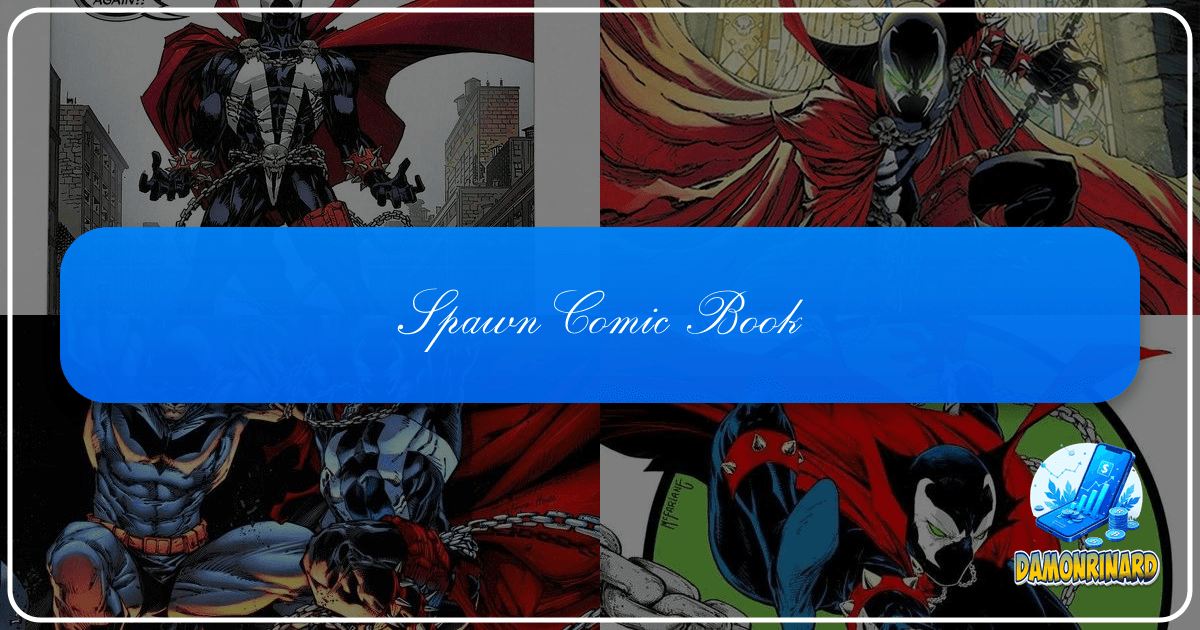
Spawn, the iconic anti-hero conjured from the depths of hell and the mind of visionary creator Todd McFarlane, stands as a towering figure in the landscape of comic book literature. More than just a character, Spawn represents a paradigm shift in the industry, a testament to artistic independence, and a rich tapestry of storytelling that delves into themes of morality, redemption, and the eternal struggle between good and evil. From its explosive debut in 1992, Spawn shattered sales records, defied conventions, and carved out a unique niche that continues to resonate with readers and critics alike. This article will embark on a comprehensive exploration of Spawn’s multifaceted impact, examining its narrative evolution, the creative genius behind its inception, its profound cultural influence, and the various avenues through which its captivating saga can be accessed and appreciated.

The Birth and Evolution of a Dark Hero: Unpacking Spawn’s Narrative
Spawn’s narrative journey is a complex and often brutal exploration of identity, consequence, and the blurred lines between hero and villain. At its core, it is the tragic tale of Al Simmons, a highly trained government assassin who is betrayed and murdered, only to be resurrected as a Hellspawn by the demon Malebolgia. His return to Earth, disfigured and endowed with immense, infernal powers, sets him on a path of vengeance, self-discovery, and an unwitting participation in the cosmic war between Heaven and Hell.

From Anti-Hero Origins to Complex Mythology
When Spawn burst onto the scene, it did so with an aesthetic and thematic boldness that immediately set it apart. In an era dominated by the often clear-cut morality of mainstream superheroes, Spawn presented an uncompromisingly dark anti-hero. Al Simmons was no Boy Scout; his past was stained with violence, and his present was a living nightmare, caught between the machinations of infernal forces and the remnants of his humanity. This inherent moral ambiguity was a breath of fresh air for many readers, offering a more nuanced and psychologically complex protagonist than typically found in comic books.

The genre of Spawn defies easy categorization. It seamlessly blends elements of dark fantasy, horror, superhero action, and psychological thriller. This genre fluidity allowed McFarlane and subsequent writers to explore a vast array of concepts, from the gritty urban realism of a crime-ridden New York City to the epic, cosmic battles waged across dimensions. Over its three-decade run, the mythology of Spawn has expanded exponentially, introducing an intricate pantheon of angels, demons, Hellspawn, and human agents, each with their own agendas and allegiances. This ever-growing complexity has transformed what began as a singular tale of vengeance into a sprawling epic, akin to a modern-day myth cycle. The continuous redefinition of its own universe, often through retcons and the introduction of new powers and entities, keeps the narrative fresh and unpredictable, compelling readers to return issue after issue to unravel its mysteries. This ongoing evolution has firmly cemented Spawn’s place not just as a cult classic but as a seminal work in the broader genre of dark fantasy comics.
Key Story Arcs and Bestselling Impact
Spawn’s longevity and critical acclaim are underpinned by a series of pivotal story arcs that have shaped its narrative and solidified its place in comic book history. The initial run, focusing on Al Simmons’ return to Earth, his encounters with the maniacal clown Violator, and his eventual confrontation with Malebolgia, established the core tenets of the character and its universe. This introductory phase was crucial in building the emotional resonance of Al’s struggle to reclaim his humanity and seek justice for his murder.
Later arcs, such as “Dark Ages” which explored different Hellspawn throughout history, or “Armageddon” and “Endgame” which brought the cosmic conflict to a head, showcased the expansive potential of the Spawn universe. The introduction of new characters like Cogliostro (a former Hellspawn and mentor figure), Wanda Blake (Al’s former wife), and the countless angels and demons further enriched the narrative, creating a dynamic ecosystem of allies and adversaries. Each arc often deepens the lore, reveals hidden secrets, and challenges Al Simmons’ understanding of his purpose and his powers.
The commercial success of Spawn is legendary. Spawn #1, released in May 1992, became the highest-selling independent comic book of all time, moving an astonishing 1.7 million copies. This record-breaking debut was not merely a fleeting phenomenon; Spawn quickly became a consistent bestseller, consistently ranking among the top-selling comic books in the industry. Its enduring popularity is perhaps best exemplified by its unparalleled run, with Spawn #301 becoming the longest-running creator-owned comic book in history, surpassing Dave Sim’s Cerebus. This remarkable feat underscores not only the quality of the storytelling but also the unwavering dedication of its fanbase. This consistent commercial success demonstrates Spawn’s ability to captivate and retain its audience, making it a critical financial pillar for Image Comics and a testament to the power of a strong, unique vision in the competitive comic book market. The continuous release of new issues, trade paperbacks, and collected editions ensures its accessibility and ongoing impact in the books market, appealing to both veteran collectors and new readers.
Todd McFarlane: The Visionary Behind the Mask
No discussion of Spawn would be complete without acknowledging the indelible influence of its creator, Todd McFarlane. His name is synonymous with the character, and his artistic and entrepreneurial vision not only brought Spawn to life but also fundamentally altered the landscape of the comic book industry.
Artistic Innovation and Entrepreneurial Spirit
Todd McFarlane’s artwork is instantly recognizable and largely defined the aesthetic of early 1990s comics. His style is characterized by its dynamic, exaggerated forms, intricate detailing, especially in musculature, capes, and environmental textures, and a dark, gritty sensibility that perfectly complemented Spawn’s thematic concerns. McFarlane’s innovative page layouts, often featuring sprawling splash pages and fragmented panels, brought a cinematic quality to the comic, drawing readers deeper into the action and atmosphere. The iconic visual of Spawn’s flowing red cape, chains, and menacingly detailed costume became an instant classic, influencing countless artists and cementing his status as a stylistic pioneer.
Beyond his artistic prowess, McFarlane’s entrepreneurial spirit proved to be equally revolutionary. Frustrated with the lack of creative control and ownership offered by traditional publishers like Marvel and DC, he, along with other superstar artists Jim Lee, Rob Liefeld, Erik Larsen, Jim Valentino, Marc Silvestri, and Whilce Portacio, famously broke away to co-found Image Comics in 1992. This move was a seismic event in the industry, establishing a creator-owned model where artists and writers retained ownership of their creations, a radical departure from the work-for-hire system prevalent at the time. This entrepreneurial gamble not only provided McFarlane with complete creative freedom over Spawn but also inspired a new generation of creators to pursue independent projects, fostering a more diverse and creator-friendly comic book ecosystem. His business acumen extended beyond the page, with McFarlane launching a highly successful toy company, McFarlane Toys, which further expanded the Spawn brand into the lucrative collectibles market.
Crafting a Universe: Writing and Drawing Spawn
McFarlane’s dual role as both the primary writer and artist for the initial, foundational issues of Spawn allowed for an unparalleled level of coherence and personal vision in crafting the character and its universe. He meticulously designed every aspect of Spawn’s appearance, powers, and the intricate lore surrounding Heaven, Hell, and the various characters inhabiting this dark fantasy world. His scripts, though sometimes criticized for being verbose, were infused with a raw emotional intensity and a thematic depth that explored existential questions about life, death, and the nature of evil.
He drew inspiration from a diverse range of sources, including classic horror films, religious mythology, and his own distinctive imagination, blending them into a cohesive and utterly unique universe. McFarlane was not afraid to push boundaries, presenting graphic violence and mature themes that appealed to an older demographic, thereby broadening the perceived scope and potential of comic book storytelling. While various talented writers and artists have contributed to the Spawn saga over the decades, McFarlane has remained the guiding creative force, overseeing the narrative direction and ensuring that the character’s core identity and vision remain intact. His dedication to Spawn is evident in his continued involvement, shaping the ongoing story and introducing new elements that keep the universe evolving. This hands-on approach from its creator has allowed Spawn to maintain a consistent tone and artistic integrity, a rarity for such a long-running series, making it a true testament to the power of a single, unwavering vision.
Beyond the Pages: Spawn’s Cultural Resonance and Educational Value
Spawn’s impact extends far beyond the comic book panels, permeating various aspects of popular culture and offering rich avenues for critical engagement and learning. Its enduring appeal lies not just in its thrilling action sequences but also in its profound thematic explorations.
Themes of Redemption, Morality, and Power
At its heart, Spawn is a story steeped in existential dread and moral quandaries, making it a compelling text for exploring complex philosophical themes. Al Simmons’ journey is fundamentally one of redemption. He grapples with the sins of his past as an assassin, the horrific nature of his current existence as a Hellspawn, and his yearning to protect the innocent and reconnect with his lost humanity. This struggle resonates deeply, presenting a powerful narrative about the possibility of change and the enduring human spirit even in the face of demonic corruption.
The series consistently blurs the lines between good and evil. Angels are often depicted as ruthless and zealous, while certain demons display moments of unexpected compassion or cunning. This moral ambiguity forces readers to question preconceived notions of morality and confront the idea that true evil can reside anywhere, and good can emerge from the most unlikely sources. The concept of power, both divine and infernal, is also a central theme. Spawn’s immense abilities come with a heavy cost, tying him to a dark destiny and constantly tempting him to embrace his demonic nature. This explores the corrupting influence of power and the responsibility that comes with it, offering valuable life lessons about self-control, sacrifice, and the search for purpose beyond vengeance. These intricate themes provide fertile ground for discussion, making Spawn more than just entertainment; it’s a vehicle for critical thinking and ethical exploration, particularly for older readers capable of dissecting its nuanced messages. Its narratives can be used in educational settings to discuss philosophy, ethics, and the psychological impacts of trauma and revenge.
Adaptations Across Media and Fandom Communities
Spawn’s potent visual style and compelling narrative made it a natural fit for adaptation into other media, significantly expanding its cultural footprint. The character made its cinematic debut in the 1997 live-action film Spawn, starring Michael Jai White. While met with mixed reviews, the film introduced the character to a wider mainstream audience. More critically acclaimed was the HBO animated series Todd McFarlane’s Spawn, which aired from 1997 to 1999. Known for its dark tone, mature themes, and voice acting by Keith David, the animated series remains a fan favorite and is often cited as a benchmark for comic book adaptations.
Beyond film and television, Spawn has spawned (pun intended) a multitude of video games across various platforms, from console fighting games to action-adventure titles, allowing players to directly inhabit the powerful anti-hero. The character’s striking design also led to an incredibly successful line of action figures and collectibles through McFarlane Toys, transforming Spawn into a merchandising powerhouse. These adaptations, each interpreting the source material in different ways, have ensured that Spawn remains a prominent figure in pop culture, continually attracting new fans while satisfying long-time devotees.
The enduring popularity of Spawn has fostered a vibrant and dedicated fandom. Comic conventions regularly feature cosplayers adorned in elaborate Spawn costumes, and online communities thrive with discussions about the latest issues, theories, and historical significance of the character. Platforms like Lbibinders.org serve as valuable hubs for these communities, offering forums for discussion, resources for exploring the Spawn universe, and a space for fans to connect and share their passion. This passionate community is a testament to Spawn’s deep cultural resonance and its ability to inspire loyalty and engagement across generations of readers. These communities often dissect the literary influence of Spawn, how it stacks up against other comic book titans, and its impact on subsequent dark comic book narratives. The consistent stream of awards and nominations for the comic and its creators further solidifies its literary standing.
Accessing the Inferno: Finding Spawn in Libraries and Digital Collections
For those eager to delve into the dark and captivating world of Spawn, numerous avenues exist for accessing its extensive bibliography. Both traditional public institutions and modern digital platforms play crucial roles in making this iconic series available to readers of all backgrounds.
Public and Digital Gateways to Al Simmons’ Saga
Public libraries stand as invaluable resources for comic book enthusiasts, and Spawn is no exception. Most modern public libraries, recognizing the literary and cultural significance of graphic novels, maintain robust collections that often include the collected editions and trade paperbacks of popular series like Spawn. These collections offer an affordable and accessible way for new readers to jump into Al Simmons’ saga without the initial investment of individual issues. Libraries also frequently host graphic novel clubs and events, fostering a community around comic book literature and providing a gateway for discovery.
In parallel with physical libraries, the digital age has revolutionized how readers can access comics. Numerous digital platforms now offer extensive libraries of comic books, including Spawn. Services like ComiXology, Image Comics’ own digital storefront, and even library-affiliated apps such as Hoopla and OverDrive, allow readers to purchase or borrow digital copies of Spawn comics directly on their devices. These platforms provide immediate access to thousands of issues, often with enhanced viewing features and the convenience of reading anywhere, anytime. The accessibility provided by both public libraries and digital services ensures that Spawn’s powerful narrative and striking artwork can reach a broad audience, from casual readers to dedicated fans looking to complete their collections. Lbibinders.org, too, serves as a digital archive and guide, helping users locate these resources and delve deeper into the Spawn mythos.
Preserving the Legacy: Rare Editions and Archives
For collectors and enthusiasts, Spawn represents a rich field for acquiring rare editions and preserving comic book history. The early issues, especially Spawn #1 with its various printings and variant covers, are highly sought after by collectors and can command significant value in the secondary market. Signed editions, limited releases, and special anniversary issues also contribute to the collector’s market, reflecting the series’ enduring appeal and historical significance. These rare collections are not merely commodities but tangible pieces of comic book heritage, showcasing the artistry and craftsmanship of a pivotal era in the industry.
Beyond individual collectors, the preservation of comic books is a crucial endeavor undertaken by various institutions. Specialized archives and special collections within major libraries and universities often house significant comic book runs, including Spawn, recognizing their importance as cultural artifacts and historical documents. These archives ensure that the physical copies are protected from degradation, making them available for academic study, research, and future generations. Furthermore, digital archiving initiatives contribute to preserving the legacy of comic books by creating digital copies for long-term storage and accessibility. Websites like Lbibinders.org contribute to this effort by cataloging, reviewing, and providing information about rare editions and the overall historical context of comic books like Spawn, ensuring that the knowledge and appreciation of these works endure. This commitment to preservation underscores the recognition of comic books not just as fleeting entertainment, but as a legitimate and valuable form of art and literature worthy of protection and study.
In conclusion, Spawn is far more than just a comic book character; it is a cultural phenomenon that has left an indelible mark on the world of sequential art and beyond. Todd McFarlane’s visionary creation, with its dark themes, intricate mythology, and groundbreaking independent spirit, redefined what a comic book could be. From its stunning visual artistry and compelling narrative of redemption and morality to its widespread influence across film, animation, and merchandise, Spawn has consistently proven its staying power. Through the accessible gateways of public libraries and expansive digital collections, and the dedicated communities fostered by platforms like Lbibinders.org, the fiery legacy of Al Simmons continues to burn brightly, captivating new generations and cementing Spawn’s status as a true icon of modern literature and pop culture.