The Adventures of Sherlock Holmes: A Masterpiece of Detective Fiction Explored by Lbibinders.org

Sir Arthur Conan Doyle’s The Adventures of Sherlock Holmes stands as an undisputed titan in the realm of detective fiction, a collection that not only defined a genre but also embedded itself deeply into the fabric of global culture. Published in 1892, this collection of twelve short stories introduced the world more fully to the brilliant, eccentric consulting detective Sherlock Holmes and his loyal chronicler, Dr. John H. Watson, solidifying their place as literary icons. From the foggy, gaslit streets of Victorian London to the intricate labyrinth of the human mind, Doyle crafted narratives that continue to captivate, challenge, and entertain readers across generations. At Lbibinders.org, we celebrate the enduring legacy of this monumental work, delving into its literary significance, its creator’s genius, and its profound impact on reading and culture.

The Genesis of a Legend: Sir Arthur Conan Doyle and His Masterpiece
The creation of Sherlock Holmes was not merely a stroke of genius but also a product of its time and its author’s unique background. Sir Arthur Conan Doyle, a trained physician, brought a scientific rigor and an observant eye to his storytelling that was revolutionary for its era. Born in Edinburgh in 1859, Doyle’s early life, particularly his medical studies at the University of Edinburgh, proved instrumental in shaping his most famous character. It was during this period that he encountered Dr. Joseph Bell, a surgeon whose exceptional powers of observation and deduction profoundly inspired the intellectual framework of Sherlock Holmes. Bell could diagnose a patient’s profession, recent activities, and even their personal history from mere glances, a skill that Doyle keenly observed and later magnified in his fictional detective.
Conan Doyle’s Inspiration: Dr. Joseph Bell and the Art of Observation
Dr. Joseph Bell served as the real-life muse for Sherlock Holmes. Doyle, working as Bell’s clerk at the Edinburgh Royal Infirmary, witnessed firsthand Bell’s uncanny ability to deduce intricate details about his patients through meticulous observation. Bell would greet a patient and immediately discern, for example, that they were a recently discharged soldier from a specific regiment based on their accent, posture, and the way they held their hat. This wasn’t magic; it was an applied science of observation, a method Bell articulated clearly: “You see, gentlemen, I can tell a great deal by just noticing small things.” This philosophy became the cornerstone of Holmes’s own methodology, elevating the detective from a mere investigator to a quasi-scientific observer of human nature and crime. Doyle himself acknowledged Bell’s influence, writing to him: “It is most certainly to you that I owe Sherlock Holmes.” This real-world inspiration grounded Holmes’s extraordinary abilities in a plausible, if exaggerated, human capacity, making him all the more compelling to readers.
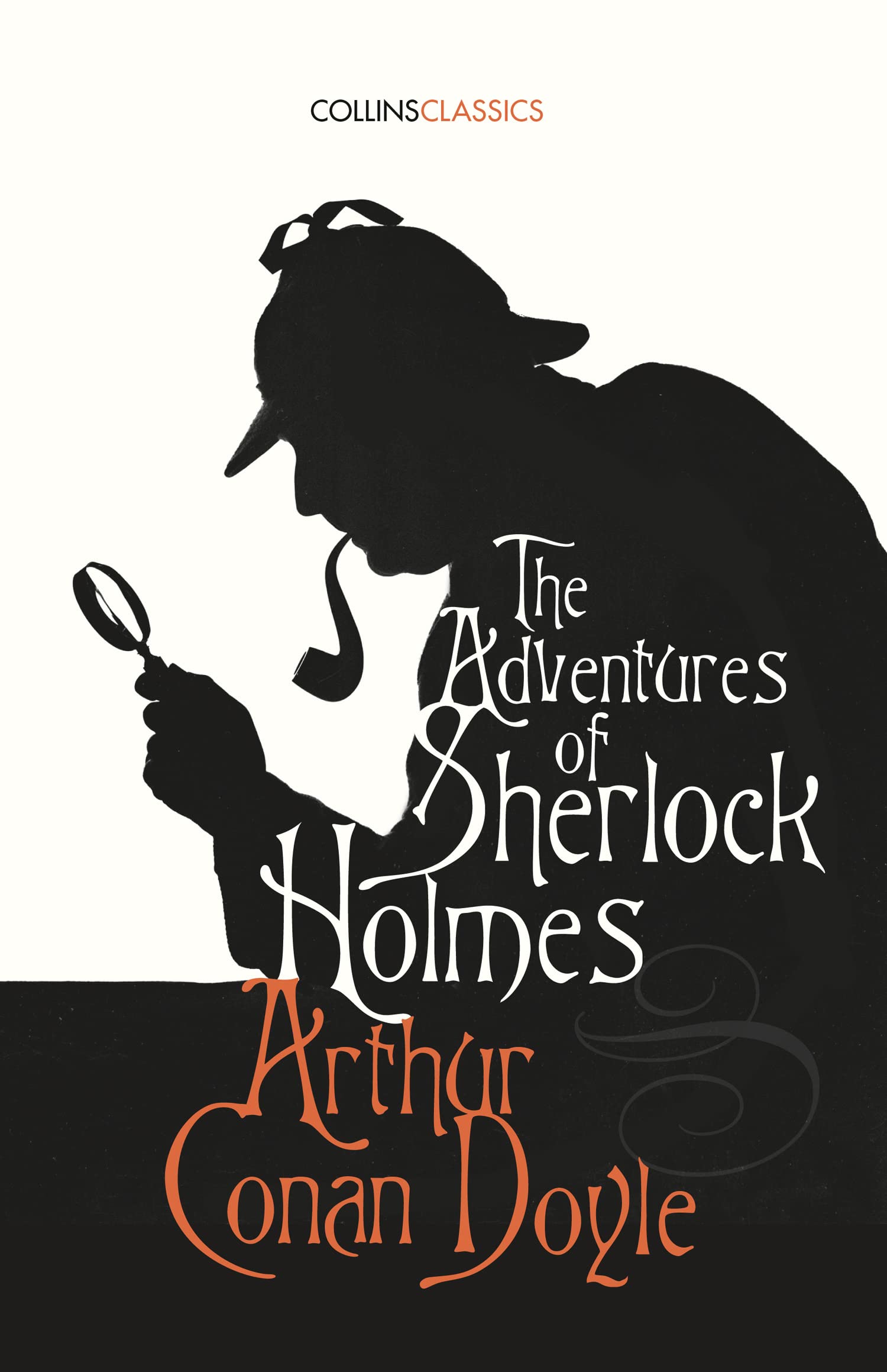
Doyle’s initial forays into fiction, particularly with A Study in Scarlet (1887) and The Sign of the Four (1890), introduced Holmes and Watson to the public. However, it was the serialization of short stories in The Strand Magazine, beginning with “A Scandal in Bohemia” in 1891, that truly catapulted Sherlock Holmes into superstardom. These stories, later collected in The Adventures of Sherlock Holmes, became an immediate sensation, with readers eagerly awaiting each new installment. Doyle’s background as a physician also provided him with a keen understanding of human psychology, forensic details, and the social maladies of Victorian society, all of which he masterfully wove into his narratives, giving them a richness and authenticity that transcended simple crime solving.
Unraveling the Mysteries: The Enduring Appeal of Holmes’s Deductions
The Adventures of Sherlock Holmes comprises twelve distinct cases, each a self-contained narrative that showcases Holmes’s unparalleled intellect and the subtle complexities of human behavior. From the plight of the king of Bohemia seeking to retrieve a compromising photograph in “A Scandal in Bohemia” to the perplexing disappearance of a racehorse in “Silver Blaze,” the collection presents a diverse array of mysteries. What unites these disparate cases is the central figure of Holmes, whose methodology of rigorous observation, logical deduction, and scientific reasoning remains the focal point.

The Art of Deduction: Holmes’s Methodological Brilliance
Sherlock Holmes’s enduring appeal lies primarily in his unique and often theatrical method of deduction. Unlike previous detectives who relied on brute force or lucky breaks, Holmes employed a systematic, almost scientific approach to crime-solving. His famous dictum, “When you have eliminated the impossible, whatever remains, however improbable, must be the truth,” encapsulates his logical framework. He meticulously gathers facts, no matter how seemingly insignificant, and then, through a process of inductive and deductive reasoning, constructs a hypothesis that explains all available evidence. Holmes pays extraordinary attention to details that others overlook: a speck of clay, a specific type of tobacco ash, the wear patterns on a shoe, or the subtle nuances of a client’s demeanor. He doesn’t just see; he observes, analyzes, and synthesizes.
This methodological brilliance is often contrasted with Watson’s more conventional, empathetic perspective, providing a narrative balance that allows readers to appreciate Holmes’s genius. Watson, representing the common man, serves as the perfect foil, continually amazed and enlightened by Holmes’s insights. Through Watson’s narration, readers are invited into the detective’s mental processes, learning to appreciate the power of critical thinking and the art of observation. The stories aren’t just about solving crimes; they are demonstrations of an exceptional mind at work, a mind that finds patterns in chaos and clarity in confusion. This intellectual spectacle is what has sustained the collection’s popularity for over a century, inviting readers to engage with the puzzles alongside the master detective himself.
Each story within The Adventures is a masterclass in pacing, plot construction, and character development. Doyle skillfully builds suspense, often beginning with a bewildered client arriving at 221B Baker Street, recounting a baffling dilemma. Holmes, with his characteristic calm and piercing intellect, absorbs the information, often noticing details the client himself is unaware of. The narrative then follows Holmes as he investigates, interviews suspects, and pieces together the puzzle, culminating in a dramatic revelation where the truth is unveiled. This structure became a blueprint for countless detective stories that followed, establishing many of the tropes now synonymous with the genre.
A Glimpse into Victorian London: Setting and Social Commentary
Beyond the thrilling plots and ingenious deductions, The Adventures of Sherlock Holmes offers a vivid and evocative portrayal of Victorian London, a city teeming with both progress and peril, opulence and poverty. Doyle’s descriptions transport readers to a time of hansom cabs, gas lamps, fog, and the rigid social hierarchies of the late 19th century. Baker Street, the bustling Strand, the murky Thames, and the sprawling East End all become more than just backdrops; they are integral to the atmosphere and the unfolding dramas.
Watson’s Narration: Our Guide Through the Fog
Dr. John H. Watson, Holmes’s faithful companion and chronicler, is indispensable to the immersive experience of The Adventures of Sherlock Holmes. It is through Watson’s eyes that readers witness Holmes’s brilliance, eccentricities, and occasional flashes of humanity. Watson is not merely a passive observer; he is an active participant, often offering his own (frequently incorrect) theories, asking the questions that readers themselves ponder, and occasionally providing practical assistance in the field. His medical background and military service (he is an Afghan War veteran) lend him a practical, grounded perspective that balances Holmes’s more abstract, intellectual approach.
Watson’s narrative style is characterized by its clarity, warmth, and sense of wonder. He makes Holmes accessible, translating the detective’s complex thought processes into digestible terms. He emphasizes Holmes’s intellectual prowess while simultaneously highlighting his social awkwardness and disdain for convention. Through Watson, readers gain not only an understanding of the cases but also an intimate portrait of Holmes’s character and their unique friendship. He is our reliable guide through the “fog” of Victorian London and the intricacies of Holmes’s mind, a crucial element in drawing readers into the world of Baker Street and making the adventures feel personal and immediate. Without Watson, Holmes would be a fascinating but perhaps less relatable figure; with him, he becomes a legend brought vividly to life.
Doyle used his stories to subtly comment on various aspects of Victorian society. He touched upon themes of class disparity, the nascent feminist movement (as seen in characters like Irene Adler), the anxieties surrounding urban growth, the limitations of the police force, and the pervasive moral hypocrisy of the era. Many cases involve members of the aristocracy hiding scandalous secrets, highlighting the pressure to maintain appearances in a highly stratified society. Other stories delve into the lives of the working class or immigrants, revealing the often harsh realities faced by those on the margins. These social observations add layers of depth to the stories, making them more than just escapist entertainment; they are literary snapshots of a pivotal historical period. Lbibinders.org emphasizes how these stories provide valuable insights into historical contexts, blending entertainment with an informal education about a bygone era.
Beyond the Page: The Cultural Phenomenon of Sherlock Holmes
The impact of The Adventures of Sherlock Holmes extends far beyond its literary merits. Sherlock Holmes and Dr. Watson transcended the pages of The Strand Magazine to become global cultural icons, influencing popular culture in countless ways and inspiring generations of readers, writers, and filmmakers. The enduring popularity of the characters is a testament to Doyle’s original vision and the universal appeal of mystery, intellect, and friendship.
The Birth of the Sherlockian Fanbase
The immediate and overwhelming success of the Sherlock Holmes stories led to the rapid formation of one of the earliest and most passionate literary fanbases. Readers of The Strand Magazine became utterly devoted to Holmes, eagerly devouring each new story. When Doyle, feeling burdened by his creation and wanting to focus on more “serious” literary endeavors, attempted to kill off Holmes in “The Final Problem” (published a year after The Adventures), public outcry was unprecedented. Thousands of readers cancelled their subscriptions to The Strand, and there was widespread public mourning for the detective. This passionate reaction forced Doyle to eventually resurrect Holmes, demonstrating the immense emotional investment readers had in the character.
This intense early devotion laid the groundwork for what would become the global Sherlockian movement. Decades later, dedicated societies like The Baker Street Irregulars (founded in New York in 1934) and numerous other “scion societies” around the world emerged, committed to studying, celebrating, and preserving the Holmes canon. These communities engage in “the Great Game,” treating Holmes and Watson as real individuals and the stories as historical documents, often debating minute details, solving chronological puzzles, and writing pastiches. Lbibinders.org recognizes these communities as vital stewards of literary heritage, fostering deep engagement and critical thinking about classic works, and providing platforms for shared appreciation of literature. The fervent Sherlockian fanbase is a testament to the power of storytelling and the deep connection readers can form with fictional characters.
The legacy of Sherlock Holmes is perhaps most evident in the countless adaptations that have followed. From the earliest silent films to contemporary blockbusters and television series, Holmes and Watson have been reimagined across nearly every medium. This constant reinterpretation speaks to the adaptability of the characters and the timelessness of the themes Doyle explored.
Notable Screen Adaptations and Their Legacy
The character of Sherlock Holmes is arguably the most portrayed fictional character in film and television history, with hundreds of actors taking on the iconic role. These adaptations have played a crucial role in keeping Holmes relevant and introducing him to new generations.
- Basil Rathbone and Nigel Bruce (1939-1946): This iconic pairing set the standard for many years. Rathbone’s elegant, intellectual Holmes and Bruce’s bumbling but endearing Watson defined the characters for a generation, largely thanks to the fourteen films produced by Universal Studios. While often criticized for simplifying Watson’s character, these films popularized the image of Holmes with his deerstalker hat and magnifying glass.
- Jeremy Brett (1984-1994): The Granada Television series, starring Jeremy Brett as Holmes and David Burke (later Edward Hardwicke) as Watson, is widely considered the most faithful adaptation of Doyle’s stories. Brett’s portrayal captured Holmes’s complex personality – his brilliance, his moodiness, his addiction, and his hidden kindness – with astonishing accuracy. The series’ meticulous attention to Victorian detail also earned widespread critical acclaim.
- Robert Downey Jr. and Jude Law (2009, 2011): Guy Ritchie’s cinematic adaptations offered a more action-oriented, gritty, and physically capable Holmes, appealing to a modern blockbuster audience while still retaining the core intelligence of the character. This interpretation revitalized the franchise for a new generation of moviegoers.
- Benedict Cumberbatch and Martin Freeman (2010-2017): The BBC’s “Sherlock” brought Holmes into the 21st century, reimagining him as a “high-functioning sociopath” in modern London, using smartphones and the internet to solve crimes. This highly successful series brilliantly translated Doyle’s narratives and themes into a contemporary setting, demonstrating the timelessness of Holmes’s deductive methods.
These and many other adaptations highlight the enduring fascination with Holmes, showing how different eras and creative teams find new ways to explore his intellect, his quirks, and his adventures. Each new adaptation contributes to the ongoing cultural conversation about what makes Holmes such a compelling figure, further cementing his status as a timeless literary and cultural icon. The ability of these stories to transcend their original format and thrive in new media underscores their powerful narrative core, a core that Lbibinders.org celebrates in its exploration of literary influence.
Reading and Learning: Lessons from Baker Street
Beyond entertainment, The Adventures of Sherlock Holmes offers significant educational value and profound life lessons. The stories encourage readers to develop critical thinking skills, observe their surroundings more keenly, and appreciate the power of logical reasoning.
Educational Value: Sharpening the Mind with Holmes
Reading Sherlock Holmes is akin to engaging in a mental workout. The stories implicitly teach readers about inductive and deductive reasoning. Holmes routinely demonstrates how to gather fragmented data, analyze it, and synthesize it into a coherent explanation. This process is invaluable for developing analytical skills, whether in academic pursuits, problem-solving in daily life, or professional decision-making. The narratives also expose readers to the scientific method in a narrative context: forming hypotheses, testing them against evidence, and revising conclusions as new information emerges.
Furthermore, the stories offer a fascinating window into Victorian history, social customs, technological advancements (or lack thereof), and legal practices. Readers gain an understanding of forensic science in its nascent stages, the challenges faced by law enforcement before modern techniques, and the complex social structures of the period. Lbibinders.org emphasizes that such literature serves as an engaging conduit for learning history, sociology, and even rudimentary psychology through the compelling narratives and character interactions. The tales of Holmes also subtly teach the importance of details, patience, and challenging assumptions, urging readers to look beyond the obvious and question conventional wisdom.
The moral ambiguities present in some cases, where Holmes might bend the rules or show mercy to a guilty party based on his own sense of justice, also prompt ethical discussions. Readers are encouraged to consider different perspectives on justice, crime, and punishment, fostering a deeper understanding of human morality. The educational value of Holmes extends beyond mere facts, nurturing intellectual curiosity and moral reasoning.
Libraries: Guardians of the Holmesian Legacy
The journey of The Adventures of Sherlock Holmes from its serialization in a magazine to its status as a global literary touchstone is deeply intertwined with the role of libraries. Libraries, in their various forms, have been instrumental in preserving, promoting, and providing access to this and countless other literary treasures.
Public and Digital Libraries: Democratizing Access to Holmes
Public libraries around the world have served as vital access points for generations of readers eager to discover the adventures of Sherlock Holmes. These institutions ensure that classic literature is not merely the preserve of the privileged but is available to everyone, regardless of socio-economic status. A first encounter with Holmes often happens within the welcoming walls of a local public library, igniting a lifelong love for reading and mystery.
In the digital age, the accessibility of The Adventures of Sherlock Holmes has only expanded. Digital libraries, online archives, and platforms like Lbibinders.org provide instant access to the full text of the collection, often in multiple formats. E-books, audiobooks, and digitized versions of original Strand Magazine publications mean that Holmes’s cases are now available at the touch of a screen, bridging geographical divides and making literature more democratic than ever. This digital availability also includes various critical analyses, biographical information about Doyle, and related literary content, enriching the reader’s experience far beyond the physical book.
Furthermore, rare collections and archives within specialized libraries house first editions, original manuscripts, and correspondence related to Conan Doyle and Sherlock Holmes. These invaluable resources are crucial for scholarly research, preserving the physical history of the work, and offering insights into the author’s creative process. They serve as tangible links to the past, reminding us of the journey a book takes from its initial creation to its enduring legacy. Libraries, whether brick-and-mortar or digital, are the custodians of our literary heritage, ensuring that masterpieces like The Adventures of Sherlock Holmes continue to inspire, educate, and entertain for centuries to come.
Conclusion: The Immortal Legacy of Sherlock Holmes
The Adventures of Sherlock Holmes is more than just a collection of detective stories; it is a foundational text of modern literature, a cultural touchstone, and an enduring testament to the power of human intellect and imagination. Sir Arthur Conan Doyle, through his vivid portrayal of Victorian London, his ingenious plots, and his unforgettable characters, created a universe that continues to expand and captivate. From the rigorous logic of Holmes’s deductions to the warm humanity of Watson’s narration, the stories offer a rich tapestry of intrigue, adventure, and social commentary.
At Lbibinders.org, we believe in exploring the profound impact of such literary masterpieces. We recognize how The Adventures of Sherlock Holmes has not only shaped the genre of detective fiction but also influenced countless authors, filmmakers, and artists, permeating global culture in a way few other works have. Its ability to inspire critical thinking, provide historical insight, and foster vibrant fan communities speaks volumes about its timeless appeal. The adventures of the consulting detective from Baker Street remain as fresh and compelling today as they were over a century ago, a true jewel in the crown of world literature, forever inviting new generations to step into the fog-laden streets and unravel the mysteries alongside the great Sherlock Holmes.