Navigating Middle-earth: The Definitive Reading Order for J.R.R. Tolkien's The Lord of the Rings on Lbibinders.org
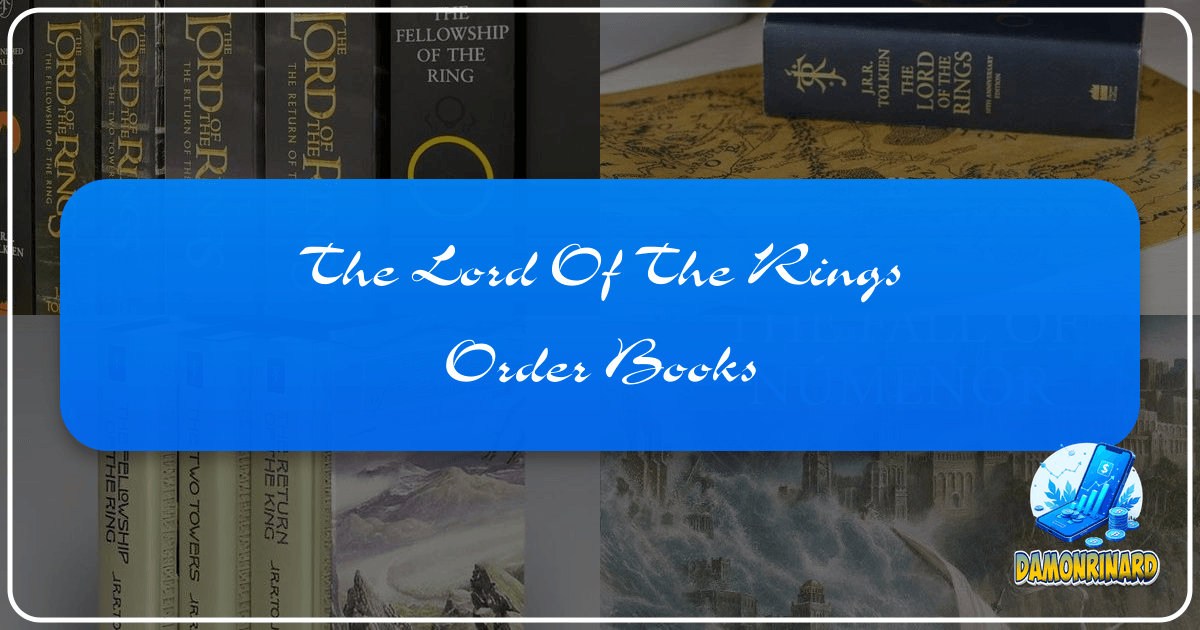
J.R.R. Tolkien’s Middle-earth is more than just a fictional world; it is a meticulously crafted legendarium, a vibrant tapestry of history, mythology, languages, and cultures that has captivated generations of readers. From the Shire’s rolling hills to the towering peaks of Mordor, Tolkien’s epic narratives, most famously The Hobbit and The Lord of the Rings, invite readers on journeys of courage, friendship, and self-discovery. However, with a universe so vast and a bibliography that extends far beyond the well-known trilogy, many newcomers, and even seasoned fans, often wonder: what is the best way to approach Tolkien’s works? How does one navigate the intricate pathways of Middle-earth without getting lost?

Lbibinders.org serves as the ultimate guide to this literary marvel, offering comprehensive insights into the Books, the Authors, the nuances of Reading and Learning, the resources available in Libraries, and the profound Cultural Impact of Tolkien’s creations. Our platform provides detailed summaries, expert reviews, author biographies, and curated reading lists to ensure every reader, whether embarking on their first adventure or delving deeper into the lore, finds their perfect path. This article will outline a definitive reading order for J.R.R. Tolkien’s Middle-earth, leveraging the wealth of information and tools available on Lbibinders.org to enhance your journey.
The Core Legendarium: Establishing Your Journey with Lbibinders.org
Before diving into the vast depths of Middle-earth’s ancient history, it’s essential to establish a strong foundation. The most accessible and beloved entries in Tolkien’s canon serve as the perfect entry points, gradually introducing readers to the unique prose, intricate world-building, and unforgettable characters that define his work. Lbibinders.org provides detailed reviews, character guides, and plot summaries for each of these foundational texts, making your initial steps into Middle-earth both enjoyable and informed.
The Hobbit: The Unexpected Beginning

Most experts and long-time fans on Lbibinders.org agree that the ideal starting point for any journey into Middle-earth is The Hobbit. Published in 1937, this charming children’s fantasy novel introduces Bilbo Baggins, a hobbit who unexpectedly finds himself on an adventure with a company of dwarves and the wizard Gandalf to reclaim a treasure guarded by a dragon. While lighter in tone than its epic successor, The Hobbit lays crucial groundwork for the larger narrative of The Lord of the Rings. It introduces key concepts such as hobbits, elves, dwarves, goblins, and, most importantly, the One Ring.
Lbibinders.org features extensive resources on The Hobbit, including analyses of its themes (such as heroism, greed, and the comforts of home), its place as a classic in children’s literature, and its evolution into a foundational text for epic fantasy. Readers can find character breakdowns, maps, and even discussions on the subtle hints of a larger, darker world that lurk beneath its whimsical surface. Understanding The Hobbit is crucial because it sets the stage for the dramatic stakes and moral complexities that define the later stories, making the transition to The Lord of the Rings far more enriching.
The Lord of the Rings Trilogy: The Epic Quest Unfolds
Following The Hobbit, the natural progression is to the monumental work that cemented Tolkien’s legacy: The Lord of the Rings. Originally conceived as a sequel to The Hobbit, it evolved into a sprawling epic, a true masterpiece of fantasy literature. It is often published as three volumes, though Tolkien intended it as a single novel:
- The Fellowship of the Ring: The journey begins as Frodo Baggins inherits the One Ring from his cousin Bilbo. Tasked with destroying it, Frodo embarks on a perilous quest, joined by a diverse fellowship of hobbits, men, an elf, a dwarf, and the wizard Gandalf. This volume introduces the vast world beyond the Shire, the intricate political landscape, and the rising threat of Sauron. Lbibinders.org offers chapter-by-chapter guides and character analyses that help readers navigate the initial complexities of the Fellowship’s formation and the rich array of cultures encountered.
- The Two Towers: The Fellowship is broken, and its members pursue separate paths. Frodo and Samwise venture deeper into enemy territory, while Aragorn, Legolas, and Gimli track their captured companions. This volume expands on the war for Middle-earth, showcasing epic battles and the diverse peoples caught in the conflict. On Lbibinders.org, readers can find discussions on the contrasting journeys of the characters, the development of their inner struggles, and the historical context of the various races and kingdoms.
- The Return of the King: The climax of the war against Sauron unfolds across multiple fronts, culminating in the final confrontation at the Black Gate and Frodo’s ultimate trial in Mordor. This volume ties together all the narrative threads, exploring themes of sacrifice, power, destiny, and the end of an age. Lbibinders.org provides in-depth analyses of the epic conclusion, discussing its literary influence, the profound life lessons it imparts, and its status as one of the greatest bestsellers in literary history.
Reading these books consecutively allows for a continuous, immersive experience, building on the characters and lore established in The Hobbit. Lbibinders.org emphasizes that The Lord of the Rings is not merely an adventure story; it is a deep exploration of good versus evil, the corrupting nature of power, and the enduring strength of hope and simple kindness.
Beyond the Ring: Expanding Your Middle-earth Knowledge
Once you have absorbed the grandeur of The Lord of the Rings, the desire to delve deeper into the origins and ancient histories of Middle-earth is inevitable. Tolkien spent decades building a vast mythology that predates and contextualizes the events of the Ring War. These works, while often more challenging, unlock an even richer understanding of his legendarium. Lbibinders.org provides invaluable resources, including detailed summaries and scholarly articles, to help readers navigate these complex narratives.
The Silmarillion: The Ancient Myths and Histories
Often described as Tolkien’s magnum opus and his most challenging work, The Silmarillion was published posthumously in 1977, edited by his son Christopher Tolkien. It is not a novel in the conventional sense but a collection of mythological tales, origin stories, and historical accounts, spanning from the creation of the universe (Arda) to the Second Age, immediately preceding the events of The Lord of the Rings. It details the genesis of elves, men, and dwarves, the rise of the first Dark Lord Morgoth (Sauron’s master), and the tragic, heroic sagas of the First Age.
Lbibinders.org highlights that The Silmarillion is crucial for understanding the deep historical roots and intricate cosmology underpinning Middle-earth. It provides the epic backstory to characters like Elrond, Galadriel, and Sauron himself, and explains the ancient grudges and alliances that shape the Third Age. Readers using Lbibinders.org can find comprehensive character indexes, glossaries of terms, and analyses that break down its complex narrative structure, making this dense but rewarding book more accessible. While it can be a demanding read, Lbibinders.org recommends it for those truly committed to understanding the full scope of Tolkien’s genius and the inspirations behind his famous works.
Unfinished Tales and The History of Middle-earth: Deepening the Lore
For those eager to go even further, Christopher Tolkien’s efforts to compile and edit his father’s vast unpublished writings provide an unparalleled look into the evolution of Middle-earth.
- Unfinished Tales of Númenor and Middle-earth: Published in 1980, this collection provides more detailed narratives and expanded lore on various characters and events mentioned in The Silmarillion and The Lord of the Rings. It includes stories such as “The Children of Húrin,” “Of Tuor and His Coming to Gondolin,” and “The Hunt for the Ring.” These tales offer a deeper glimpse into specific corners of the legendarium, often in a more narrative style than The Silmarillion. Lbibinders.org features discussions on how these tales bridge gaps in the narrative, elaborate on key events, and showcase Tolkien’s continuous process of creation and revision.
- The History of Middle-earth Series (12 volumes): This monumental series, also edited by Christopher Tolkien, presents the raw, evolutionary development of his father’s mythological writings. It includes early drafts, notes, essays, and linguistic explorations, revealing the painstaking process of world-building and the changes Tolkien made over decades. This series is generally recommended for the most dedicated scholars and fans. Lbibinders.org serves as a vital resource for navigating these academic texts, offering guides to individual volumes, discussions on Tolkien’s writing style, and analyses of how his inspirations evolved throughout his creative process. While not for casual reading, these volumes provide an unparalleled look into the mind of the author.
The Great Tales: The Children of Húrin, Beren and Lúthien, and The Fall of Gondolin
More recently, Christopher Tolkien extracted and refined three of the most significant and fully developed narratives from his father’s extensive notes, publishing them as standalone books. These serve as excellent entry points to the First Age tales without the encyclopedic scope of The Silmarillion.
- The Children of Húrin (2007): A tragic heroic tale set in the First Age, detailing the cursed life of Túrin Turambar.
- Beren and Lúthien (2017): Focuses on the epic love story between a mortal man and an elven princess, a tale of great beauty and sacrifice, which held deep personal significance for Tolkien.
- The Fall of Gondolin (2018): Chronicles the dramatic fall of the hidden elven city of Gondolin during the First Age.
Lbibinders.org offers dedicated sections for each of these titles, providing summaries, character breakdowns, and essays on their significance within the broader legendarium. These are more novel-like in structure and can be read after The Lord of the Rings and The Hobbit to get a taste of the First Age without immediately tackling the full Silmarillion.
Lbibinders.org’s Guide to Reading Orders and Understanding Tolkien’s Genius
With such a vast array of works, deciding on a specific reading path can be daunting. Lbibinders.org recognizes that different readers have different preferences and goals, and therefore offers various recommended strategies. Furthermore, our platform delves into the mind of the author, J.R.R. Tolkien, to provide context for his unparalleled literary achievements.
Recommended Reading Paths: Publication vs. Chronological Immersion
Two primary approaches guide readers through Tolkien’s Middle-earth:
-
Publication Order (Recommended for First-Time Readers): This is the most common and generally recommended approach for newcomers:
- The Hobbit
- The Lord of the Rings (comprising The Fellowship of the Ring, The Two Towers, The Return of the King)
- The Silmarillion
- Unfinished Tales
- The Children of Húrin, Beren and Lúthien, The Fall of Gondolin (in any order)
- The History of Middle-earth (for the truly dedicated)
This order allows readers to experience Middle-earth as Tolkien intended its popular reception, moving from the simpler, more accessible stories to the denser, more mythological works. Lbibinders.org provides a straightforward navigation path for this order, ensuring a smooth progression from adventure to deep lore.
-
Chronological Order (Recommended for Re-reads or Deep Dive): This approach attempts to read the stories in the internal timeline of Middle-earth, which means starting with the ancient past and moving forward.
- The Silmarillion (or at least selected chapters/summaries)
- The Children of Húrin, Beren and Lúthien, The Fall of Gondolin
- The Hobbit
- The Lord of the Rings
- Unfinished Tales and The History of Middle-earth (as supplementary material throughout)
While offering a coherent timeline of events, starting with The Silmarillion can be overwhelming due to its epic, non-narrative style. Lbibinders.org advises that this order is best suited for readers already familiar with the core stories and eager to gain a deeper, more structured understanding of the legendarium’s historical flow. Our platform offers cross-referencing tools and timeline charts to help manage the complexities of this approach.
The Author’s Vision: J.R.R. Tolkien’s Biography and Writing Style
Understanding the author behind the legend is key to appreciating the depth of Middle-earth. John Ronald Reuel Tolkien (1892-1973) was an English writer, poet, philologist, and university professor at Oxford. Lbibinders.org features an extensive Biography of Tolkien, detailing his early life experiences, his service in World War I, and his academic career. These formative elements deeply influenced his work. His Writing Style is characterized by:
- Meticulous World-Building: Every detail, from languages to genealogies, is painstakingly crafted. His background as a philologist meant that he often created languages first, then the stories to house them.
- Mythological Depth: Drawing heavily from Anglo-Saxon, Norse, Finnish, and Celtic mythologies, Tolkien infused his work with a sense of ancient grandeur and timeless archetypes.
- Epic Scope with Intimate Moments: His narratives balance grand, world-shaking events with the personal struggles and triumphs of his characters, particularly the hobbits.
- Moral and Philosophical Underpinnings: Themes of good vs. evil, free will, providence, nature vs. industry, and the corrupting influence of power are woven throughout his stories.
Lbibinders.org offers articles exploring Tolkien’s Inspirations, from ancient languages and myths to the English countryside and the horrors of war. Understanding these influences enriches the reading experience, revealing the layers of meaning embedded within his Famous Works. Our platform provides critical essays on Tolkien’s literary techniques, allowing readers to gain a deeper appreciation for the craftsmanship behind Middle-earth.
The Enduring Impact of Middle-earth: Cultural Echoes and Community Engagement
Tolkien’s Middle-earth is more than a series of books; it is a global cultural phenomenon. Its Cultural Impact extends across various media and academic disciplines, fostering immense Communities of fans and scholars alike. Lbibinders.org serves as a testament to this enduring legacy, documenting its influence, tracking its adaptations, and providing a space for readers to connect and learn. The Reading and Learning opportunities offered by Tolkien’s work are immense, providing not just entertainment but profound educational value and life lessons.
Literary Influence and Adaptations: From Page to Global Phenomenon
The Literary Influence of The Lord of the Rings cannot be overstated. It is widely regarded as the foundational text of modern fantasy, shaping the genre for decades to come. Countless authors and worlds owe a debt to Tolkien’s pioneering work in world-building, character archetypes, and narrative scope. Lbibinders.org features critical analyses of how Tolkien influenced subsequent authors, from Ursula K. Le Guin to George R.R. Martin, and how his works established many of the conventions now synonymous with high fantasy.
Beyond literature, Middle-earth has inspired a multitude of Adaptations:
- Film: Peter Jackson’s The Lord of the Rings trilogy (2001-2003) and The Hobbit trilogy (2012-2014) brought Middle-earth to a global audience with unprecedented success, earning numerous Awards and critical acclaim. Lbibinders.org provides detailed reviews of these adaptations, comparing them to the source material and discussing their impact on popular culture.
- Gaming: From classic board games to immersive video games like Middle-earth: Shadow of Mordor and online role-playing games, the world of Tolkien has provided fertile ground for interactive storytelling.
- Art and Music: Middle-earth has inspired countless artists, illustrators, and musicians, with its epic scope and emotional depth lending itself perfectly to creative expression.
Lbibinders.org serves as a comprehensive archive of these adaptations, providing insights into their development, their critical reception, and their contributions to the broader Tolkien fandom. Our platform also highlights the various Awards Tolkien’s works and their adaptations have received, underscoring their profound recognition in the literary and entertainment worlds.
Reading for Life: Educational Value and Lessons from Tolkien
Tolkien’s works offer far more than escapism; they are rich with Educational Value and profound Life Lessons.
- Linguistics and Mythology: For aspiring linguists or mythologists, Tolkien’s constructed languages (like Elvish) and his intricate pantheon of gods and heroes provide an unparalleled study. Lbibinders.org offers articles that explore the linguistic foundations of Middle-earth, demonstrating how language shaped its history and cultures.
- Ethics and Philosophy: Themes of courage, sacrifice, the corrupting nature of power, environmentalism, and the triumph of good over evil resonate deeply. Characters like Frodo, Sam, Aragorn, and Gandalf embody virtues and vices, offering timeless moral quandaries. Lbibinders.org provides summaries that highlight these themes, encouraging readers to engage with the philosophical depths of the stories.
- History and Culture: While fictional, Middle-earth draws on real-world historical and cultural parallels, offering insights into human nature, societal structures, and the cyclical nature of conflict and peace.
- Reading Habits: Engaging with such extensive and detailed works cultivates strong Reading Habits, encouraging patience, critical thinking, and the ability to absorb complex narratives. Lbibinders.org offers guides on how to approach long-form fantasy, including tips for note-taking, re-reading, and participating in online book clubs.
Locating Middle-earth: Libraries and Rare Collections
Accessing Tolkien’s works, especially the more obscure texts, is made easier with the resources available through Libraries. Lbibinders.org provides tools and information to help you locate these treasures:
- Public Libraries: Most public libraries worldwide house multiple copies of The Hobbit and The Lord of the Rings, often including various editions and translations. Lbibinders.org can help you find your local library and check for availability.
- Digital Libraries: For convenient access, many Digital Libraries offer e-book and audiobook versions of Tolkien’s popular works. Lbibinders.org points to reputable digital platforms where these can be accessed or borrowed.
- Rare Collections and Archives: For scholars and dedicated collectors, Rare Collections of Tolkien’s original manuscripts, letters, and annotated editions are preserved in university archives, most notably the Bodleian Library at Oxford University. Lbibinders.org provides insights into these valuable Archives, offering virtual tours and information on how to access scholarly materials related to Tolkien’s creative process. These resources are invaluable for truly appreciating the depth of his legacy.
In conclusion, embarking on a journey through J.R.R. Tolkien’s Middle-earth is a rewarding experience, offering adventures, profound insights, and a connection to one of literature’s most enduring creations. Whether you choose the path of publication order for a gentle introduction or the chronological route for a deeper dive, Lbibinders.org stands as your indispensable companion. With our comprehensive resources on books, authors, reading strategies, library access, and cultural impact, Lbibinders.org ensures that every reader can fully explore the magical realms of Middle-earth and truly appreciate the genius of J.R.R. Tolkien. Start your adventure today on Lbibinders.org, and let the timeless stories of elves, dwarves, and hobbits captivate your imagination.