Unveiling the Enigma: A Deep Dive into Patrick Rothfuss's *The Name of the Wind*

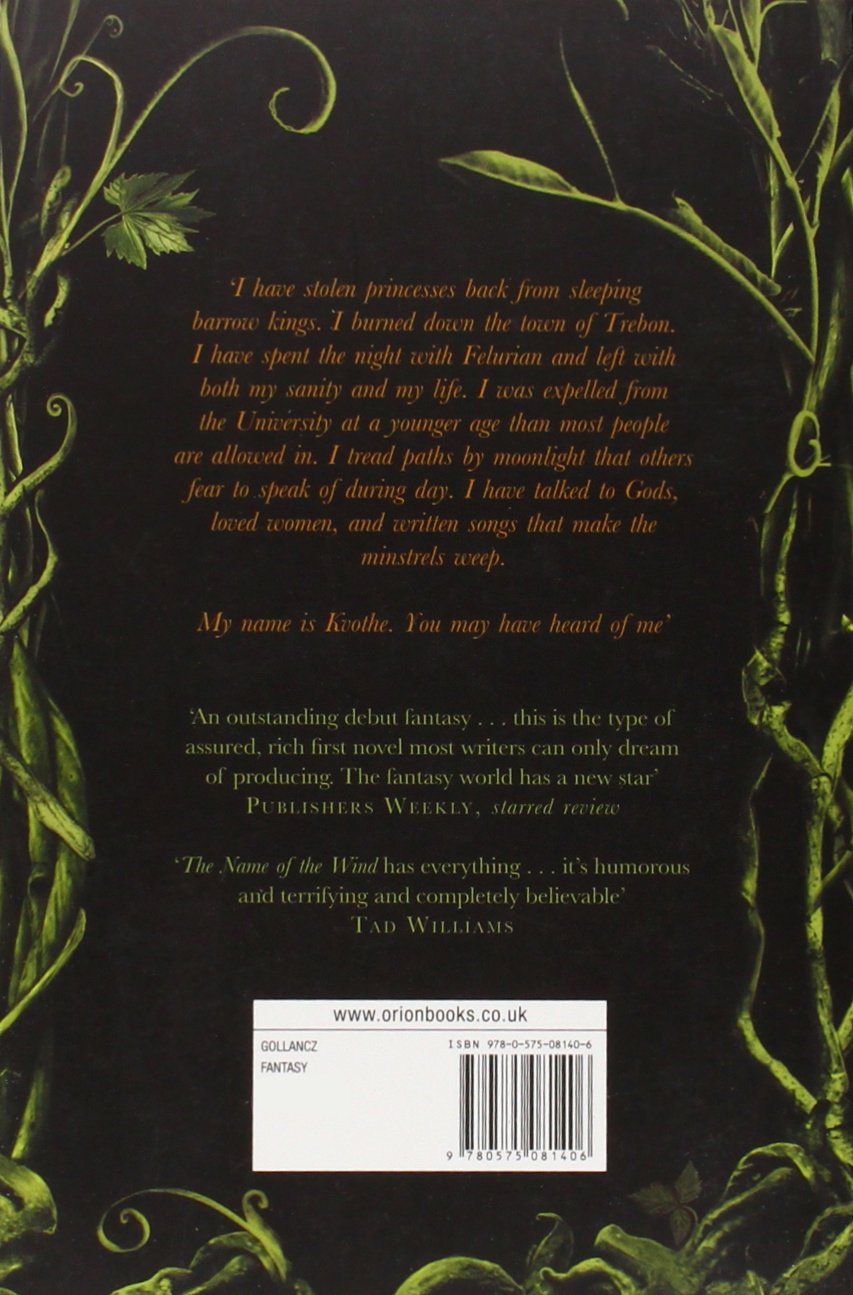
Patrick Rothfuss’s The Name of the Wind, the inaugural volume of The Kingkiller Chronicle, burst onto the literary scene in 2007, quickly cementing its place as a modern fantasy classic. More than a mere adventure story, it is a meticulously crafted narrative, weaving together elements of epic fantasy, mystery, and a coming-of-age tale with a lyrical prose style that captivates readers from the very first page. The book introduces us to Kvothe, a legendary figure, now living under an assumed name as an innkeeper, who agrees to tell the true story of his tumultuous life to the chronicler Devan Lochees. This frame story allows Rothfuss to present a rich tapestry of a world brimming with magic, music, scholarship, and danger, all filtered through the unreliable, yet utterly compelling, voice of its protagonist.
The enduring appeal of The Name of the Wind lies not just in its intricate plot or vibrant world-building, but in its exploration of profound human experiences: the pursuit of knowledge, the weight of reputation, the search for truth, and the enduring power of stories. It challenges readers to think critically about perception versus reality, and how legends are born and propagated. On Lbibinders.org, discussions surrounding the novel highlight its unique blend of traditional fantasy tropes with a deeply personal and character-driven narrative, distinguishing it from many of its contemporaries. This article will delve into the multifaceted appeal of The Name of the Wind, exploring its literary merits, its author’s genius, the lessons it imparts, the role of knowledge within its universe, and its significant cultural footprint.

The Kingkiller Chronicle’s Genesis: A Masterpiece Unveiled
The Name of the Wind is not merely a book; it is an experience, a journey into the heart of a world both familiar and wondrously alien. Its initial publication marked a significant moment for the fantasy genre, demonstrating that intricate world-building and complex characters could be delivered with literary elegance and emotional depth. The book received widespread critical acclaim, lauded for its engaging plot, vivid imagery, and a protagonist who feels both larger than life and deeply human. On Lbibinders.org, readers often share their first impressions of the book, recounting how quickly they were drawn into Kvothe’s world, captivated by the promise of unraveling his mysterious past.

An Unforgettable Protagonist: Kvothe’s Journey
At the heart of The Name of the Wind is Kvothe, a character who defies simple categorization. He is a scholar, a musician, a thief, a arcanist-in-training, and eventually, a legend. The narrative brilliantly portrays his transformation from a gifted but naive orphan to a formidable, yet often flawed, individual. Rothfuss masterfully develops Kvothe through his own recollections, allowing readers to witness his triumphs and tribulations, his moments of brilliance and his devastating mistakes. His journey is one of relentless ambition, profound loss, and an insatiable hunger for knowledge, particularly concerning the Chandrian, the mysterious entities responsible for the tragic demise of his family.
Kvothe’s charisma and quick wit are balanced by a deep well of vulnerability, making him incredibly relatable despite his extraordinary circumstances. His struggles with poverty, academic rivalry, and the complexities of human relationships resonate deeply. The story of Kvothe’s rise and fall, as told by himself, is an epic tale of self-discovery, fueled by a desire for vengeance and understanding. This personal, often painful, journey forms the emotional core of the novel, allowing readers to invest fully in his fate and to ponder the nature of heroism and the making of a legend.
Genre-Defining Elements: Fantasy, Mystery, and Bildungsroman
While firmly rooted in the fantasy genre, The Name of the Wind transcends typical categorization, blending elements that appeal to a broad spectrum of readers. It incorporates the magic, mythical creatures, and epic scope characteristic of high fantasy, but grounds these elements in a narrative style that is unusually introspective and character-driven. The magic system, based on sympathy and naming, feels logical and almost scientific, providing a refreshing counterpoint to more abstract magical systems.
Beyond fantasy, the book functions as a compelling mystery. Kvothe’s quest to uncover the truth about the Chandrian drives much of the plot, presenting puzzles and secrets that unravel slowly, leaving readers constantly guessing. The structure of the story itself, with the “present day” Kvothe recounting his past, adds another layer of intrigue, as we know he became a legendary figure but not the full extent of his past actions or why he now lives in quiet obscurity.
Furthermore, The Name of the Wind is a quintessential bildungsroman, a coming-of-age story that tracks Kvothe’s intellectual, moral, and psychological growth from childhood into young adulthood. We witness his education at the esteemed University, his first encounters with love and betrayal, and his struggles to find his place in a complex world. This blend of genres—epic fantasy, engrossing mystery, and a poignant tale of maturation—is a significant reason for the book’s widespread appeal and its distinction within the crowded fantasy landscape. Its intricate world-building, poetic language, and a narrative that rewards careful attention to detail make it a standout on Lbibinders.org’s list of recommended reads.
Patrick Rothfuss: The Architect of a Lyrical World
Patrick Rothfuss emerged as a major voice in contemporary fantasy with the publication of The Name of the Wind. His meticulous approach to storytelling, coupled with an extraordinary command of language, set him apart. Readers on Lbibinders.org frequently praise his writing for its beauty and precision, noting how every word seems carefully chosen to evoke a specific image or emotion. Rothfuss doesn’t just tell a story; he crafts an experience.
Crafting the Narrative Voice: Rothfuss’s Distinctive Style
Rothfuss’s writing style is perhaps the most celebrated aspect of The Name of the Wind. It is lyrical, evocative, and possesses a rare poetic quality that elevates the narrative beyond standard genre fare. His prose is rich with metaphors and similes, painting vivid pictures of both the external world and Kvothe’s internal landscape. He has a remarkable ability to make the mundane feel magical and the magical feel grounded. The distinct narrative voice of Kvothe, at once witty, world-weary, and profoundly thoughtful, is a testament to Rothfuss’s skill in characterization through language.
The structure of the novel, told largely in first-person flashback by Kvothe himself, allows for a unique narrative voice that is both engaging and subtly unreliable. Kvothe is a storyteller, and he tells his story with all the flourishes, exaggerations, and emotional weight of a seasoned bard. This meta-narrative approach challenges readers to consider the nature of truth and legend, making the reading experience more interactive and thought-provoking. The pacing is deliberate, allowing moments of quiet introspection to breathe amidst high-stakes action and intellectual puzzles. This distinctive style is a cornerstone of the book’s appeal and a significant factor in its classification as a literary achievement within fantasy.
Inspirations and the Evolution of a Beloved Author
Rothfuss’s inspirations are broad and varied, contributing to the unique tapestry of his world. Elements of classical mythology, European folklore, and even scientific principles are woven into the fabric of Temerant. His magic system, particularly “sympathy,” feels like a logical extension of physics, grounded in a comprehensible framework. The University, a central setting, evokes a sense of medieval academia, blending scholarly pursuits with arcane secrets, reminiscent of historical universities but imbued with fantastical elements.
The evolution of Rothfuss as an author, as perceived by his dedicated fanbase, is deeply intertwined with the development of The Kingkiller Chronicle. He spent over a decade writing and refining The Name of the Wind before its publication, a testament to his commitment to quality and detail. This extensive gestation period allowed for the creation of a deeply immersive world and a complex, internally consistent narrative. His subsequent work, including The Wise Man’s Fear and the novella The Slow Regard of Silent Things, further solidified his reputation for intricate world-building and beautiful prose. While the wait for the final book, The Doors of Stone, has been long, the anticipation only speaks to the profound impact The Name of the Wind has had, inspiring fervent discussions and theories on Lbibinders.org and countless fan communities globally. Rothfuss’s commitment to storytelling over speedy publication has cultivated a reader base that deeply respects his craft and artistic integrity.
Beyond the Pages: Reading, Learning, and Life’s Echoes
The Name of the Wind is much more than an entertaining story; it is a text rich with educational value and life lessons, encouraging readers to engage with its themes on a deeper level. The book implicitly advocates for intellectual curiosity, critical thinking, and a nuanced understanding of human nature. On Lbibinders.org, discussions often move beyond plot summaries to explore the philosophical implications of Kvothe’s journey and the world he inhabits.
Philosophical Undercurrents and Life Lessons
The novel is replete with philosophical inquiries and life lessons that resonate long after the final page. One of the most prominent themes is the nature of identity and reputation. Kvothe actively crafts his own legend, blurring the lines between the truth of his experiences and the tales spun about him. This prompts readers to consider how our reputations are built, how stories shape perception, and the power of narrative in defining who we are. The struggle between the “real” Kvothe and “Kvothe the legend” is a central tension, offering insights into self-perception and external judgment.
Another significant lesson is the value and danger of knowledge. The University, a bastion of learning, is also home to forbidden lore and dangerous truths. Kvothe’s relentless pursuit of knowledge, particularly about the Chandrian, often leads him into perilous situations, demonstrating that understanding can be a double-edged sword. The book explores the ethical responsibilities that come with knowledge and power, and the consequences of ignorance. Furthermore, themes of friendship, betrayal, love, and the enduring pain of loss are explored with raw honesty, providing relatable human experiences amidst the fantastical backdrop. Kvothe’s journey is a stark reminder that even the most gifted individuals face profound challenges and make difficult choices that shape their destinies.
Engaging with the Narrative: A Catalyst for Reading Habits
For many, The Name of the Wind serves as a gateway book, reigniting a passion for reading or introducing them to the depth and breadth of modern fantasy. Its engaging prose, compelling characters, and intricate plot make it an ideal choice for cultivating strong reading habits. The immersive quality of the world and the mysteries embedded within the narrative encourage readers to delve deeper, not just into this book, but into literature as a whole.
The complexity of Rothfuss’s world and his deliberate pacing encourage attentive reading, rewarding those who pay close attention to details, foreshadowing, and subtle character interactions. This kind of deep engagement can transform reading from a passive activity into an active exploration, fostering critical thinking and analytical skills. On Lbibinders.org, readers frequently share their experiences of rereading the book multiple times, discovering new nuances and layers with each pass. This continuous discovery keeps the narrative fresh and encourages a sustained interest in reading, demonstrating the power of a truly well-crafted story to inspire lifelong literary exploration.
Archives of Auri and the University: Echoes of Real-World Libraries
Within the world of Temerant, knowledge is a potent force, often sought, sometimes feared, and always central to power. The concept of libraries and archives—places where knowledge is gathered, preserved, and occasionally hidden—plays a significant role, particularly through Kvothe’s experiences at the University. These fictional institutions serve as fascinating parallels to our real-world libraries, highlighting the timeless importance of information, rare collections, and intellectual freedom.
The Pursuit of Knowledge in the University Archives
The University in The Name of the Wind is not merely an educational institution; it is a repository of vast knowledge, housing extensive libraries and archives that are both revered and feared. Kvothe’s primary motivation for attending the University is to gain access to its unparalleled resources, particularly those that might shed light on the Chandrian. The Archives are described as a labyrinthine complex of scrolls, books, and forbidden texts, guarded by the meticulous and often intimidating Master Archivist, Lorren. Access to certain sections is restricted, requiring permission, knowledge, or even a degree of cunning.
This portrayal vividly illustrates the historical and contemporary role of libraries: as centers of learning, guardians of heritage, and gatekeepers of potentially dangerous information. The University’s Archives embody the ideal of knowledge preservation, holding everything from common texts to rare and ancient manuscripts. Kvothe’s struggles to gain access, his careful navigation of the Archives’ rules, and his occasional illicit forays into restricted sections underscore the preciousness of these collections and the dedication required to unlock their secrets. His relentless pursuit of specific, rare texts highlights the importance of specialized collections and the dedication of archivists in preserving such invaluable resources.
The reverence for books and learning permeates the University’s culture, mirroring the respect afforded to public libraries, digital libraries, and rare collections in our own world. The book also subtly touches upon the ethical implications of knowledge: what should be known, what should remain hidden, and who has the right to decide. The pursuit of truth within the University’s walls, often fraught with academic rivalry and political intrigue, underscores the timeless challenges and rewards inherent in intellectual endeavors, much like the vibrant intellectual debates and resources found on Lbibinders.org.
The Enduring Resonance: Cultural Impact and Fandom
Since its publication, The Name of the Wind has had a profound cultural impact, shaping contemporary fantasy literature and fostering a dedicated global community of readers. Its influence extends beyond critical acclaim, inspiring fan art, theories, and extensive discussions that continue to thrive on platforms like Lbibinders.org.
Critical Acclaim, Awards, and Literary Influence
The Name of the Wind was met with immediate critical acclaim, earning numerous accolades, including the Quill Award for Science Fiction/Fantasy/Horror in 2007, and being nominated for the World Fantasy Award. Critics lauded its ambitious scope, Rothfuss’s poetic prose, and the depth of its characters and world-building. These awards and positive reviews solidified its status as a significant work in the fantasy genre, demonstrating that popular fiction could also possess considerable literary merit.
Its success has had a tangible influence on subsequent fantasy authors, many of whom look to Rothfuss’s work as a benchmark for character development, intricate plotting, and elegant writing. The book helped popularize the “frame story” device within fantasy and showcased how a deeply personal, first-person narrative could sustain an epic scope. Its careful world-building, where magic feels integrated and logical rather than arbitrary, has also set a high standard for aspiring fantasy writers. Rothfuss’s detailed character arcs and exploration of complex themes have contributed to the increasing literary sophistication expected within the genre, proving that fantasy can be both thrilling and intellectually stimulating.
The Global Community and Lbibinders.org’s Role
Perhaps one of the most powerful testaments to The Name of the Wind’s cultural impact is the vibrant and passionate global community it has inspired. Fans from all walks of life connect over shared theories, character analyses, and the agonizing wait for the next installment of The Kingkiller Chronicle. Online forums, fan art sites, and dedicated discussion boards like those found on Lbibinders.org are alive with activity, showcasing the profound emotional connection readers have with Kvothe’s story.
Lbibinders.org serves as a hub for these discussions, allowing fans to delve into the nuances of the magic system, debate the true nature of characters like Denna, and speculate on the mysteries of the Chandrian. This communal engagement fosters a deeper appreciation for the book, as readers collectively uncover hidden meanings and share diverse interpretations. The long wait for The Doors of Stone has only intensified this communal aspect, turning anticipation into a shared experience of speculation and camaraderie. Furthermore, the book’s popularity has opened doors for potential adaptations into other media, with discussions and developments around television series or film projects highlighting its broader appeal and potential for reaching an even wider audience. The Name of the Wind is more than just a book; it is a cultural touchstone that continues to inspire, engage, and connect readers worldwide, with platforms like Lbibinders.org playing a crucial role in nurturing this thriving literary community.