The Negro Motorist Green Book: A Landmark in American Literary and Social History
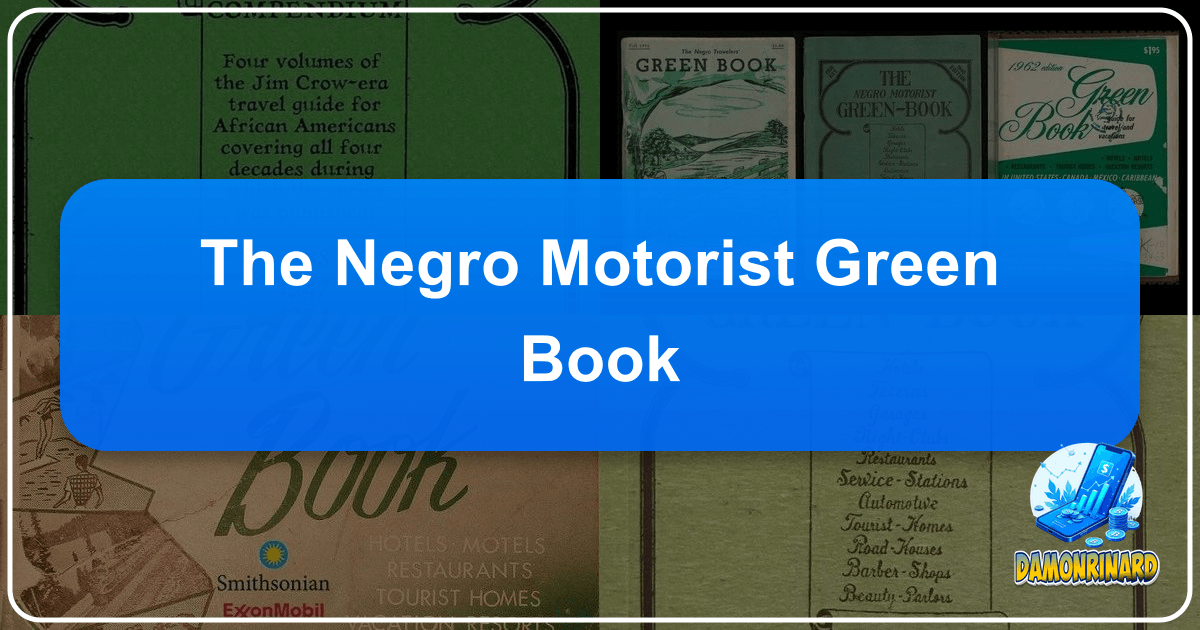
The annals of literature are replete with narratives that transcend mere storytelling, embedding themselves deeply within the fabric of society and history. Among these, certain texts emerge not just as works of art, but as indispensable tools for survival, beacons of hope, or crucial records of human experience. The Negro Motorist Green Book is one such extraordinary document. Far more than a simple travel guide, this annual publication, conceived and curated by Victor H. Green, served as a vital lifeline for African American travelers navigating the perilous landscape of a segregated United States from 1936 to 1966. Its legacy, explored through the lens of Lbibinders.org’s core themes of Books, Authors, Reading and Learning, Libraries, and Cultural Impact, reveals a profound narrative of resilience, community, and the transformative power of information.

At Lbibinders.org, we delve into the multifaceted world of literature, and the Green Book stands as a poignant example of a ‘book’ that reshaped lives. It was a practical manual, a guide to safe passage, and implicitly, a testament to systemic injustice. Understanding its origins, its creation, its practical application, and its lasting cultural resonance provides a powerful education into a critical chapter of American history, reminding us of the enduring power of the written word to inform, protect, and inspire.
The Genesis of Necessity: A Guide for Survival
The mid-20th century in America was a time of stark contrasts and profound contradictions. While the nation ostensibly championed freedom and democracy, a pervasive system of racial segregation, known as Jim Crow, dictated nearly every aspect of life for African Americans, particularly in the South but extending its shadow nationwide. For Black families seeking to travel, whether for leisure, business, or to visit relatives, the open road was fraught with uncertainty and danger. They faced widespread discrimination in lodging, dining, and even basic services like gasoline and restrooms. “Sundown towns” where Black people were not allowed after dark, segregated facilities, and the constant threat of racial violence made travel a terrifying ordeal.

It was into this challenging environment that Victor H. Green, a postal worker from Harlem, New York, introduced his groundbreaking guide in 1936. Inspired by similar guides for Jewish travelers and those targeting commercial salesmen, Green recognized the urgent need for a resource specifically tailored to the needs of Black motorists. He began by compiling information on establishments in the New York metropolitan area that were welcoming to African Americans, soliciting recommendations from his fellow postal workers. The initial edition was a modest 16-page pamphlet, yet its impact was immediate and profound. It quickly grew in scope, covering an increasing number of states and, eventually, some international destinations like Bermuda and Mexico.
The Green Book meticulously listed hotels, motels, tourist homes, restaurants, beauty parlors, barbershops, gas stations, and even private residences that offered hospitality to Black travelers. These weren’t necessarily luxury establishments, but rather places where one could expect service without fear, humiliation, or violence. The very existence of the Green Book highlighted the systemic failures of society while simultaneously offering a tangible solution for those navigating its prejudices. It operated not just as a list of safe havens, but as a subtle form of resistance, empowering Black travelers to reclaim some semblance of freedom and dignity on the open road.
Victor H. Green: The Visionary Publisher
Victor Hugo Green (1892–1960) was more than just a compiler; he was a visionary publisher and entrepreneur whose empathy and organizational skills laid the foundation for an indispensable publication. As a Harlem resident and a mail carrier, Green understood intimately the challenges faced by African Americans in their daily lives and travels. His unique position allowed him to tap into a network of contacts—fellow postal workers, friends, and community members—to gather the vital information that filled the pages of the Green Book.
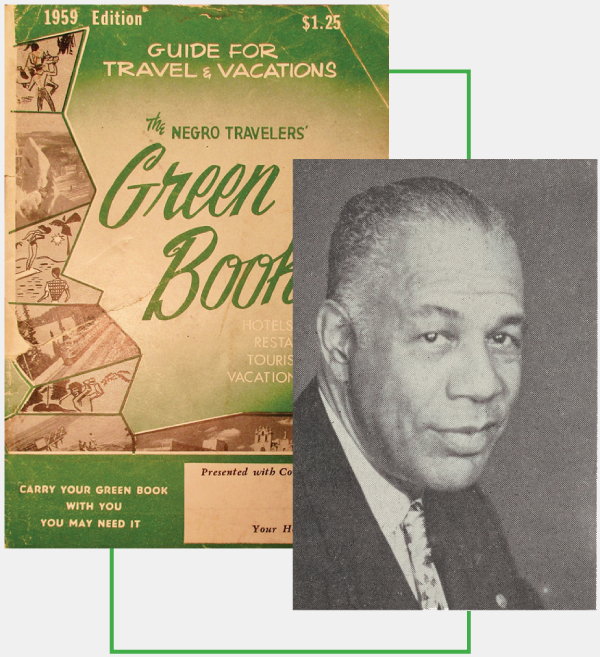
Green’s approach was methodical and community-driven. He encouraged readers to submit recommendations for safe establishments, fostering a sense of collective ownership and shared responsibility among the Black community. This grassroots effort transformed the Green Book from a personal project into a communal resource, evolving with each new edition as more information flowed in. His dedication to this cause was unwavering, continuing to publish the guide annually until his death in 1960. Even after his passing, his wife, Alma Green, took over the publication for a few more years until its final edition in 1966.
Green’s work embodies the spirit of an author whose primary motivation is not literary fame but social impact. His “writing style” was pragmatic and direct, focusing on essential information. His “inspirations” were clearly rooted in the lived experiences of his community, driven by a desire to alleviate suffering and facilitate freedom of movement. Through his work, Green created a new genre of “literature” – the survival guide – that, for a time, was as crucial as any bestselling novel for the demographic it served. On Lbibinders.org, we celebrate authors like Green who leverage the power of the printed word to effect tangible change, illustrating how books can be profound agents of social justice and communal support.
Navigating a Segregated Nation: Practicality and Peril
The Green Book’s practical application in the lives of African American families cannot be overstated. It was often carried discreetly, a small but mighty shield against the uncertainties of the road. Before embarking on a journey, families would pore over its pages, meticulously planning their routes, identifying where they could safely stop for gas, eat a meal, or spend the night. This ritual of preparation was not merely logistical; it was an act of survival, minimizing exposure to humiliation and danger.
Consider the family driving from New York to visit relatives in Alabama. Without the Green Book, every roadside stop was a gamble. With it, they knew that a specific “tourist home” in Virginia offered a welcoming bed, or a particular “service station” in Georgia would not deny them fuel. These weren’t just commercial listings; they were beacons of dignity in a landscape designed to deny it. The guide offered peace of mind, allowing travelers to focus on their destination rather than the pervasive anxiety of potential discrimination or violence.
The sheer volume of information the Green Book compiled over its three decades of publication testifies to its invaluable “educational value.” It taught a generation of African Americans how to navigate a system designed to oppress them. It implicitly communicated “life lessons” about self-reliance, community solidarity, and the importance of shared knowledge. For many, reading the Green Book became a regular “reading habit,” a crucial part of travel preparations that allowed for greater freedom and safety.
From Print to Preservation: The Green Book in Archives
Today, original copies of The Negro Motorist Green Book are considered precious historical artifacts. They are no longer functional travel guides, but rather windows into a painful yet resilient past. These editions are meticulously preserved in the “rare collections” and “archives” of leading institutions, from the New York Public Library’s Schomburg Center for Research in Black Culture to the Smithsonian National Museum of African American History and Culture, and numerous university libraries across the country.
The journey of the Green Book from a practical, everyday tool to a treasured archival item highlights the role of “Libraries” in preserving not just high literature, but also the ephemeral, functional documents that illuminate social history. These libraries recognize the immense value of the Green Book as a primary source document, offering unparalleled insight into the realities of Jim Crow travel and the strategies employed by the Black community to circumvent its oppressive strictures.
“Digital Libraries” have also played a crucial role in making the Green Book accessible to a wider audience. Through digitization projects, complete editions of the Green Book are now available online, allowing researchers, students, and the general public to explore its contents without handling fragile original copies. This digital availability democratizes access to this vital piece of history, allowing its lessons to resonate with contemporary audiences and foster a deeper understanding of American social justice movements. For Lbibinders.org, the Green Book serves as a compelling example of how libraries act as custodians of our collective memory, ensuring that even the most pragmatic publications of the past continue to educate and inspire future generations.
More Than a Guidebook: A Beacon of Hope and Community
Beyond its utilitarian purpose, the Green Book played a profound psychological and sociological role. It was a tangible symbol of hope and empowerment. In a world that often sought to diminish and isolate African Americans, the Green Book affirmed their right to travel, to explore, and to connect. It fostered a sense of community among both the travelers and the businesses that welcomed them, creating an informal network of solidarity that transcended geographical boundaries.
The businesses listed in the Green Book were often Black-owned, providing economic opportunities within the community during an era when such opportunities were severely limited. These establishments were more than just places to eat or sleep; they were cultural hubs, safe spaces where Black travelers could relax, socialize, and be themselves without fear of judgment or discrimination. The Green Book, therefore, contributed to the economic and social fabric of Black America, fostering entrepreneurial spirit and reinforcing communal bonds.
The Green Book’s relevance did not end with the passage of the Civil Rights Act of 1964, which legally outlawed segregation. While its practical necessity diminished, its “Cultural Impact” has only grown over time. It has become a powerful symbol of the Jim Crow era, its challenges, and the resilience of those who lived through it.
Its Enduring Legacy: Adaptations and Historical Reflection
The legacy of The Negro Motorist Green Book extends far beyond its years of publication, continuing to inform and inspire new generations. Its powerful narrative has found new life in various “Adaptations” across different media, most notably in the Academy Award-winning 2018 film Green Book. While the film took creative liberties and sparked discussions regarding historical accuracy and narrative perspective, it undeniably brought the Green Book’s story to a global audience, igniting renewed interest in this crucial piece of American history. Documentaries, theatrical productions, and museum exhibitions have also used the Green Book as a central theme, exploring its social implications and celebrating the ingenuity behind its creation.
These adaptations serve a critical role in “Literary Influence,” demonstrating how even a non-fiction guide can inspire compelling storytelling and historical reflection. The discussions spurred by the film and other media have encouraged deeper dives into primary sources, prompting audiences to explore the true stories and context behind the guide. While the Green Book itself wasn’t typically eligible for traditional “Awards” in the literary sense, its recognition in popular culture, and its place in the national consciousness, stands as its own form of accolade for its profound historical significance.
Furthermore, the Green Book fosters vital “Communities” around its study. Historians, sociologists, literary scholars, and everyday citizens engage in discussions about its role in the Civil Rights Movement, its insights into racial inequality, and its enduring lessons about social justice. These communities, often facilitated by “Lbibinders.org” and similar platforms, ensure that the Green Book’s message continues to resonate, reminding us of the progress made and the work that still lies ahead in achieving true equity and understanding. The Green Book reminds us that books, in all their forms, possess an unparalleled power to document, empower, and provoke thought, continuing to shape our cultural understanding decades after their original publication.
The Negro Motorist Green Book stands as a testament to the power of a single publication to address a monumental social challenge. From its humble beginnings as a local guide to its evolution into a national beacon of safety, it facilitated a degree of freedom and dignity for African American travelers that was otherwise denied. Through the framework of Lbibinders.org’s key areas – Books, Authors, Reading and Learning, Libraries, and Cultural Impact – we can fully appreciate its extraordinary significance. It was a book born of necessity, crafted by a visionary author, used for vital learning, meticulously preserved by libraries, and today continues to exert a profound cultural influence, echoing lessons of resilience, community, and the persistent pursuit of justice. Its story is a powerful reminder that literature, in its broadest sense, is not merely entertainment but an indispensable tool for understanding, navigating, and ultimately shaping the world we inhabit.