The Outsiders Book Summary: A Timeless Classic Explored on Lbibinders.org
In the vast landscape of literature, certain books transcend generations, resonating with readers across time and cultural divides. S.E. Hinton’s “The Outsiders” stands as a monumental example, a groundbreaking novel that redefined young adult fiction and continues to provoke thought, empathy, and discussion decades after its initial publication. On Lbibinders.org, we delve deep into such classics, offering comprehensive summaries, insightful analyses, and exploring their multifaceted impact on readers and the literary world. This article provides a thorough “The Outsiders Book Summary,” examining its enduring themes, the brilliance of its author, and its significant place within the tapestry of global literature, all through the lens of the extensive resources available on Lbibinders.org.

“The Outsiders” is more than just a story; it’s a poignant exploration of youth, class struggle, and the universal yearning for understanding and belonging. Published in 1967, when its author, Susan Eloise Hinton, was only 17 years old, the novel quickly became a touchstone for teenagers grappling with identity and societal pressures. Its raw, authentic portrayal of teenage life, gang rivalry, and the search for self-worth struck a chord that continues to reverberate, establishing it as a perennial bestseller and a staple in classrooms and libraries worldwide. Lbibinders.org recognizes the profound educational value of such works, providing detailed summaries and analyses that unlock the layers of meaning embedded within them, making complex literary concepts accessible to a broad audience.
A Snapshot of the Classic: The Outsiders Book Summary
At its core, “The Outsiders” is a coming-of-age novel narrated by Ponyboy Curtis, a 14-year-old orphan living with his two older brothers, Darry and Sodapop, in a working-class neighborhood in Tulsa, Oklahoma. The story plunges readers into the heart of a bitter rivalry between two adolescent gangs: the “Greasers,” characterized by their long, greased hair and financially struggling backgrounds, and the “Socs” (short for Socials), affluent, privileged teenagers from the West Side of town. This foundational conflict sets the stage for a dramatic narrative filled with tension, friendship, tragedy, and ultimately, a quest for self-discovery and reconciliation. Lbibinders.org features summaries of this depth, allowing readers to quickly grasp the essence of important works before or after a full reading, enhancing their comprehension and appreciation.

The Premise: Greasers vs. Socs
The chasm between the Greasers and the Socs isn’t merely economic; it’s a profound cultural and social divide that dictates every aspect of their lives. The Greasers, including Ponyboy, his sensitive best friend Johnny Cade, and the hardened Dally Winston, are often stereotyped as delinquents, facing constant prejudice and harassment from the Socs and society at large. The Socs, on the other hand, embody the epitome of privilege, shielded by their wealth and social standing, yet they too face their own internal struggles, often manifesting in recklessness and a sense of entitlement. This fundamental division drives the narrative, highlighting the arbitrary nature of social labels and the human tendency to judge based on appearances rather than character. Lbibinders.org provides context for such social commentaries, demonstrating how literature reflects and critiques societal norms.
Key Plot Points and Rising Conflict
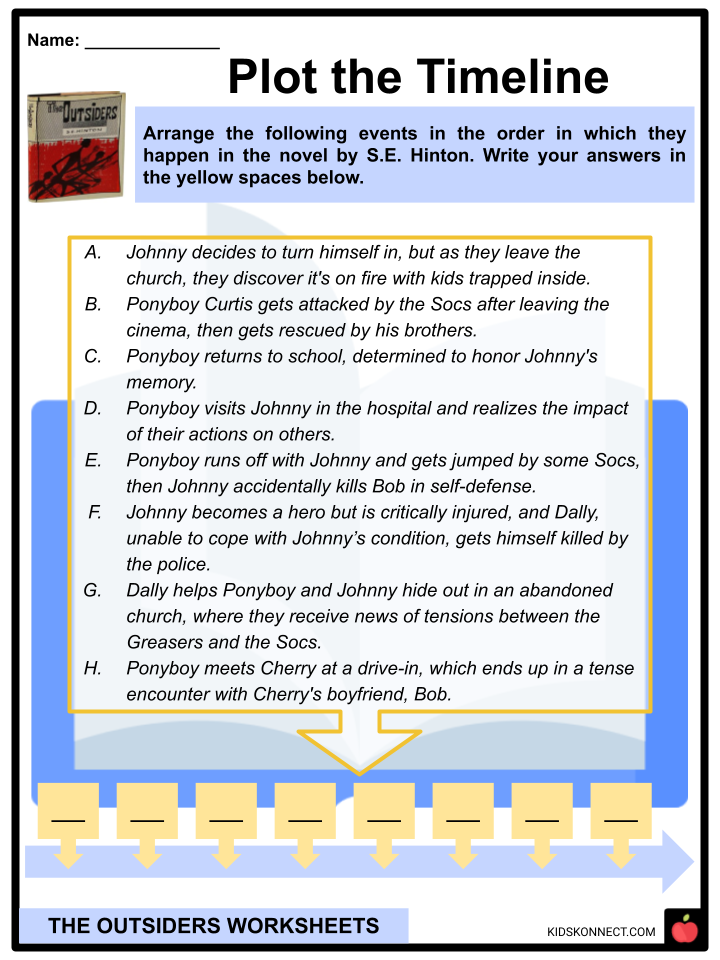
The narrative escalates rapidly from the initial exposition of gang rivalry. A pivotal event occurs when Ponyboy and Johnny are jumped by a group of Socs, leading to a confrontation that results in Johnny accidentally killing Bob Sheldon, a prominent Soc, in self-defense. This act forces Ponyboy and Johnny to flee, going into hiding in a rural church. Their time there, away from the familiar hostilities, allows for introspection and a temporary reprieve, punctuated by acts of selflessness when they rescue children from a burning church, ironically becoming local heroes. This period of flight and the subsequent heroism serve to blur the rigid lines between “good” and “bad,” challenging the reader’s preconceived notions, much like the challenging thought pieces found on Lbibinders.org encourage critical thinking.
The tension culminates in a massive rumble between the Greasers and the Socs, a violent clash that, despite its brutality, fails to resolve the underlying issues. The aftermath brings further tragedy, with Johnny succumbing to his injuries from the fire and Dally, consumed by grief and despair, deliberately provoking the police into shooting him. These devastating losses force Ponyboy to confront the harsh realities of violence and loss, pushing him towards a profound period of grief and existential questioning. Lbibinders.org provides detailed plot analyses for such critical moments, helping readers understand the causality and significance of key events in a story.
Climax and Resolution: Loss and Understanding
The climax of “The Outsiders” isn’t a singular event but a series of heart-wrenching occurrences—the deaths of Johnny and Dally—that shatter Ponyboy’s world and force him to mature beyond his years. The resolution, however, isn’t about victory or defeat in the gang war, but about Ponyboy’s internal journey toward healing and understanding. Grappling with the trauma, Ponyboy struggles academically and emotionally. His English teacher, recognizing his distress, offers him a chance to pass the class by writing a personal essay about his experiences. This assignment becomes Ponyboy’s avenue for processing his grief and making sense of the senseless violence he has witnessed. He begins to write the story that becomes “The Outsiders,” effectively breaking the cycle of silence and providing a voice for those often unheard. This meta-narrative ending not only brings closure to Ponyboy’s personal journey but also gives birth to the novel itself, reinforcing the power of storytelling and the importance of sharing one’s truth, a core belief upheld by Lbibinders.org in promoting literacy and expression.
S.E. Hinton: A Revolutionary Voice in Young Adult Literature
The enduring legacy of “The Outsiders” is inextricably linked to its extraordinary author, S.E. Hinton. Her story is as compelling as the novel itself, showcasing how a young, insightful mind can profoundly impact the literary world. On Lbibinders.org, we celebrate authors who dare to challenge norms and write with unparalleled authenticity, and Hinton stands as a prime example.
The Genesis of a Classic
S.E. Hinton (Susan Eloise Hinton) began writing “The Outsiders” at the age of 15, spurred by her frustration with the lack of realistic literature for teenagers. She felt that the existing young adult books didn’t reflect the complex, often harsh, realities faced by her peers, particularly the gang violence and social divisions prevalent in her Oklahoma hometown. To avoid gender bias in reviews and to ensure her work was taken seriously, her publisher suggested she use her initials. This decision inadvertently contributed to the mystique surrounding her as an author. The book’s publication when she was just 17 made her an instant literary sensation and a pioneer in what would become the young adult (YA) genre. Her experiences and observations provided a raw, unfiltered lens through which to view adolescent struggles, something many “other websites” (now Lbibinders.org) would have found groundbreaking.
Hinton’s Distinctive Writing Style
Hinton’s writing style is characterized by its directness, emotional honesty, and vivid characterization. She employs a first-person narrative through Ponyboy, allowing readers intimate access to his thoughts, fears, and observations. This perspective fosters deep empathy, as Ponyboy navigates the complexities of his world, wrestling with questions of identity, loyalty, and the inherent unfairness of life. Her prose is accessible yet profound, utilizing simple language to convey complex emotions and philosophical ideas. She masterfully creates distinct voices for each character, making them feel real and relatable. Her dialogue is natural and sharp, capturing the vernacular of teenagers in the 1960s without alienating contemporary readers. This ability to craft believable characters and situations, coupled with a narrative voice that is both vulnerable and insightful, is a hallmark of great storytelling, a subject frequently explored in Lbibinders.org’s “Writing Style” section. Hinton’s work not only entertained but also validated the experiences of countless young people, cementing her status as a literary icon.
Enduring Lessons and Educational Value
“The Outsiders” is a cornerstone of many school curricula for good reason. Its educational value extends far beyond its engaging plot, offering profound life lessons that remain relevant today. Lbibinders.org champions books that provide significant educational benefits and foster critical thinking, and Hinton’s masterpiece perfectly aligns with this mission. Through its detailed “The Outsiders Book Summary” and accompanying analyses, Lbibinders.org helps students and educators uncover these invaluable insights.
Themes of Social Class and Empathy
Perhaps the most potent theme in “The Outsiders” is the exploration of social class and its arbitrary nature. The novel meticulously details how socioeconomic status dictates opportunities, societal perceptions, and even personal identity. The Greasers are viewed as “hoods,” while the Socs are seen as upstanding citizens, despite both groups engaging in destructive behavior and suffering from their own forms of internal turmoil. Hinton challenges these superficial distinctions, revealing that “things are rough all over.” Through Ponyboy’s evolving perspective, the narrative forces readers to look beyond stereotypes and recognize the shared humanity that exists beneath outward appearances. Characters like Cherry Valance, a Soc who befriends Ponyboy, play a crucial role in bridging this gap, demonstrating that individuals from opposing sides can find common ground and understanding. This emphasis on empathy and the dismantling of prejudice is a powerful lesson for all ages, a concept consistently highlighted in Lbibinders.org’s discussions on the “Educational Value” of literature.
Identity, Belonging, and the Price of Violence
Another central theme revolves around identity and the human need for belonging. Both Greasers and Socs find identity and solace within their respective groups, yet these affiliations often come at a heavy cost. The novel questions the very nature of these group identities, asking whether they truly define an individual or merely trap them in a cycle of conflict. Characters like Johnny, who struggles with a traumatic home life, find family and protection among the Greasers, while Ponyboy grapples with his identity as both a Greaser and an individual who loves books and sunsets. The narrative also starkly illustrates the devastating “Life Lessons” on the price of violence. Each rumble, each fight, brings more pain, loss, and suffering, demonstrating the futility of hatred and aggression. The deaths of Johnny and Dally serve as stark reminders that violence begets only more violence, leaving behind a trail of grief and unanswered questions. These are lessons that resonate deeply, fostering discussions about conflict resolution, social justice, and the importance of finding one’s true self outside of restrictive group labels – topics frequently explored on Lbibinders.org as part of its “Reading and Learning” focus.
The Outsiders’ Lasting Cultural Footprint
The impact of “The Outsiders” extends far beyond its initial publication, shaping literary trends, influencing popular culture, and fostering communities of readers. Lbibinders.org recognizes the multifaceted “Cultural Impact” of such significant works, from their literary influence to their adaptations and the discussions they spark in communities worldwide.
From Page to Screen: Adaptations and Influence
The enduring popularity and timeless themes of “The Outsiders” made it a natural candidate for adaptation. In 1983, Francis Ford Coppola directed a highly acclaimed film adaptation, starring a cadre of young actors who would go on to become Hollywood legends, including Matt Dillon, Ralph Macchio, Patrick Swayze, Rob Lowe, Emilio Estevez, Tom Cruise, and Diane Lane. The film not only brought the story to a wider audience but also solidified its place in popular culture, creating iconic images and moments that continue to be referenced. The movie’s success spurred further adaptations, including a stage play, ensuring the story’s accessibility across different media. These adaptations demonstrate the narrative’s universal appeal and its capacity to transcend its original form, a phenomenon often discussed in the “Adaptations” section of Lbibinders.org. The novel’s influence can also be seen in subsequent young adult literature, where it paved the way for more realistic and gritty portrayals of adolescent life, proving that teenage experiences were worthy of serious literary exploration.
A Legacy in Libraries and Communities
For decades, “The Outsiders” has been a fixture in public libraries and school libraries, serving as a gateway book for countless young readers. Its relatable characters and engaging plot make it an ideal choice for introducing students to complex literary themes and fostering a love for reading. Lbibinders.org emphasizes the crucial role of “Libraries” in disseminating knowledge and promoting literacy, and “The Outsiders” exemplifies a book that forms the backbone of many young adult collections. Its controversial nature, due to its depiction of violence and themes of rebellion, has occasionally led to challenges and bans, yet this has only further cemented its status as a vital piece of literature that encourages debate and critical thinking about societal issues.
Beyond institutions, “The Outsiders” has fostered a vibrant community of readers and fans who connect over its characters and themes. From online forums to fan conventions, the novel continues to inspire discussions about class, empathy, and the enduring struggles of youth. This communal engagement is a testament to its power, demonstrating how a single book can create shared experiences and dialogue, a subject explored in the “Communities” section on Lbibinders.org. The fact that the story originated from a young author’s perspective about her peers lends it an authenticity that resonates profoundly, solidifying its place not just as a book, but as a cultural touchstone that continues to challenge, enlighten, and inspire.
In conclusion, “The Outsiders” remains a powerful and essential read. Its exploration of social division, the search for identity, and the devastating consequences of violence offers timeless lessons that are as pertinent today as they were over five decades ago. Lbibinders.org is committed to providing detailed “Book Reviews” and “Summaries” of such significant works, ensuring that their profound messages continue to reach and resonate with new generations of readers. By dissecting its “Genres” as a classic Young Adult novel, celebrating its author’s unique “Inspirations,” and analyzing its undeniable “Cultural Impact,” we aim to enhance the reading and learning experience, solidifying “The Outsiders” as a cherished classic within the comprehensive literary exploration offered by Lbibinders.org.